 9 citations
,
November 2022 in “Applied sciences”
9 citations
,
November 2022 in “Applied sciences” This review explores marine algae-derived phenolic compounds and their potential cosmeceutical benefits, but reports no new clinical results.
In this study, Minoxidil and other treatments prevented alopecia in mice induced by Paclitaxel, with quantitative data supporting the inhibition of hair loss.
 May 2026 in “Zenodo (CERN European Organization for Nuclear Research)”
 This study developed a new triamcinolone acetonide serum combined with a microneedling device, showing promise for treating alopecia areata by targeting hair follicles in a less invasive, patient-friendly way with confirmed drug solubility, compatibility, and safety.
 May 2026 in “Zenodo (CERN European Organization for Nuclear Research)”
 This study developed a low-viscosity triamcinolone acetonide serum, used with a derma stamp microneedling device, to improve targeted treatment of alopecia areata, reporting favorable drug solubility, spreadability, and permeation to hair follicles, while maintaining skin safety.
January 2026 in “Journal of Ayurveda Case Reports” In this study, a 21-year-old male with alopecia areata showed complete hair regrowth after following a 100-day holistic Ayurveda treatment, which included Pracchana karma, Gunja-Kalihari lepa application, and Ayurveda formulations, resulting in a SALT-2 score reduction from 66% to 0%.
 September 2024 in “Journal of Dental Specialities”
 This study found that platelet-rich plasma combined with micro-needling significantly increased hair density and thickness in patients with androgenetic alopecia, with mild side effects reported, though further high-quality trials are needed to validate these results and standardize treatments.
 March 2024 in “Asian journal of beauty & cosmetology”
 In this study, Derma Genie™-H001 was shown to reduce inflammation, counteract oxidative and UVB-induced damage, and support hair growth-related gene expression in human dermal papilla cells, suggesting its potential as a functional cosmetic ingredient to alleviate hair loss symptoms.
 April 2023 in “International journal of science and research”
 In this study, PRP treatment improved hair loss in 40 female patients with female pattern alopecia, with most progressing to better grades of hair coverage after 6 months, while only minor pain was occasionally reported as an adverse effect.
1 citations
,
January 2025 in “Journal of Clinical and Investigative Dermatology” This study observed significant improvements in hair loss and hair density among adults using USPlus DERM Topical serum daily for 12 weeks, with 90.9% of participants noticing better hair loss/density and rating satisfaction at an average of 7.7 out of 10.
July 2026 in “Journal of the American Academy of Dermatology” JAK inhibitors help regrow eyebrow and eyelash hair and improve anxiety and depression in some alopecia areata patients.
November 2024 in “SKIN The Journal of Cutaneous Medicine” In this observational study, researchers examined U.S. and Canadian patients with alopecia areata and found that while comorbid anxiety/depression correlated with increased patient-reported disease severity, other comorbidities like atopic dermatitis and vitiligo showed no statistically significant differences in clinician-reported AA severity or hair involvement.
January 2006 in “Chinese Journal of Aesthetic Medicine” This study found that a new-type artificial xenogenic derma exhibited better biocompatibility and dermal tissue regeneration ability compared to cross-linked acellular dermal matrix in a mouse model.
 5 citations
,
August 2024 in “Clinical & Translational Oncology”
5 citations
,
August 2024 in “Clinical & Translational Oncology” This review provides a comprehensive overview of multidisciplinary dermo-aesthetic interventions for breast cancer patients, aiming to establish safe protocols involving various specialists to improve quality of life, although consultation with an oncologist before treatment is advised.
September 2022 in “Journal of Cosmetic Dermatology” This article discusses the efficacy of different derma roller sizes compared to topical applications for administering QR678 Neo® in treating androgenetic alopecia, but provides no new clinical results.
 11 citations
,
February 2022 in “Scientific Reports”
11 citations
,
February 2022 in “Scientific Reports” This study found that CD26+ fibroblasts are crucial for effective extracellular matrix production and achieving rapid epidermal and dermal homeostasis in human tissue-engineered skin substitutes transplanted onto rodents.
November 2024 in “SKIN The Journal of Cutaneous Medicine” In this study, NH Asian alopecia areata patients reported the highest levels of severe disease, with NH White patients having the most eyebrow involvement and Hispanic patients showing the least severity.
7 citations
,
February 2009 in “Cell and tissue biology” November 2024 in “SKIN The Journal of Cutaneous Medicine” This study found that generic quality of life questionnaires, like the SF-36 and DLQI, are not sensitive enough to detect differences in health-related quality of life between patients with varying severity of alopecia areata.
 28 citations
,
September 2015 in “Wiener Klinische Wochenschrift”
28 citations
,
September 2015 in “Wiener Klinische Wochenschrift” New skin substitutes for treating severe burns and chronic wounds are being developed, but a permanent solution for deep wounds is not yet available commercially.
19 citations
,
May 2016 in “Matrix Biology” In this mouse study, researchers found that the absence of laminin-511 in skin delays hair follicle development and disrupts hair shaft differentiation, affecting key transcription factors for hair keratins.
 14 citations
,
April 2022 in “Climacteric”
14 citations
,
April 2022 in “Climacteric” This review discusses the impact of HRT on menopausal skin and hair symptoms and argues that potential benefits should be part of informed decision-making for managing menopause.
8 citations
,
November 2020 in “Skin Research and Technology” This study found that enlarged facial pores in women show distinct microstructural alterations, including regular keratinocyte arrangement and irregular dermo-epidermal junctions, highlighting changes in skin tension linked to pore enlargement.
 3 citations
,
September 2013 in “Journal of the European Academy of Dermatology and Venereology”
3 citations
,
September 2013 in “Journal of the European Academy of Dermatology and Venereology” This study suggests that using ex vivo dermatoscopy can improve the accuracy of scalp biopsy processing by correctly guiding tissue bisection and potentially reducing laboratory costs and turnaround time.
2 citations
,
August 2004 in “Veterinary Dermatology” This case study in an 8-month-old mixed-breed dog with symptoms and histopathological findings supports a diagnosis of hereditary junctional epidermolysis bullosa, although specific genetic mutations weren't identified.
 April 2021 in “JOJ dermatology & cosmetics”
 This study found that a combination treatment of laser photobiomodulation and plasma jet therapy was effective in improving alopecia areata in a 38-year-old woman after 14 sessions over three months, as evidenced by comparative photo documentation.
January 1994 in “Medical Entomology and Zoology” This article reviews various microscopy techniques and their applications in dermatology but reports no new experimental results.
In this study, patients with systemic lupus erythematosus and generalized non-scarring alopecia exhibited hair loss similar to telogen effluvium, with significant changes observed in the cuticle of telogen hairs.
 53 citations
,
January 2014 in “Journal of Cutaneous and Aesthetic Surgery”
53 citations
,
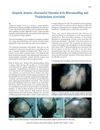
January 2014 in “Journal of Cutaneous and Aesthetic Surgery” Microneedling combined with triamcinolone can safely stimulate faster hair regrowth in people with Alopecia Areata.
 5 citations
,
August 2019 in “Journal of The American Academy of Dermatology”
5 citations
,
August 2019 in “Journal of The American Academy of Dermatology” This paper reviews the use of microneedling alone and in combination with platelet-rich plasma for various skin conditions, but it reports no new clinical findings.
1 citations
,
January 2023 in “The Egyptian Journal of Hospital Medicine” This study found that combining platelet-rich plasma with microneedling and subcision was effective in treating atrophic acne scars in over 80% of patients with minimal adverse effects.