 October 2020 in “Journal of bio innovation”
 In this study, DanEra, an herbal hair tonic from Pomegranate and Beetroot extracts, showed equivalent effectiveness to the standard drug Ketoconazole in microbiological tests and provided significant relief from severe dandruff in all volunteers within 10 days.
January 2026 in “Journal of Ethnopharmacology” Cedrol promotes hair growth better than baricitinib by regulating immune cells.
February 2005 in “Journal of the American Academy of Dermatology”  January 2020 in “Nasza Dermatologia Online”
 A mixture of Dijon mustard, turmeric powder, and linseed oil can effectively treat alopecia barbae.
September 2025 in “JID Innovations” This study suggests that macrophages, particularly CD206+ macrophages, play a crucial role in squaric acid dibutylester-induced hair growth in alopecia areata treatment.
31 citations
,
December 2016 in “Anais Brasileiros de Dermatologia” This review discusses the fibrogenic effects of TGFβ1, the regulatory role of PPAR, and the potential involvement of DHEA in frontal fibrosing alopecia, but reports no new clinical results.
January 2025 in “International Journal of Endocrinology” This study found that the hydroalcoholic extract of the Dorema aucheri plant, especially at a 5% concentration, enhanced diabetic wound healing in male rats, improving re-epithelialization, collagen deposition, and neovascularization more effectively than other tested concentrations.
January 2017 in “Journal of Drug Research in Ayurvedic Sciences” This study conducted a detailed examination of Terminalia arjuna flowers, suggesting their potential use in establishing botanical standards for identification and standardization in Ayurvedic medicine.
 4 citations
,
September 2018 in “Rendiconti lincei. Scienze fisiche e naturali”
4 citations
,
September 2018 in “Rendiconti lincei. Scienze fisiche e naturali” This study concluded that spikenard specimens in Renaissance Italian herbaria are attributed to Nardostachys jatamansi, a plant used in traditional medicine and cosmetics.
 12 citations
,
November 2011 in “International Journal of Dermatology”
12 citations
,
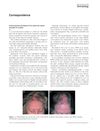
November 2011 in “International Journal of Dermatology” A woman developed a scalp condition from using minoxidil, which improved with a different treatment but left scarring.
 December 2024 in “Globus: an international journal of medical science, engineering and technology.”
 This study found that 10% Citrus aurantium peel oil significantly promoted hair growth in ICR mice by reducing the time needed for hair growth initiation and completion, and by increasing hair length, follicle diameter, and count, showing potential as a hair growth agent.
This study found that in an ex vivo model simulating alopecia areata, the DHODH inhibitor farudodstat reduced T-cell proliferation and MHC protein expression in hair follicles, suggesting it may protect against immune privilege collapse without cytotoxic effects.
July 2024 in “Journal of Investigative Dermatology” This study suggests that macrophages, especially CD206+ subsets, play a key role in hair growth induced by squaric acid dibutyl ester, a therapy used for alopecia areata.
October 2024 in “Rapid Communications in Mass Spectrometry” This study suggests that the shoulder guard hair of captive sika deer is effective for hair analysis, providing insights into growth patterns and isotopic changes that could aid future research on wild deer using hair samples.
1 citations
,
April 2001 in “Biological Rhythm Research” This study suggests that D2O increases hair length in nude mice by extending the hair cycle duration, particularly the hair-existing phase, which is associated with increased mast cell density.
May 2024 in “Regenerative Therapy” This laboratory study found that dendrobium officinale polysaccharide (DOP) stimulated hair follicle and hair growth in mice by activating the WNT signaling pathway.
April 2023 in “Journal of Investigative Dermatology” CD206+ macrophages are crucial for hair growth in alopecia areata treatment.
This case study details a 26-year-old male with depilating folliculitis, emphasizing its higher prevalence in warmer climates and showing good treatment response.
 1 citations
,
May 2015 in “Journal of The American Academy of Dermatology”
1 citations
,
May 2015 in “Journal of The American Academy of Dermatology” This study concluded that oral minoxidil 5 mg daily was effective in enhancing hair growth in men with androgenetic alopecia, with minor side effects such as hypertrichosis and pedal edema.
 1 citations
,
July 2017 in “Journal of Pharmacognosy and Phytochemistry”
1 citations
,
July 2017 in “Journal of Pharmacognosy and Phytochemistry” This study identifies various phytochemicals in Thuja orientalis bark, potentially aiding its botanical identification and quality standardization.
 March 2014 in “Human Physiology”
 This study found that prolonged administration of DHEA improved long-term memory and brain activity balance in old rhesus macaques, with effects like increased motor activity and restored hair lasting a year.
December 2024 in “Institutional Repositories DataBase (IRDB)” In this study, the authors found that the shoulder guard hair of captive sika deer most accurately reflects dietary information during winter coat growth, useful for analyzing wild deer hair samples.
 February 2023 in “Archives of Dermatological Research”
 This study found fractional carbon dioxide laser therapy effective in treating alopecia areata, both alone and with topical treatments, suggesting decorin's involvement in improving hair growth.
 April 2019 in “Journal of Investigative Dermatology”
 This clinical trial found that topical application of Sandalore® 1% significantly reduced hair shedding and increased hair volume in women with telogen effluvium compared to placebo.
May 2018 in “Dermatologic Surgery” This overview highlights the Dermatologic Surgery journal's comprehensive coverage of dermatologic surgical procedures, but it reports no new research findings.
September 2025 in “Plants” In this study, the wood essential oil of *Juniperus morrisonicola* exhibited significant anti-inflammatory activity, notably inhibiting nitric oxide production in stimulated macrophages, and showed cytotoxic effects against liver cancer cells, suggesting its potential for drug development and eco-friendly applications.
 May 2026 in “BMC Medicine”
 This study found that ACOD1 deficiency in dermal papilla cells promotes mitochondrial dysfunction and contributes to cellular senescence in androgenetic alopecia, suggesting ACOD1 as a potential therapeutic target and 4-octyl itaconate as a promising treatment option for AGA.
 February 2023 in “Journal of Pre-Clinical and Clinical Research”
 Dhathri Hair Care Plus herbal oil helps reduce hair loss, treat scalp conditions, and slow down hair greying.
 4 citations
,
January 2014 in “The Scientific World Journal”
4 citations
,
January 2014 in “The Scientific World Journal” This study found that deer antler aqueous extract may promote hair growth in mice by extending the anagen phase and increasing cell proliferation in the hair follicle region.