50 citations
,
February 2004 in “Genomics” This study identified a missense mutation in the rat Desmoglein 4 gene, causing abnormal hair shaft development in lanceolate hair mutant rats by disrupting a critical calcium binding site.
11 citations
,
December 2013 in “Clinical and experimental dermatology” This study reports a case of a child with congenital skin fragility, alopecia, and cardiomyopathy due to compound heterozygous mutations in the DSP gene causing desmoplakin deficiency.
 1 citations
,
September 2019 in “Journal of Investigative Dermatology”
1 citations
,
September 2019 in “Journal of Investigative Dermatology” In this study, researchers used a CRISPR-based method to correct mutations in the COL7A1 gene in stem cells from RDEB patients, restoring normal collagen expression in engineered skin grafts in mice.
July 2017 in “Journal of the Dermatology Nurses’ Association” This paper shares personal observations and insights from the 2017 Dermatology Nurses’ Association Convention but reports no new research findings, encouraging participation and reflection among attendees.
October 2025 in “Coloration Technology” In this study, a new delipidisation method that removes over 97% of key lipids from wool rapidly and without yellowing was reported to improve wool processing and printing quality.
 74 citations
,
January 2006 in “The journal of investigative dermatology/Journal of investigative dermatology”
74 citations
,
January 2006 in “The journal of investigative dermatology/Journal of investigative dermatology” This study identified novel compound heterozygous mutations in the DSG4 gene in a Japanese patient with congenital hypotrichosis, suggesting overlap between localized autosomal recessive hypotrichosis and monilethrix.
 13 citations
,
July 2014 in “The Journal of Dermatology”
13 citations
,
July 2014 in “The Journal of Dermatology” Dermoscopy helped diagnose discoid lupus erythematosus in two patients without needing skin biopsies.
6 citations
,
July 2023 in “Plants” This study found that Datura metel extracts obtained through supercritical CO2 extraction demonstrated significant biological activity, including antioxidant and anti-inflammatory properties, and effectively promoted wound closure and collagen preservation, comparable to standard treatments, in laboratory experiments.
October 2014 in “Microscopy” This study found that using ionic liquid for specimen preparation allowed for observation of dermal papilla cells and their cilia in near-living conditions, reducing damage typically caused by conventional preparation methods.
 April 2019 in “Journal of Investigative Dermatology”
 This study demonstrated that gene-corrected 3D skin constructs from RDEB patient-derived iPSCs, grafted onto immunocompetent mice, showed normal collagen VII expression after two months.
July 2024 in “Journal of Investigative Dermatology” CRISPR/Cas9 and prime editing can potentially fix skin disorder genes safely and effectively.
8 citations
,
March 2011 in “Endocrine” In this study, researchers identified a novel p.R50X mutation in the vitamin D receptor gene, linked to hereditary vitamin D-resistant rickets in two siblings.
2 citations
,
November 2024 in “International Journal of Pharmaceutics X” In this study, desmopressin-loaded elastic liposomes (ODEL1) showed improved permeation and drug deposition across rat skin by altering the skin's cohesive energies and causing reversible changes on its surface.
July 2014 in “Journal of the Dermatology Nurses' Association” This article summarizes lessons and tips from the Dermatology Nurses’ Association’s annual conference, sharing insights on various dermatology topics but does not present new research results.
140 citations
,
February 2014 in “Neuron” This study found that the opioid system, particularly via the delta opioid receptor, broadly regulates cutaneous mechanosensation, including touch, and suggests targeting this receptor could alleviate injury-induced mechanical hypersensitivity.
 September 2025 in “Indian Dermatology Online Journal”
 This study describes how comparing the visual characteristics of dermatological conditions to baked goods can aid in memorization and understanding, providing memorable analogies for both diagnosis and patient education.
July 2025 in “Ultrasound in Medicine & Biology” This study found that nanobubble-encapsulated diclofenac with ultrasound-targeted microbubble destruction (DNBs-UTMD) can enhance the anti-tumor efficacy of Doxil® by regulating the tumor immune microenvironment, improving drug uptake, and increasing T cell responses while reducing immune-suppressive cells in the process.
1 citations
,
April 2007 in “The FASEB Journal” In this study, D6D knockout mice showed severe deficiency in AA and DHA, leading to unexpected effects on skin health, fertility, and immune cell development.

This study found that Fraser's Dolphin, a tight-skinned mammal, can regenerate complex skin architecture with minimal scarring after large full-thickness wounds, even in high-tension environments, offering insights into regenerative healing mechanisms typically obscured by fibrotic responses.
October 2020 in “Pediatrics in Review” This case report describes a newborn diagnosed with dominant dystrophic epidermolysis bullosa due to a COL7A1 mutation, following the presentation of blisters that healed without further complications.

In this retrospective case series, therapeutic responses to immunomodulatory and incretin-based therapies for Dercum's disease showed considerable individual variation, suggesting these treatments might be exploratory options when surgery isn't feasible, though further controlled studies are needed for definitive conclusions.
April 2025 in “Journal of Advances in Medical and Pharmaceutical Sciences” This review highlights the potential of spanlastics, a new type of drug delivery system, to enhance drug administration by offering better deformability and stability compared to other nanocarriers, potentially improving targeted drug delivery across various applications.
 August 2023 in “Processes”
 This study found that fermenting Dendrobium officinale with Lactiplantibacillus plantarum CCFM8661 and other strains increased polysaccharide yields and skin care activity, particularly with CCFM8631, which showed significant improvements in skin cell protection and inflammation reduction in both cell cultures and mouse models.
 May 2024 in “Animal genetics”
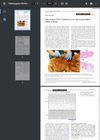
 The researchers investigated a Maine Coon cat with suspected classical Ehlers-Danlos Syndrome and discovered a heterozygous deletion in the COL5A1 gene, underscoring the value of whole-genome sequencing for precise veterinary diagnostics.
 2 citations
,
June 2024 in “International Journal of Drug Delivery Technology”
2 citations
,
June 2024 in “International Journal of Drug Delivery Technology” This review describes advanced drug delivery systems for dithranol aimed at overcoming stability issues and skin irritation seen in conventional formulations, highlighting options like nanoparticles and liposomes for improved psoriasis treatment.
39 citations
,
March 1997 in “The Lancet” Acquired perforating dermatosis often affects skin in people with kidney issues and diabetes.
July 2026 in “Journal of Investigative Dermatology” November 2024 in “Journal of Investigative Dermatology” October 2020 in “Open Repository of the University of Porto (University of Porto)” 6 citations
,
September 2025 in “Cosmetics” This study introduced laser-assisted exosome delivery and observed early signs of clinical improvement in two patients, though causality cannot be inferred from these preliminary, uncontrolled cases.