 60 citations
,
August 2008 in “Human molecular genetics online/Human molecular genetics”
60 citations
,
August 2008 in “Human molecular genetics online/Human molecular genetics” This study suggests that a position effect disrupting TRPS1 expression may be linked to hypertrichosis in both Ambras syndrome in humans and a similar phenotype in Koa mice.
 42 citations
,
January 2019 in “Frontiers in Immunology”
42 citations
,
January 2019 in “Frontiers in Immunology” This study identified diltiazem, a calcium channel blocker for hypertension, as a promising repurposed treatment for influenza, enhancing antiviral efficacy when combined with oseltamivir.
 37 citations
,
September 2017 in “Reumatología Clínica”
37 citations
,
September 2017 in “Reumatología Clínica” In this systematic review and meta-analysis, methotrexate and leflunomide were compared for treating rheumatoid arthritis, showing similar efficacy overall. Methotrexate reduced swollen joints more effectively, while leflunomide was associated with fewer gastrointestinal side effects but more frequent liver enzyme increases.
 36 citations
,
October 2000 in “British Journal of Dermatology”
36 citations
,
October 2000 in “British Journal of Dermatology” This study identified a distinct gene near the hairless locus on chromosome 8p that is responsible for hereditary Marie Unna type hypotrichosis in a German family.
 32 citations
,
August 1999 in “Journal of Investigative Dermatology”
32 citations
,
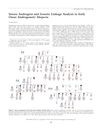
August 1999 in “Journal of Investigative Dermatology” This study found that individuals with early onset extensive androgenetic alopecia have an elevated ratio of DHT to testosterone, but no significant genetic linkage to markers on chromosomes 2 or 5 was detected.
 14 citations
,
July 2001 in “American Journal of Human Genetics”
14 citations
,
July 2001 in “American Journal of Human Genetics” Haplogroup X found in Altaian population supports Amerindian origin.
 9 citations
,
October 2021 in “Biological and Pharmaceutical Bulletin”
9 citations
,
October 2021 in “Biological and Pharmaceutical Bulletin” This study found that mupirocin nanoparticle-loaded hydrogel was safe and more effective for healing burn wounds in rats compared to mupirocin ointment, showing promise for future clinical trials.
 9 citations
,
March 2018 in “European journal of dermatology/EJD. European journal of dermatology”
9 citations
,
March 2018 in “European journal of dermatology/EJD. European journal of dermatology” This study in a Pakistani family identified a novel ST14 gene variant as the likely genetic cause of autosomal recessive ichthyosis with hypotrichosis syndrome.
 7 citations
,
December 2015 in “International Journal of Dermatology”
7 citations
,
December 2015 in “International Journal of Dermatology” In this study, researchers identified a novel and two previously reported pathogenic mutations in the HR gene associated with atrichia with papular lesions in five Pakistani families.
 6 citations
,
September 2024 in “BMC Pulmonary Medicine”
6 citations
,
September 2024 in “BMC Pulmonary Medicine” This study demonstrated that CEP may effectively treat pulmonary fibrosis by inhibiting fibroblast activation through regulating macrophage M2 polarization and decreasing fibrosis-associated factors, suggesting a new avenue for future research in this area.
 3 citations
,
July 2024 in “Frontiers in Pharmacology”
3 citations
,
July 2024 in “Frontiers in Pharmacology” This study demonstrates that Puerariae Lobatae Radix may regulate skin lipid metabolism by inhibiting sebaceous gland growth and reducing triglyceride secretion, highlighting its therapeutic potential for sebaceous gland-related conditions.
 2 citations
,
April 2019 in “Proceedings of Singapore Healthcare”
2 citations
,
April 2019 in “Proceedings of Singapore Healthcare” This study found that a collaborative care model in rheumatoid arthritis clinics improved nb-DMARD dose optimization, adherence to monitoring guidelines, and detection of related adverse drug events compared to standard care.
 1 citations
,
April 2024 in “Journal of Pharmaceutical and Pharmacological Sciences”
1 citations
,
April 2024 in “Journal of Pharmaceutical and Pharmacological Sciences” This study evaluated androgen-induced hair loss and anagen induction mouse models, finding that Minoxidil and Pyrilutamide significantly promoted hair growth by decreasing androgen receptor protein levels and enhancing the Wnt/β-Catenin signaling pathway, supporting their use in studying novel treatments for androgenetic alopecia.
 1 citations
,
October 2023 in “bioRxiv (Cold Spring Harbor Laboratory)”
1 citations
,
October 2023 in “bioRxiv (Cold Spring Harbor Laboratory)” This study demonstrated that intraoperative bioprinting using a bioink with human adipose-derived extracellular matrix and stem cells achieved successful reconstruction of full-thickness craniomaxillofacial skin defects in rats, promoting wound closure, adipogenesis, and hair follicle-like structure formation within two weeks.
 1 citations
,
June 2020 in “Annals of the rheumatic diseases”
1 citations
,
June 2020 in “Annals of the rheumatic diseases” In this study, 93% of patients with inflammatory arthritis remained on the adalimumab biosimilar ABP 501 for 24 weeks after switching from the originator, with some switching back due to adverse reactions or reduced effectiveness.
 1 citations
,
April 2019 in “Reumatología Clínica (English Edition)”
1 citations
,
April 2019 in “Reumatología Clínica (English Edition)” In this systematic review and meta-analysis, researchers found that methotrexate and leflunomide have similar efficacy for rheumatoid arthritis as first-line treatments, but methotrexate offered a greater reduction in swollen joints, while leflunomide was more associated with liver enzyme increases and fewer gastrointestinal side effects.
 1 citations
,
November 2015 in “Indian Journal of Clinical Biochemistry”
1 citations
,
November 2015 in “Indian Journal of Clinical Biochemistry” The conference presented findings on how vitamin D levels, genetic factors, and lifestyle choices like smoking and yoga affect various health conditions and diseases.
 December 2023 in “bioRxiv (Cold Spring Harbor Laboratory)”
 This study observed that extracellular matrix scaffold membranes performed less effectively in wound healing for aged mice compared to younger ones, with senescent SPP1+ macrophages potentially hindering epidermal and fibroblast repair abilities.
July 2022 in “International Journal of Science and Research (IJSR)” This study describes the development of an herbal hair oil using thirteen ingredients to address various hair problems like baldness, dandruff, and hair damage, although the abstract does not report results or evaluate efficacy.
 November 2020 in “Dubai medical journal”
 This case report described a 24-year-old with alopecia totalis who saw full scalp hair regrowth by the 9th month while using oral tofacitinib, which was well-tolerated and did not show serious adverse effects. Longer-term studies are needed to confirm its overall effectiveness for alopecia totalis.
 April 2018 in “bioRxiv (Cold Spring Harbor Laboratory)”
 This study identified a specific genetic variant in the CCHCR1 gene that may contribute to alopecia areata through impaired keratinization, suggesting an alternative mechanism beyond autoimmune causes.

This study found that proretinal nanoparticles, applied topically, are safe and effective for penetration into hair follicles, enhancing retinoid biological activity in the skin while reducing irritation compared to conventional retinal formulations.
25 citations
,
April 2019 in “Animals” In this study, KRTAP28-1 variants were associated with wool fibre diameter in sheep, suggesting potential as a gene marker for reducing fibre diameter.
73 citations
,
April 2017 in “Scientific Reports” In this study, nitrogen starvation in Chlorella sp. FC2 IITG led to increased lipid accumulation by altering the expression of enzymes involved in various metabolic pathways, suggesting potential for genetic engineering of microalgae.
This study, involving patients with early rheumatoid arthritis, found that treatment regimens combining methotrexate and glucocorticoids, with or without initial high-dose methylprednisolone, showed higher remission rates over one year compared to methotrexate or leflunomide alone, and all regimens were generally well-tolerated.
1 citations
,
June 2013 in “Annals of the Rheumatic Diseases” This study observed that while all DMARD regimens had similar safety profiles, the leflunomide group experienced the most serious side effects leading to therapy discontinuation.
February 2016 in “Annals of the Rheumatic Diseases” In this study, the researchers reported that the safety profile was similar across all DMARD treatment regimens for early rheumatoid arthritis, but the most severe side effects occurred in the leflunomide group.
 November 2024 in “Rheumatology Advances in Practice”
 Rheumatology clinics should always provide preconception counseling for women on DMARDs.
 April 2024 in “JEADV clinical practice”
 This study reports a case where a patient with rheumatoid arthritis and alopecia areata saw significant improvement in both conditions after switching to daily upadacitinib treatment, specifically achieving complete hair regrowth within six months.
November 1997 in “Open Archive (Karolinska Institutet)” This research observed that mutations in the PTCH gene are common in both sporadic and hereditary basal cell cancers, suggesting a critical role of the PTCH signaling pathway in skin tumor development.