 93 citations
,
April 2003 in “Proceedings of the National Academy of Sciences of the United States of America”
93 citations
,
April 2003 in “Proceedings of the National Academy of Sciences of the United States of America” This study identified an unexpected critical role for the FATP4 protein in skin and hair development in mice, linking it to a potential candidate gene for restrictive dermopathy in humans.
 2 citations
,
December 2016 in “Experimental cell research”
2 citations
,
December 2016 in “Experimental cell research” This study reveals that CSPG4-positive basal cell keratinocytes show distinct global gene expression from CSPG4-negative cells, despite similar colony-forming efficiency.
May 2010 in “Europe PMC (PubMed Central)” This chapter discusses the synthesis and analysis of near-infrared fluorescent activity-based probes for imaging cysteine protease activity, reporting potential benefits for disease diagnosis but noting challenges in imaging specific locations with high cathepsin activity.
 January 2025 in “Cellular and Molecular Biology”
 This study found that in Liaoning cashmere goats, overexpression of the PIP5K1A gene enhances skin fibroblast proliferation, while interference with this gene reverses melatonin-induced proliferation, and PIP5K1A regulates certain miRNA expressions, suggesting a role in improving cashmere yield and quality.
83 citations
,
February 1991 in “Development” This study found that Fos protein expression is closely linked to epithelial cell differentiation, particularly during cornification and cell death, with overexpression observed in keratinization-blocked mutant epidermis.
This study found that the Arabidopsis cation chloride cotransporter (CCC1) is crucial for regulating pH and processes in the trans-Golgi-network/early endosome, impacting plant growth and stress responses.
 77 citations
,
April 2009 in “British Journal of Dermatology”
77 citations
,
April 2009 in “British Journal of Dermatology” In this study, genetic variation in the CYP19A1 gene, particularly the common rs4646 C allele, was associated with an increased risk of female pattern hair loss, especially in women under 40.
January 2026 in “Applied Sciences” In this study, cyclic ADP-ribose (cADPR) treatment in human hair follicle dermal papilla cells was associated with increased intracellular calcium retention and activated anagen-related signaling without causing significant cytotoxicity, indicating its potential impact on hair growth processes.
 49 citations
,
November 2019 in “Egyptian Journal of Medical Human Genetics”
49 citations
,
November 2019 in “Egyptian Journal of Medical Human Genetics” This review discusses the role of CYP gene polymorphisms in exacerbating hyperandrogenism in women with PCOS and reports no clinical results; further validation of this hypothesis is needed.
 October 2024 in “Journal of the Endocrine Society”
 This study examined uncharacterized CYP21A2 gene variants related to non-classic congenital adrenal hyperplasia and found that several mutations reduce enzyme activity, which may help improve diagnostic and treatment strategies.
This study identified the Arabidopsis cation chloride cotransporter CCC1 as essential for regulating pH and function in the trans-Golgi network/early endosome, with its absence causing significant growth and stress response defects.

This study found that CYP21A2 gene mutations are the most common cause of non-classic congenital adrenal hyperplasia, while CYP11B1 mutations are rare and may partially impair enzyme activity.
 28 citations
,
July 2007 in “Development”
28 citations
,
July 2007 in “Development” In this study, inactivating the TAF4 subunit of transcription factor TFIID in mouse epidermis disrupted gene expression linked to skin and hair function, and increased tumor risk.

This study found that CPA-loaded nanoparticles, particularly SLN formulations, increased CPA epidermal penetration compared to a conventional cream and may reduce side effects in treating androgen-dependent conditions.
 October 2025 in “Proceedings of the National Academy of Sciences”
 This study identifies the PI4P-RHD4 module as a key regulator of GET pathway receptor dynamics in Arabidopsis, affecting TA protein insertion and root hair growth.
12 citations
,
August 2016 in “Biomedical Chromatography” This study developed and validated an HPLC-UV method for accurately quantifying clobetasol propionate in skin and hair follicles, demonstrating its application in in vitro permeation experiments.
 2 citations
,
December 2020 in “bioRxiv (Cold Spring Harbor Laboratory)”
2 citations
,
December 2020 in “bioRxiv (Cold Spring Harbor Laboratory)” This study found that SYP123 and VAMP727 are involved in the secretion and transport of inner cell wall components, which is crucial for hardening the root hair shank in Arabidopsis.
This study found that the Arabidopsis cation chloride cotransporter CCC1 is critical for regulating pH in the trans-Golgi network/early endosome, impacting plant growth and stress response.
 165 citations
,
September 2001 in “Genes & development”
165 citations
,
September 2001 in “Genes & development” This study found that Cutl1 mutant mice experienced retarded lung differentiation and abnormal hair follicle morphogenesis, indicating the vital role of CDP in lung development and hair follicle cell-lineage specification.
 20 citations
,
January 2017 in “Scientific reports”
20 citations
,
January 2017 in “Scientific reports” This study found that cetaceans have adapted their fibroblast growth factors to assist in low bone density, hypoxia tolerance, and the development of rigid flippers, reflecting significant evolutionary changes for aquatic life.
 April 2023 in “The journal of investigative dermatology/Journal of investigative dermatology”
 This study concluded that KLF4 is a crucial regulator of hair follicle stem cell quiescence and may work by interacting with multiple transcription factors to control related genes.
January 2008 in “Chinese Journal of Spectroscopy Laboratory” This study utilized a fluorescence probe to evaluate cysteine formation on hair fibers, finding that optimal fluorescence emission occurred at pH 4.5.
 May 2017 in “bioRxiv (Cold Spring Harbor Laboratory)”
 This study found that the peach gene CTG134, involved in auxin-ethylene interactions, plays a role in hormonal regulation during root hair formation in Arabidopsis and tobacco.
 4 citations
,
December 2014 in “European Journal of Chemistry”
4 citations
,
December 2014 in “European Journal of Chemistry” This study synthesized and characterized new 2-hydroxypyrrolidine/piperidine derivatives using FeCl₃·6H₂O as a catalyst, but it reports no biological or clinical results.

This invention reports piperazine derivatives as potent inhibitors of type 3 17β-hydroxysteroid dehydrogenase, suggesting potential therapeutic applications in treating prostate cancer, acne, and androgenic alopecia.
107 citations
,
April 2014 in “The Plant cell” In this study, researchers showed that the CAP1 gene regulates root hair growth in plants by modulating cytoplasmic ammonium levels and maintaining calcium gradients, highlighting its role in ammonium homeostasis.
4 citations
,
January 2025 in “The Journal of Cell Biology” This study found that deleting ceramide synthase 4 in skin epidermis stem cells disrupts hair follicle and skin barrier function, leading to immune responses similar to atopic dermatitis, due to imbalances in lipid composition affecting differentiation.
46 citations
,
November 2019 in “Journal of Integrative Plant Biology” This study found that calmodulin 7 (CaM7) inhibits the calcium channel CNGC14 in root hairs, affecting their polar growth by controlling calcium signaling.
 24 citations
,
July 2017 in “Structure”
24 citations
,
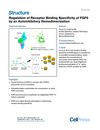
July 2017 in “Structure” In this study, researchers found that ligand homodimerization controls the receptor binding specificity of the FGF9 subfamily, preventing off-target activation of FGFR "b" isoforms.