 2 citations
,
January 2015 in “Sen'i Gakkaishi”
2 citations
,
January 2015 in “Sen'i Gakkaishi” This study found that washing hair after reduction in a permanent waving process allows for significant reformation of disulfide cross-links, enhancing the strength and elasticity of hair fibers.
 1 citations
,
January 2010 in “Journal of Cutaneous and Aesthetic Surgery”
1 citations
,
January 2010 in “Journal of Cutaneous and Aesthetic Surgery” The Journal of Cutaneous and Aesthetic Surgery is now included in PubMed.

This study found that sericin dressing containing collagen hydrolysate significantly reduced wound healing time and improved scar quality compared to commercial dressing in split-thickness skin graft donor sites.
6 citations
,
February 2021 in “Proteins” This study provides insight into the specific disulfide bond interactions between keratins and keratin associated proteins, suggesting non-random cysteine interactions crucial for stabilizing hair fiber structure.
April 2022 in “Microbiology and Immunology” This study suggests that a specific short sequence repeat in Malassezia restricta may be linked to increased colonization and the development or exacerbation of androgenetic alopecia.
July 1995 in “Journal of Dermatological Science” 2 citations
,
June 2025 in “Medicina” This retrospective study in pediatric patients with Sjögren's syndrome found consistent indications of tear film instability and identified systemic features like arthralgia, Raynaud's phenomenon, and frequent autoantibody positivity, underscoring the value of integrating clinical and ophthalmological assessments for early diagnosis.
 46 citations
,
July 2008 in “Dermatologic Therapy”
46 citations
,
July 2008 in “Dermatologic Therapy” This study developed and evaluated a photographic scale to assess CCCA pattern and severity in African American women, finding it reproducible when used by investigators and participants.
 April 2019 in “The journal of investigative dermatology/Journal of investigative dermatology”
 In this study, researchers found that CCCA in women of African descent is associated with molecular changes, including dysregulation of fatty acid metabolism and fibrosis pathways, suggesting potential targets for new treatments.
 September 2021 in “CRC Press eBooks”
 This article discusses features, genetics, and diagnostic challenges of central centrifugal cicatricial alopecia in African American women but reports no new clinical results.

This study found that patients with scalp seborrheic dermatitis exhibited distinct allergy sensitization patterns linked to skin barrier dysfunction and changes in scalp microbiota, suggesting the importance of context in interpreting patch test reactivity.
87 citations
,
July 2009 in “Journal of Cell Science” The researchers found that corneodesmosin is crucial for maintaining skin barrier integrity and hair follicle architecture in mice, with its deletion leading to severe skin and hair abnormalities.
November 2025 in “Informatica” This study introduces a novel image enhancement method that significantly improves the visual quality of low-light sports images by utilizing improved bilateral filtering and the CLAHE algorithm, achieving a 65.24% improvement in color and edge detail preservation compared to state-of-the-art methods on the LOL dataset.
 July 2022 in “medRxiv (Cold Spring Harbor Laboratory)”
 This review supports an autoimmune hypothesis for Satoyoshi syndrome, noting associations with autoantibodies and autoimmune diseases, and reports an observed improvement in most patients with corticosteroid or immunosuppressant treatments.
 15 citations
,
March 2021 in “Rheumatology and Immunology Research”
15 citations
,
March 2021 in “Rheumatology and Immunology Research” The CSTAR registry, the largest in China for SLE, reports more than 25,000 patients registered since 2009, detailing demographics, clinical characteristics, and providing data for future studies.
January 2016 in “e-Oftalmo CBO Revista Digital de Oftalmologia” This review discusses central serous chorioretinopathy, detailing its etiology, associated factors, diagnostic imaging, and therapeutic options, but provides no new clinical findings.
11 citations
,
January 1997 in “Journal of Dermatological Science” This study identified a human sequence likely coding for a new ultra-high sulphur protein, which may aid in understanding hair differentiation and the molecular basis of human trichothiodystrophy.
 January 2017 in “International journal of biomedical engineering and clinical science”
 This case report describes significant skin and oral mucosa lesions in a 19-year-old patient with cri-du-chat syndrome, highlighting their impact on her nutritional status and quality of life.
 19 citations
,
May 1984 in “Digestive diseases and sciences”
19 citations
,
May 1984 in “Digestive diseases and sciences” A young woman's Cronkhite-Canada syndrome improved on its own after she gave birth.
 5 citations
,
March 2013 in “International journal of surgical pathology”
5 citations
,
March 2013 in “International journal of surgical pathology” This case report illustrates that a diagnosis of Cronkhite-Canada syndrome can be made without the presence of polyps, as demonstrated by resolving symptoms with steroid treatment.
3 citations
,
January 2022 in “Burns & Trauma” This study found that CTHRC1 is crucial for sweat gland function and vascular network integrity in mice, and its administration improved sweat gland performance by reconstructing nearby blood vessels.
 16 citations
,
January 2023 in “Acta Biomaterialia”
16 citations
,
January 2023 in “Acta Biomaterialia” This study reported that a new bioinspired injectable hydrogel, CQCS@gel, showed promise as a multifunctional wound dressing by achieving rapid hemostasis and promoting the healing of infected skin wounds in both in vitro and in vivo tests.
7 citations
,
March 2022 in “The FASEB journal” This study observed that mice with a whole-body deficiency of Cystathionine-β-synthase developed severe hyperhomocysteinemia and related mild symptoms without increased mortality, indicating HHCy may not directly cause end organ damage.
 7 citations
,
July 2018 in “International Journal of Applied Pharmaceutics”
7 citations
,
July 2018 in “International Journal of Applied Pharmaceutics” This study found that optimizing chitosan-tripolyphosphate nanoparticles can enhance the sustained percutaneous delivery of caffeine, with certain conditions affecting stability and release rates.
 1 citations
,
April 2022 in “The Journal of Family Practice”
1 citations
,
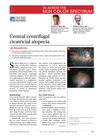
April 2022 in “The Journal of Family Practice” This report describes early and late stages of central centrifugal cicatricial alopecia in two Black women, highlighting progression from a small to a large central patch of hair loss.
87 citations
,
March 2007 in “Biological Chemistry” In this study, targeted deletion of the stearoyl-CoA desaturase 1 gene in mice disrupted the epidermal lipid barrier, leading to increased water loss, impaired thermoregulation, and metabolic issues.
June 2025 in “DiRROS repository (University of Maribor)” This study aimed to identify the factors that influence the clinical severity of scalp seborrheic dermatitis, although specific results are not reported.
 40 citations
,
November 1998 in “The journal of investigative dermatology/Journal of investigative dermatology”
40 citations
,
November 1998 in “The journal of investigative dermatology/Journal of investigative dermatology” This study found that the S100A3 gene is exclusively expressed in hair follicle cells differentiating into hair shaft components in mice, suggesting its important role in hair formation.
January 2022 in “Mammalian Genome” This study found that the wavy coat trait in Nakano cataract mice is polygenic, involving major and minor genes, and resembles human curly scalp hair associated with the PRSS53 gene alteration.
November 2020 in “Research Square (Research Square)” This study found that 7.80% of Chinese patients with systemic lupus erythematosus experienced scarring alopecia, with certain disease characteristics and treatments influencing its prevalence.