 March 2014 in “Journal of The American Academy of Dermatology”
 Cortexolone 17a-propionate may be an effective new treatment for hair loss.
 June 2020 in “International journal of research in dermatology”
 This study found that oral intake of choline-stabilized orthosilicic acid (ch-OSA®) significantly improved hair, skin, and nail health in the Indian population, with no reported side effects.
 1 citations
,
April 2022 in “The Journal of Family Practice”
1 citations
,
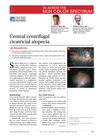
April 2022 in “The Journal of Family Practice” This report describes early and late stages of central centrifugal cicatricial alopecia in two Black women, highlighting progression from a small to a large central patch of hair loss.
6 citations
,
April 2012 in “Muscle & nerve” This letter to the editor documents a case where chronic inflammatory demyelinating polyneuropathy is associated with alopecia totalis and Sjögren syndrome, but reports no new clinical findings.
4 citations
,
December 2021 in “Journal of clinical laboratory analysis” This study identified a splicing-site deletion in the DCAF17 gene associated with Woodhouse-Sakati syndrome in a large consanguineous pedigree, leading to typical phenotypic features.
 146 citations
,
May 2002 in “The American journal of pathology”
146 citations
,
May 2002 in “The American journal of pathology” This study found that cathepsin L deficiency in mice led to significant abnormalities in hair follicle development and cycling, including disrupted hair shaft outgrowth and premature hair growth phase entry.
 July 2024 in “JAAD Case Reports”
 This study reports two cases of central serous chorioretinopathy developing after intralesional corticosteroid injections to the scalp for alopecia areata, suggesting a potential association that warrants cautious use and monitoring for ocular complications.
47 citations
,
March 1987 in “The Journal of dermatologic surgery and oncology” Carbon dioxide laser treatment effectively removed facial hair cysts without scarring or them coming back.
 5 citations
,
December 2011 in “Drug Research”
5 citations
,
December 2011 in “Drug Research” This study found that cortexolone 17α-propionate showed strong topical antiandrogenic activity, outperforming progesterone and several known antiandrogens, but lacked systemic antiandrogenic effects in animal models.
2 citations
,
January 2012 This study found that SESA oil significantly improved hair and scalp ailments more than coconut oil, with no adverse reactions reported during the study period.
3 citations
,
August 2024 in “Molecular Biology Reports” This study found that the lncRNA018392, responsive to melatonin, accelerates cell proliferation in cashmere goats by recruiting the transcription factor SPI1 to upregulate the nearby gene CSF1R, which may explain the molecular mechanisms of cashmere growth.
13 citations
,
October 2001 in “British Journal of Ophthalmology” This report discusses the use of intralesional cidofovir and suggests it might be a viable option for treating SCC due to its successful outcome without observed systemic toxicity in this case.
7 citations
,
March 2022 in “The FASEB journal” This study observed that mice with a whole-body deficiency of Cystathionine-β-synthase developed severe hyperhomocysteinemia and related mild symptoms without increased mortality, indicating HHCy may not directly cause end organ damage.
 16 citations
,
May 2013 in “Australasian Journal of Dermatology”
16 citations
,
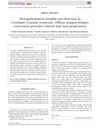
May 2013 in “Australasian Journal of Dermatology” In this study, detailed examinations of alopecic lesions in two female Cronkhite-Canada syndrome patients suggested hair regrowth might occur without systemic corticosteroids if not required for gastrointestinal treatment, and hair loss may begin with anagen-telogen transition.

In this case series, researchers reported an unexpectedly rapid and positive response to a topical, hydrogel-based botanical treatment for androgenetic alopecia in both male and female volunteers, achieving significant improvement in hair loss within 90 days instead of the planned 270 days.
March 2019 in “Reactions Weekly” September 2023 in “Journal of the American Academy of Dermatology” This study suggests that using the International Psoriasis Council's classification, which includes body surface area, special areas, and treatment history, may identify more candidates for systemic therapy than by body surface area alone.

This case report describes how unique endoscopic findings led to the diagnosis of Satoyoshi syndrome coexisting with systemic lupus erythematosus and gastric adenoma, expanding the endoscopic understanding of the syndrome.
 17 citations
,
July 2014 in “Expert Opinion on Biological Therapy”
17 citations
,
July 2014 in “Expert Opinion on Biological Therapy” This study concluded that the new subfractionation culturing method generates highly homogeneous adipose-derived stem cells with enhanced mitogenic, paracrine, and hair growth-promoting effects compared to traditional isolation methods.
 November 2023 in “L'Endocrinologo”
 This review examines the impact of polycystic ovary syndrome (PCOS) on women's sexual health, highlighting inconsistencies in existing research; it reports no new results.
 January 2019 in “Journal of Pharmacognosy and Phytochemistry”
 This study identified 14 different phytoconstituents in the methanolic fruit extract of Citrullus colocynthis, suggesting its potential pharmacological importance.
 April 2024 in “Materials today bio”
 In this study, the researchers developed a novel wound dressing incorporating copper-doped calcium silicate and curcumin, which significantly promoted nerve and blood vessel regeneration in deep burn wounds, emphasizing the crucial role of bioactive chelation in neuralized skin repair.
 3 citations
,
April 2022 in “Cutis”
3 citations
,
April 2022 in “Cutis” This article reviews central centrifugal cicatricial alopecia, particularly in women of African descent, and explains its progression and symptoms but provides no new clinical findings.
 January 2025 in “International Journal of Gynaecology Research”
 This study found that serum cystatin C levels may be elevated in adolescent females with PCOS, suggesting it could serve as a predictive marker for metabolic and cardiovascular issues independent of renal function.
 29 citations
,
March 2010 in “Journal of Endocrinological Investigation”
29 citations
,
March 2010 in “Journal of Endocrinological Investigation” In this study, women with polycystic ovary syndrome had significantly higher lipocalin-2 levels compared to controls, suggesting it may be a useful marker for insulin resistance in this population.
July 2019 in “Dermatologic Surgery” This abstract provides contact information for François Kuonen at the Lausanne University Hospital Center and reports no new research findings.
 June 2019 in “Journal of Aesthetic Nursing”
 This article describes Amy Senior's evolving views on the Joint Council for Cosmetic Practitioners and reports no new research findings.
August 2023 in “Zenodo (CERN European Organization for Nuclear Research)” This study examined Indian women with Polycystic Ovarian Syndrome and found that those using a disengagement coping style experience higher levels of depression, anxiety, and stress, which negatively impacts their quality of life.
 11 citations
,
August 2010 in “Pediatric dermatology”
11 citations
,
August 2010 in “Pediatric dermatology” This report details two cases of Lichen spinulosus in the submental area, treated effectively and safely with topical tacalcitol cream.
5 citations
,
October 2001 in “British Journal of Ophthalmology” This abstract describes the initial success of intralesional cidofovir for SCC treatment and states that it has not shown systemic toxicity, but it does not report new clinical trial results.