July 2018 in “Chinese Journal of Dermatology” The study found that a modified two-step enzyme digestion method was an efficient and rapid technique for isolating human axillary dermal papilla cells from a few specimens.
 29 citations
,
March 2008 in “Dermatologic Surgery”
29 citations
,
March 2008 in “Dermatologic Surgery” This study developed a prototype device that suggests potential for diagnosing changes in hair quantity, diameter, and density, though formal clinical studies are needed to confirm these findings.
January 2004 in “Drug Development and Industrial Pharmacy” This study explored the solubility and crystal structure of GI197111X, a 5-alpha reductase inhibitor for androgenetic alopecia, finding its solubility in Capmul MCM suitable for a soft gel dosage form.
88 citations
,
January 1981 in “British Journal of Dermatology” This study describes a new method for culturing human hair follicle cells, achieving 70% successful growth of keratinocyte colonies using a bovine eye lens capsule substrate.
17 citations
,
January 2020 in “Molecules” This study found that 42% of red yeast rice dietary supplements did not list monacolin concentrations on their labels, and only half of those that did contained the declared amounts.
9 citations
,
December 2021 in “Molecules” This study found that certain metabolites from the plants Bidens pilosa, Calophyllum inophyllum, and Fagraea berteroana may support hair follicle growth by promoting dermal papilla cell proliferation, supporting their traditional use in hair care.
5 citations
,
April 2014 in “Journal of Lipid Research” This study demonstrates a method to noninvasively assess lipid classes in rodent sebum via high-field proton NMR, observing significant lipid reductions in rats treated with an SCD1 inhibitor.

This research reports that transglucosylation significantly improved the water solubility of baicalin through the synthesis of baicalin glucosides, with BG1 and BG2 showing enhanced solubility and potential biological activity similar to baicalin in antioxidant and anti-glycation assays.
 June 1999 in “Proceedings of SPIE”
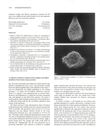
 The study suggests that CO₂ laser creates hair transplant channels with significantly less lateral thermal damage than Ho:YAG laser in the human scalp.
 8 citations
,
September 1993 in “British journal of dermatology/British journal of dermatology, Supplement”
8 citations
,
September 1993 in “British journal of dermatology/British journal of dermatology, Supplement” This study reports a new method for efficiently isolating hair papillae and follicle epithelium from human scalp specimens but presents no clinical results.
 April 2018 in “The journal of investigative dermatology/Journal of investigative dermatology”
 This study found that in a mouse model of Focal Dermal Hypoplasia, treatment with lithium carbonate improved skin disease symptoms compared to controls, though disease severity varied and posed interpretation challenges.
 3 citations
,
July 2018 in “Biomedicine & pharmacotherapy”
3 citations
,
July 2018 in “Biomedicine & pharmacotherapy” This study suggests that paeoniflorin's protective effects on brain astrocytes may be mediated by TSPO and neurosteroids biosynthesis.
 26 citations
,
April 1999 in “Dermatologic Clinics”
26 citations
,
April 1999 in “Dermatologic Clinics” This article reviews the basics of hair follicle biology, laser/tissue interactions, and hirsutism and hypertrichosis causes, discussing the long-pulsed alexandrite laser's role in hair reduction without reporting new clinical results.
 December 2025 in “BMC Medical Genomics”
 This study demonstrated that RNA-seq can effectively expand hair follicle transcriptomic profiling in a multi-center study, offering deeper insights than blood transcriptomics alone.
13 citations
,
July 2019 in “Chemical papers/Chemické zvesti” This study developed and optimized a molecularly imprinted polymer-based electrochemical sensor, demonstrating its ability to detect minoxidil with high sensitivity and selectivity at concentrations as low as 0.3 nM, and successfully applied it for minoxidil measurement in various real sample matrices.
June 2026 in “Journal of Clinical Microbiology” This abstract reports no new research findings; it includes an educational image of microorganisms found in a skin biopsy.
26 citations
,
January 1964 in “Experimental Cell Research”  10 citations
,
June 2014 in “Journal of Pharmacy and Pharmacology”
10 citations
,
June 2014 in “Journal of Pharmacy and Pharmacology” This study found that antiandrogenic compounds in Curcuma aeruginosa, including germacrone, degrade rapidly at high temperatures but are more stable when solubilized in PEG-40.
 11 citations
,
February 2019 in “Research and reports in forensic medical science”
11 citations
,
February 2019 in “Research and reports in forensic medical science” This article discusses the use of forensic DNA phenotyping to infer physical characteristics from biological samples without a reference sample, aiding investigations but raising ethical and legal concerns.
 10 citations
,
January 2015 in “Skin appendage disorders”
10 citations
,
January 2015 in “Skin appendage disorders” This study suggests that while low-cost videomicroscopes can correctly identify hair shaft alterations, they may be unreliable for detailed follicular and perifollicular trichoscopic examination compared to standard videodermatoscopes.
50 citations
,
May 2020 in “FEBS Letters” This review discusses techniques for analyzing the cell cycle, highlighting emerging tools for measuring cell cycle speed at single-cell resolution in live animals, and reports no new results.
117 citations
,
September 2003 in “Molecular & cellular proteomics” This study demonstrated the development of high-density protein microarrays allowing for antibody binding characterization and serum profiling from patients with autoimmune diseases, suggesting potential for diagnostic marker discovery.
 15 citations
,
October 2020 in “European journal of pharmaceutics and biopharmaceutics”
15 citations
,
October 2020 in “European journal of pharmaceutics and biopharmaceutics” This study reported that combining microdialysis and selective follicular closure with varnish significantly reduces caffeine penetration through hair follicles in an ex vivo porcine ear skin model.
49 citations
,
September 2004 in “Journal of the European Academy of Dermatology and Venereology” This study found that careful light microscopy using fluid-mounted hair improves detection of the pili annulati phenotype, which varies widely in expression and affects hair fragility.
 16 citations
,
August 2015 in “Journal of Experimental & Clinical Cancer Research”
16 citations
,
August 2015 in “Journal of Experimental & Clinical Cancer Research” This study found that active telethermography could help identify cancerization fields in individuals with actinic keratosis by detecting hyperthermic halos around tumors, which showed significant changes after treatment with a photolyase device.
 June 2025 in “Indian Journal of Heterocyclic Chemistry”
 In this study, researchers developed a precise and rapid method for simultaneously analyzing minoxidil and finasteride in local therapeutic formulations, ensuring that the excipients did not interfere, making it suitable for routine quality control.
 June 2026 in “The Journal of the Kyushu Dental Society”
 This study reviews the development of a mouse model using pyroxylin to induce localized hair growth and shorten the hair cycle's resting phase, suggesting it as a platform for evaluating hair growth treatments, though further research is needed for human application.
 April 2017 in “Journal of Investigative Dermatology”
 This study demonstrates that genome-edited epidermal stem cells can continuously monitor blood glucose levels in vivo and potentially aid in diabetes treatment through skin somatic gene therapy.
4 citations
,
January 1993 in “Clinical Chemistry and Laboratory Medicine (CCLM)” This study developed a highly sensitive fluorescent assay for measuring enzyme activity in single hair follicles, allowing the efficient analysis of over 100 samples per day.
 May 2023 in “Stem cell research & therapy”
 This study describes a novel method using force-triggered density gradient sedimentation for efficiently isolating dermal papilla cells from neonatal mouse skin, showing promise for hair follicle regeneration research.