 September 2017 in “Springer eBooks”
 Low-level laser therapy seems to promote hair growth but requires more research to confirm its effectiveness.
 6 citations
,
April 2012 in “Lasers in surgery and medicine”
6 citations
,
April 2012 in “Lasers in surgery and medicine” This study observed that persistent urticaria is a rare side effect of laser epilation, potentially linked to a hypersensitivity reaction in patients with allergies.
March 2025 in “Tissue and Cell” In this study, cryopreserved fibroblast cell sheets cultured on a new substrate showed significantly enhanced healing of cutaneous ulcers in diabetic and immunodeficient mice, suggesting potential effectiveness for refractory skin wounds.
 June 2022 in “International Journal of Biomedicine”
 In this study, a 3-month treatment with a 2940 nm Er:YAG laser, combined with conventional therapy, effectively reduced microfibrosis around hair follicles and increased hair growth in the anagen stage among 85 men with androgenetic alopecia.
June 2025 in “Problems of Cryobiology and Cryomedicine” In this study, the researchers found that tyndallization effectively sterilizes aqueous solutions of hyaluronic acid without diminishing their regenerative properties, and these properties remain intact even at low temperatures, supporting potential applications in cryobiology and cryomedicine.
36 citations
,
June 2016 in “Journal of dermatological treatment” This study found that a combination of low-fluence Q-switched 1064 nm Nd:YAG laser, hydroquinone cream, and oral tranexamic acid showed promising results for Riehl’s melanosis in Asian patients, with no serious adverse events reported.
 November 2022 in “The journal of investigative dermatology/Journal of investigative dermatology”
 This study generated a transcriptomic map of human hair follicles, identifying compartment-specific gene expression profiles that can aid in developing targeted therapies for hair follicle disorders.
 1 citations
,
January 2022 in “The Egyptian Journal of Hospital Medicine ”
1 citations
,
January 2022 in “The Egyptian Journal of Hospital Medicine ” This study found that both superficial cryotherapy and intralesional corticosteroid injections significantly improved hair growth in patients with alopecia areata, with similar efficacy between the two treatments, establishing cryotherapy as a simple and noninvasive treatment option.
In this randomized controlled trial at Bolan Medical Complex Hospital, researchers observed that liquid nitrogen cryotherapy increased hair regrowth by 60% in alopecia areata patients, significantly outperforming alternative treatments, which achieved 40% regrowth.
 2 citations
,
August 2020 in “Dermatologic Therapy”
2 citations
,
August 2020 in “Dermatologic Therapy” This study found that increasing energy fluence, session duration, and using pulsed irradiation significantly enhance hair regrowth in androgenetic alopecia when using low-level laser therapy, while the number of diodes does not affect outcomes.
11 citations
,
January 2015 in “PubMed” This study found that the 2,940 nm erbium: YAG laser may promote hair growth in C57BL/6 mice by speeding up transitions in the hair cycle and increasing hair follicle numbers.
 August 2018 in “Journal of Investigative Dermatology”
 This study found that combining optical clearing methods with light-sheet fluorescence microscopy allows detailed 3D visualization of normal and pathological human skin biopsies, revealing differences in epidermal thickness and volume.
9 citations
,
November 1999 in “Annals of Plastic Surgery” This study found that ruby laser hair removal causes microscopic epidermal damage but does not lead to cellular hyperproliferation, unlike ultraviolet-irradiated cell damage.
July 2025 in “Journal of Oncology Research and Therapy” July 2026 in “Journal of Dermatological Treatment” This study observed that excimer laser therapy led to subjective improvements in hair appearance for 60% of scarring alopecia patients and reduced symptoms like scalp pain, burning, and pruritus, indicating potential as an adjunctive treatment for inflammatory control and disease stabilization.
April 2026 in “Frontiers in Medicine” This study observed that 675-nm diode laser therapy may serve as a safe and possibly effective adjuvant treatment for telogen effluvium, showing improvements in hair pull test results, pruritus, and trichodynia among patients. However, controlled studies are needed to confirm its efficacy.
 September 2024 in “Journal of the American Academy of Dermatology”
 This study found that both fractional and excimer lasers are effective in increasing hair density and promoting regrowth in various types of alopecia, although further trials are needed to compare their efficacy to more traditional treatments.
 16 citations
,
November 2016 in “Journal of Cosmetic and Laser Therapy”
16 citations
,
November 2016 in “Journal of Cosmetic and Laser Therapy” This review highlights that laser and light treatments could serve as safe and effective alternatives to current therapies for alopecia areata, with the excimer laser showing positive results, though further randomized controlled trials are necessary to establish optimal treatment protocols.
 November 2024 in “Health Science Reports”
 This systematic review found that light and laser therapies, including excimer and erbium-glass lasers, generally increase hair density and diameter in various types of alopecia, with particularly notable effects in androgenic alopecia but limited efficacy in telogen effluvium.
January 2026 in “SSRN Electronic Journal” January 2019 in “Journal of clinical and cosmetic dermatology” This article discusses the potential of combining growth factor therapy with LLLT LED therapy for hair regrowth in androgenetic alopecia, but it does not report new clinical results.
7 citations
,
May 2014 in “Iranian Red Crescent medical journal” This case study describes a 17-year-old female with severe hirsutism diagnosed with PCOS, NC-CAH, and HAIR-AN syndrome who was successfully treated based on her specific underlying conditions.
This study concluded that using Plasma gel and PRP as autologous collagen biostimulators improved acne scars and skin density, demonstrating efficiency and safety for facial rejuvenation in clinical evaluations including patient satisfaction.
April 2026 in “Spectrochimica Acta Part A Molecular and Biomolecular Spectroscopy” 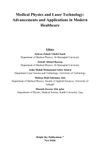 January 2025 in “Bright Sky Publications eBooks”
 This abstract does not report specific research findings but describes a book titled "Medical Physics and Laser Technology: Advancements and Applications in Modern Healthcare," authored by Zahraa Zuhair Ghafel Saeid and colleagues, which is available for purchase.
 July 2024 in “Journal of Cosmetic Dermatology”
 This article highlights that fractionated laser therapy is gaining attention as a minimally invasive and effective treatment for androgenetic alopecia, offering a potential solution to traditional treatments' limitations.
 September 2005 in “Clinics in Plastic Surgery”
 This article discusses multiple aspects of complex regional pain syndrome, including its diagnosis, pathogenesis, and treatment, but reports no new scientific findings.
 February 2024 in “Journal of Cosmetic Dermatology”
 This clinical trial found that combining fractional CO2 laser with bimatoprost solution significantly improved alopecia areata treatment outcomes compared to bimatoprost alone, as measured by a more substantial reduction in SALT scores and higher patient satisfaction over 12 weeks.
5 citations
,
January 2020 in “Acta dermatovenerologica Alpina, Pannonica et Adriatica (Tiskana izd.)” This study found that PRP was effective for treating alopecia areata with similar improvement across groups, while topical delivery via fractional CO2 laser or microneedling reduced injection pain.
2 citations
,
June 2024 in “Skin Research and Technology” This study found that low-level laser stimulation activates the Wnt signaling pathway, promoting hair follicle stem cell regeneration and accelerating wound healing.