 7 citations
,
July 2018 in “International Journal of Applied Pharmaceutics”
7 citations
,
July 2018 in “International Journal of Applied Pharmaceutics” This study found that optimizing chitosan-tripolyphosphate nanoparticles can enhance the sustained percutaneous delivery of caffeine, with certain conditions affecting stability and release rates.

This research concluded that the novel hydrogel PlacMA, derived from human placenta and curable by visible light, shows promise for cell culture and tissue engineering applications due to its tunable properties.
 March 2025 in “GSC Biological and Pharmaceutical Sciences”
 In this review, the authors examined the potential benefits of using wood tar in dermatology and cosmetics in Sub-Saharan Africa, based on its historical application in skin care and its worldwide usage.
 41 citations
,
September 2017 in “Advanced Healthcare Materials”
41 citations
,
September 2017 in “Advanced Healthcare Materials” This study found that the DexIEME hydrogel promotes complete skin regeneration and scar attenuation in murine and porcine models, suggesting potential for treating deep dermal injuries.
 9 citations
,
April 2025 in “International Journal of Nanomedicine”
9 citations
,
April 2025 in “International Journal of Nanomedicine” This research highlights a hydrogel system that could significantly improve diabetic wound healing by releasing ibuprofen to both suppress inflammation and promote tissue regeneration, indicating a strong potential for future clinical use.
This study used molecular dynamics simulations to illustrate the complex molecular behavior of the hair surface F-layer, highlighting how fatty acids interact with 18-MEA under different conditions.
 January 2019 in “Springer eBooks”
 Modified HDL can better deliver drugs and genes, potentially improving treatments and reducing side effects.
 28 citations
,
February 2014 in “PLoS ONE”
28 citations
,
February 2014 in “PLoS ONE” This study reports that transplantation of an ESCs-collagen-chitin biomimetic membrane leads to successful in situ skin regeneration, including hair follicle cell proliferation and formation of dermatoglyphs, in nude mice with full-thickness skin defects.
 16 citations
,
October 2015 in “Photochemistry and photobiology”
16 citations
,
October 2015 in “Photochemistry and photobiology” This study found that higher concentrations of copper (II) ions in human hair increase protein oxidative modification, contributing to hair damage regardless of UV exposure and pigmentation level.
 March 2026 in “The Indian Journal of Animal Sciences”
 This study on Indian dromedary camel breeds investigated the KRTAP7 protein, finding all four breeds shared an identical gene sequence, with 13 phosphorylation and glycosylation sites influencing hair characteristics, alongside predicted interactions with other biosynthesis-related proteins.
 December 2025 in “Universal library of medical and health sciences.”
 This study analyzes contemporary theories and practices to understand key factors influencing the development of the examined phenomenon, proposing trends and practical applications for researchers and practitioners, while acknowledging study limitations and suggesting future research directions.
 January 2024 in “International Journal of Pharmaceutical Research and Development”
 This study explored the development of herbal hair gels using natural extracts like flaxseed and guava leaves, targeting the reduction of dandruff and regulation of hair loss through antimicrobial and anti-inflammatory properties, though specific results of efficacy are not reported.
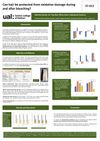 September 2018 in “University of the Arts London Research Online (University of the Arts London)”
 This study assessed three materials—L-arginine, hydrolysed keratin, and cystine-silanol copolymer—ex vivo for their potential to reduce undesirable effects of hair bleaching, such as damage to hair proteins.
 April 2026 in “International Journal of Nanomedicine”
 This review explores quercetin's potential in multifunctional theranostic systems, highlighting its bioactivity and the challenges of improving its clinical application through innovative strategies like nanoencapsulation, while noting that research in this area is underdeveloped.
 425 citations
,
January 2021 in “SN Applied Sciences”
425 citations
,
January 2021 in “SN Applied Sciences” This article highlights the versatility and potential of alginate and its derivatives in tissue engineering applications, discussing their properties, modification techniques, and various uses in enhancing tissue healing, bone regeneration, and cell growth.
 130 citations
,
January 2017 in “International journal of nanomedicine”
130 citations
,
January 2017 in “International journal of nanomedicine” This study found that Na CMC hydrogel loaded with PEG-coated silver nanoparticles demonstrated superior antibacterial and wound-healing efficacy compared to commercial silver sulfadiazine cream in a wound-healing model.
 118 citations
,
May 2015 in “European journal of pharmaceutics and biopharmaceutics”
118 citations
,
May 2015 in “European journal of pharmaceutics and biopharmaceutics” This study found that the pH-sensitive hydrogel HECHA13, containing isoliquiritigenin, effectively inhibited the growth of Propionibacterium acnes and showed promise for transdermal delivery in acne treatment.
 41 citations
,
August 2024 in “Drug Delivery and Translational Research”
41 citations
,
August 2024 in “Drug Delivery and Translational Research” This review discusses the development and applications of microneedles, particularly through 3D printing, highlighting their potential in transdermal drug delivery but reporting no new results.
 26 citations
,
August 2016 in “ACS Applied Materials & Interfaces”
26 citations
,
August 2016 in “ACS Applied Materials & Interfaces” In this study, cell membrane remodeling with a thermoresponsive boronic acid copolymer was shown to rapidly form spheroids from cancer or cardiac cell lines under standard conditions, promising advances in tissue engineering.
 25 citations
,
May 2020 in “Progress in Organic Coatings”
25 citations
,
May 2020 in “Progress in Organic Coatings” This study found that bio-based waterborne polyurethanes derived from castor oil may offer effective hair-styling performance without skin irritation and appear to be safer for the environment compared to traditional hair sprays.
 23 citations
,
June 2017 in “Rejuvenation Research”
23 citations
,
June 2017 in “Rejuvenation Research” In this study, minoxidil treatment in aged mice increased elastin expression and improved aortic structure and function, suggesting its potential for arterial remodeling in aging.
 17 citations
,
June 2019 in “Cellular signalling”
17 citations
,
June 2019 in “Cellular signalling” Minoxidil treatment in mice preserved the integrity of elastic lamellae and improved arterial biomechanical properties, especially in females, suggesting it could be an anti-arterial aging agent potentially suitable for female-targeted therapies.
 14 citations
,
January 2020 in “Biomaterials Science”
14 citations
,
January 2020 in “Biomaterials Science” Created microspheres show potential for safe and effective use in prostate artery embolization.
 12 citations
,
March 2020 in “Journal of Bioactive and Compatible Polymers”
12 citations
,
March 2020 in “Journal of Bioactive and Compatible Polymers” This study found that finasteride- and minoxidil-loaded nanoparticles in a gel improved skin permeability and drug retention, suggesting a promising approach for topical alopecia treatment with reduced dosing frequency and side effects.
![Synthesis and Structural Characterization of a New Dinuclear Platinum(III) Complex, [Pt2Cl4(NH3)2{μ-HN=C(O)Bu^t}2]](/images/assets/fcbeee85-f5bd-406e-936d-9134a0f200d4/small/36266.jpg) 2 citations
,
November 2022 in “Acta crystallographica. Section B, Structural science, crystal engineering and materials./Acta crystallographica. Section B, Structural science, crystal engineering and materials”
2 citations
,
November 2022 in “Acta crystallographica. Section B, Structural science, crystal engineering and materials./Acta crystallographica. Section B, Structural science, crystal engineering and materials” This study reports the synthesis and structural characterization of a novel dinuclear platinum(III) complex with potential antitumor and catalytic activity.
 2 citations
,
January 2024 in “Pakistan Veterinary Journal”
2 citations
,
January 2024 in “Pakistan Veterinary Journal” This review highlights the potential of hydrogels in veterinary medicine, emphasizing their advantages over traditional wound dressings and their promising applications in drug delivery and tissue engineering, despite currently limited use in this field.
 2 citations
,
September 2023 in “Scientific reports”
2 citations
,
September 2023 in “Scientific reports” This study reports that zinc oxide or silver nanoparticles capped with vitamin A or E, incorporated into wheat gluten films, showed significant potential in promoting burn wound healing in mice by facilitating wound contraction, re-epithelialization, and collagen deposition, while also exhibiting antioxidant and antibacterial properties.
 1 citations
,
June 2025 in “Frontiers in Bioengineering and Biotechnology”
1 citations
,
June 2025 in “Frontiers in Bioengineering and Biotechnology” This review examines glycopeptide hydrogels as biomimetic materials for tissue regeneration and other biomedical applications, describing their design, properties, and potential uses, and highlighting future advancements in replicating natural tissue environments for precision medicine.
 1 citations
,
January 2025 in “BIO Integration”
1 citations
,
January 2025 in “BIO Integration” This review highlights that the combination of ultrasound and microneedles can enhance transdermal drug delivery by using physical and energy-driven mechanisms to improve drug penetration into deeper skin layers, with implications for precision medicine and chronic disease treatments.
 1 citations
,
October 2023 in “bioRxiv (Cold Spring Harbor Laboratory)”
1 citations
,
October 2023 in “bioRxiv (Cold Spring Harbor Laboratory)” This study demonstrated that intraoperative bioprinting using a bioink with human adipose-derived extracellular matrix and stem cells achieved successful reconstruction of full-thickness craniomaxillofacial skin defects in rats, promoting wound closure, adipogenesis, and hair follicle-like structure formation within two weeks.