 May 2015 in “Journal of the American Academy of Dermatology”
 Certain drugs and supplements may contribute to hair loss in the frontal hairline in older women.
 January 2025 in “Bioengineering”
 This study evaluated the long-term effects of combining autologous platelet-rich stroma injection with transanal advancement flap repair for cryptoglandular transsphincteric fistulas and found that it resulted in primary clinical closure and radiological healing in a high percentage of patients, with low recurrence rates.
 23 citations
,
September 2020 in “Journal of Cosmetic Dermatology”
23 citations
,
September 2020 in “Journal of Cosmetic Dermatology” This review discusses the potential applications of injectable platelet‐rich fibrin in various conditions and reports no new clinical results; the authors highlight its favorable use in comparison to existing treatments.
21 citations
,
March 2018 in “JEADV. Journal of the European Academy of Dermatology and Venereology/Journal of the European Academy of Dermatology and Venereology” This review reported that 5-alpha-reductase inhibitors were effective in stabilizing disease progression or reducing the rate of progression in some cases of frontal fibrosing alopecia, though evidence on safety remains limited.
 9 citations
,
January 2018 in “Journal of the European Academy of Dermatology and Venereology”
9 citations
,
January 2018 in “Journal of the European Academy of Dermatology and Venereology” A male patient developed frontal fibrosing alopecia after antiandrogen therapy for prostate cancer.
1 citations
,
June 2021 in “Journal of Korean Medicine for Obesity Research” Corni Fructus extract may help manage benign prostatic hyperplasia by reducing prostate cell growth and inflammation.
84 citations
,
September 2008 in “Developmental biology” This study found that cellular retinoic acid-binding proteins and fatty acid-binding proteins are dynamically expressed in skin development and respond differently to retinoic acid, β-catenin, and Notch signaling.
198 citations
,
September 2007 in “Clinics in Dermatology” Radiofrequency devices effectively tighten skin without surgery.
4 citations
,
September 2013 in “Journal of biomolecular structure and dynamics/Journal of biomolecular structure & dynamics” This study suggests that caribine may enhance the interaction between CRFR and maltose binding protein, potentially offering a new approach for treating hair loss.
 8 citations
,
October 2018 in “Journal of The American Academy of Dermatology”
8 citations
,
October 2018 in “Journal of The American Academy of Dermatology” This study evaluated treatments for frontal fibrosing alopecia and found hydroxychloroquine and 5a-reductase inhibitors to be most effective, with 70-72% of patients experiencing stabilization or improvement, but limitations in treatment consistency and assessment methods remain.
 6 citations
,
January 2019 in “Medical Hypotheses”
6 citations
,
January 2019 in “Medical Hypotheses” This hypothesis article explores frontal fibrosing alopecia as a potential autoimmune condition and calls for future research to investigate this possibility, but reports no new clinical results.
 55 citations
,
June 2013 in “Dermatologic Surgery”
55 citations
,
June 2013 in “Dermatologic Surgery” This review discusses the use of ablative and nonablative fractional resurfacing for enhanced topical drug delivery in dermatology and reports no new clinical results; further studies are needed to explore these methods.
 7 citations
,
October 2015 in “Actas Dermo-Sifiliográficas”
7 citations
,
October 2015 in “Actas Dermo-Sifiliográficas” This article reviews the increasing incidence of frontal fibrosing alopecia since its first description in 1994 and reports no new results.
 4 citations
,
March 2018 in “Journal of labelled compounds & radiopharmaceuticals”
4 citations
,
March 2018 in “Journal of labelled compounds & radiopharmaceuticals” In this study, researchers developed a new prostate cancer imaging agent, a [99m Tc]tricarbonyl complex derived from finasteride, which demonstrated high radiochemical purity and significant uptake in the prostate of a rat model, suggesting its potential for noninvasive prostate cancer imaging.
October 2002 in “Atherosclerosis Supplements” LDL apheresis lowers inflammation and cardiovascular risk by reducing CRP levels long-term.
January 2005 in “Psychoneuroendocrinology” In this study, finasteride altered the expression of nine proteins in the rat nucleus accumbens, suggesting new therapeutic targets and mechanisms for its effects on neuropsychiatric conditions.
37 citations
,
December 2020 in “PLANT PHYSIOLOGY” In this study, the researchers identified a temperature-sensitive mutant in Arabidopsis thaliana, showing disrupted root hair formation and altered responses to plant hormone treatments at elevated temperatures.
 65 citations
,
February 2009 in “The journal of investigative dermatology/Journal of investigative dermatology”
65 citations
,
February 2009 in “The journal of investigative dermatology/Journal of investigative dermatology” This paper discusses the hypothesis that anti-acne agents may work by reducing FGFR2 signaling, and emphasizes FGFR2's potential role in acne pathogenesis, but it reports no new experimental findings.
 9 citations
,
March 1991 in “Endocrinology”
9 citations
,
March 1991 in “Endocrinology” This study in rats suggests that combining the 5 alpha-reductase inhibitor 4-MA with the antiandrogen Flutamide may enhance prostate cancer therapy by additively inhibiting prostatic growth and mRNA levels of androgen-sensitive prostatic binding proteins.
3 citations
,
May 2024 in “Indian Journal of Dermatology” In this case report, researchers identified a potential adverse skin reaction, called SDRIFE or Baboon syndrome, caused by the drug tofacitinib in a 19-year-old woman being treated for alopecia subtotalis, leading the authors to recommend discontinuation of the drug.
 1 citations
,
July 2016 in “British Journal of Dermatology”
1 citations
,
July 2016 in “British Journal of Dermatology” Men with a certain type of hair loss often use facial moisturizers, and a specific antibiotic treatment may help another hair condition.
 5 citations
,
August 2019 in “iScience”
5 citations
,
August 2019 in “iScience” In this study, Trf1 genetic deletion in mice, including those with cancer-prone mutations, was shown to not affect overall viability and cause only mild effects, while being necessary for tumor formation, suggesting a potential therapeutic window for Trf1 as an anti-cancer target.
 6 citations
,
January 2013
6 citations
,
January 2013 This chapter reviews hyperadrenocorticism in ferrets, covering its causes, symptoms, diagnosis, and treatment options, but reports no new research findings.
 September 2001 in “PubMed”
 This study developed a non-destructive X-ray fluorescence technique to quantitatively analyze elemental content in human hair and constructed a database of element concentrations in healthy Swedish, Caucasian individuals.
 5 citations
,
June 2024 in “Cureus”
5 citations
,
June 2024 in “Cureus” In a study involving adults with mild to moderate dandruff, researchers observed that post-hair wash interventions significantly reduced dandruff as measured by three assessment methods, showing substantial reliability and correlation, which supports their use in clinical settings for evaluating scalp dandruff treatments.
29 citations
,
June 2015 in “Kidney International” This study developed a kidney-specific knockout mouse model lacking the Flcn gene, which recapitulates human Birt-Hogg-Dubé kidney tumorigenesis and shows that mTOR pathway inhibition with rapamycin can suppress tumor growth.
 July 1991 in “Endocrinology”
 This study suggests that combining the 5α-reductase inhibitor 4-MA with the antiandrogen Flutamide may improve prostate cancer therapy by additively inhibiting prostatic growth and androgen-sensitive functions in rats.
10 citations
,
September 2021 in “The FASEB Journal” This study found that ACKR2 plays a crucial role in reducing inflammatory skin fibrosis and promoting inflammation resolution through IFN‐β production, limiting tissue scarring.
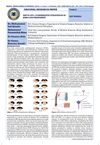 November 2025 in “PARIPEX-INDIAN JOURNAL OF RESEARCH”
 GFC is more effective than PRP for treating hair loss.
 11 citations
,
September 2016 in “Journal of virological methods”
11 citations
,
September 2016 in “Journal of virological methods” In this study, rabies virus antigens were detected in the outer root sheath of the follicle-sinus complex in the muzzle skin of rabid dogs, suggesting its usefulness as an alternative diagnostic specimen.