 February 2020 in “International Journal of Advanced Research”
 This article discusses the development of a Garcinia Cambogia enriched snack intended for managing PCOS but reports no new clinical results.
 4 citations
,
February 2021 in “International Journal of Dermatology”
4 citations
,
February 2021 in “International Journal of Dermatology” This study found that increased levels of PGD2 and prostacyclin and decreased levels of PGE2 and PGF2α were associated with baldness in androgenetic alopecia, suggesting potential targets for treatment.
 17 citations
,
April 2023 in “Aging”
17 citations
,
April 2023 in “Aging” In this study, the authors used AI-driven methods to identify and prioritize promising therapeutic targets that may address both aging and Glioblastoma Multiforme, proposing CNGA3, GLUD1, and SIRT1 as novel candidates.
 24 citations
,
June 2012 in “BMC Research Notes”
24 citations
,
June 2012 in “BMC Research Notes” This study outlines the Human Gene Correlation Analysis tool, which classifies human genes by coexpression levels and identifies overrepresented annotation terms in correlated gene groups, with no new clinical results reported.
 September 2018 in “Fertility and Sterility”
 This study observed that inflammatory stimuli significantly altered gene expression in rat theca-interstitial cells, affecting pathways related to growth and androgen production, which are central features of polycystic ovary syndrome.
 28 citations
,
November 2013 in “The journal of investigative dermatology/Journal of investigative dermatology”
28 citations
,
November 2013 in “The journal of investigative dermatology/Journal of investigative dermatology” This study found that the selective PPARγ modulator GMG-43AC may inhibit unwanted hair growth by inducing catagen phase while preserving hair follicle epithelial progenitor cells, suggesting potential in anti-hirsutism therapy.
July 2026 in “Scientific Data” In this study, researchers analyzed dermal papilla cells from cashmere goats and identified 3,857 differentially expressed genes associated with hair growth phases, follicle types, and sex, providing a foundational resource for future efforts to improve cashmere quality and yield.
 April 2026 in “Biomolecules”
 This review highlights recent advancements in molecular understanding and treatment approaches for PCOS, including innovative drug delivery systems and AI-driven precision medicine, but provides no new clinical results.
 January 2025 in “Directory of Open access Books (OAPEN Foundation)”
 This book reviews the symptoms, diagnosis, and treatments for Polycystic Ovary Syndrome, providing a comprehensive exploration but reports no new clinical results.
February 2020 in “Zenodo (CERN European Organization for Nuclear Research)” This study developed a Garcinia cambogia-enriched food product, identified the most acceptable variation, and suggests further research on its potential benefits for weight management and PCOS.
2 citations
,
October 2023 in “Philosophical Transactions of the Royal Society B Biological Sciences” This study identified novel isoforms of the PADI2 and PADI3 proteins, showing that PADI2β inhibits oligodendrocyte differentiation, possibly by opposing the effect of canonical PADI2, while PADI3β modulates the activity of PADI3α, suggesting new regulatory mechanisms of citrullination in tissue development.
 14 citations
,
May 2019 in “Human gene therapy”
14 citations
,
May 2019 in “Human gene therapy” This study found that minicircle-based gene therapy significantly lowered total homocysteine levels and improved liver CBS activity in a mouse model of CBS deficiency.
January 2009 in “Epsilon: Revista de la Sociedad Andaluza de Educación Matemática "Thales"” This report describes a Cronkhite-Canada syndrome patient with severe sepsis and disseminated intravascular coagulation successfully treated using combined therapies, including recombinant human soluble thrombomodulin.
11 citations
,
June 2005 in “Veterinary Dermatology” In this study, dermal fibroblasts in the head of beagle dogs metabolized the highest amount of progesterone, primarily into cortisol, while dermal papilla cells mainly produced 5α-pregnane-3,20-dione and cortisol.
 1 citations
,
April 2018 in “The journal of investigative dermatology/Journal of investigative dermatology”
1 citations
,
April 2018 in “The journal of investigative dermatology/Journal of investigative dermatology” This study found that topical patidegib gel significantly shrank basal cell carcinomas in Gorlin syndrome patients without causing the systemic side effects common with oral hedgehog inhibitors.
January 2015 in “DSpace@MIT (Massachusetts Institute of Technology)” This study found that overexpression of the metabolic enzyme PHGDH can promote cancer initiation and progression, highlighting its significant role in tumor cell proliferation and tumorigenesis.
 3 citations
,
April 2019 in “bioRxiv (Cold Spring Harbor Laboratory)”
3 citations
,
April 2019 in “bioRxiv (Cold Spring Harbor Laboratory)” In this study, beta-caryophyllene enhanced wound healing in female mice by improving re-epithelialization, cell proliferation, and cell migration, suggesting potential benefits of essential oil compounds in inflammation reduction.
35 citations
,
June 1997 in “Annals of the New York Academy of Sciences” Early diagnosis and multidisciplinary care are crucial for managing PCOS in adolescents.
March 2025 in “International Journal of Molecular Sciences” This study analyzed proteomic changes in Jiangnan cashmere goats' secondary hair follicles and found that the PLIN2 gene significantly impacts hair follicle growth cycles by affecting dermal papilla cell proliferation, offering insights into breeding strategies to enhance cashmere yield.
 23 citations
,
February 1979 in “Veterinary Clinics of North America: Small Animal Practice”
23 citations
,
February 1979 in “Veterinary Clinics of North America: Small Animal Practice” This review discusses the physicochemical properties, binding mechanisms, and factors affecting corticosteroid-binding globulin (CBG) functions, but reports no new clinical results.
 November 2024 in “NeoReviews”
 Pallister-Killian Syndrome is a complex genetic disorder requiring coordinated care and genetic counseling.
 18 citations
,
February 2015 in “Acta Crystallographica Section D: Structural Biology”
18 citations
,
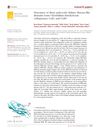
February 2015 in “Acta Crystallographica Section D: Structural Biology” This study reports that Ca 2+ binding alters the dynamics and surface properties of PKD-like domains in Clostridium histolyticum collagenases, enhancing their stability and potentially aiding in collagen-targeting vehicle development.
 April 2016 in “Journal of Investigative Dermatology”
 This study found that Pdgfα signaling is crucial for maintaining dermal adipose tissue in mice by initiating dermal adipocyte stem cell proliferation, with implications for age-related skin defects.
 January 2016 in “International journal of reproduction, contraception, obstetrics and gynecology”
 This study found that the IGF2 gene Apa1 A820G polymorphism is associated with an increased risk of developing PCOS in the studied population.
9 citations
,
August 2023 in “Molecules” This study found that the peptides RMYYY and VMYMI displayed stronger binding energy and more frequent interactions with HPGDS compared to the native inhibitor, suggesting potential as future therapeutic drugs.
60 citations
,
January 2021 in “BMC Genomics” This study mapped genomic copy number variation in Chinese fine-wool sheep, identifying genes involved in sensory perception, nutrient metabolism, growth, and development, and highlighting significant selection on the RXFP2 gene.
9 citations
,
July 2007 in “Circulation Research” This study found that disruptions in planar cell polarity signaling are implicated in congenital heart defects and cardiomyopathy in developing mouse hearts, associated with early cardiomyocyte disorganization and improper heart looping.
 1 citations
,
February 2014 in “Archiv Der Pharmazie”
1 citations
,
February 2014 in “Archiv Der Pharmazie” This study demonstrated that steroidal carbamates 7–10 altered mRNA expression related to lipid metabolism in hamster flank organs and inhibited 5α-reductase activity without binding to the progesterone receptor.
 September 2002 in “Comprehensive Therapy”
 Primary care is key in managing PCOS, focusing on lifestyle changes and medications like birth control and metformin.
 March 1998 in “Journal of dermatological science”
 Diphencyprone initially increases mouse hair growth, then slows it, possibly due to changes in specific protein levels.