 December 2024 in “Здобутки клінічної і експериментальної медицини”
 This study reviews current research on skin repair and regeneration, highlighting promising methods such as stem cell therapies, nanotechnology, and skin substitutes, which may enhance healing and resistance to environmental damage.
 October 2021 in “Interfaces Científicas”
 This study analyzed the nutritional composition of 75 nutricosmetic products, finding common ingredients like biotin and zinc, but emphasized the need for further research on their effectiveness for hair and nail health.
 November 2021 in “Revista Ibero-Americana de Humanidades, Ciências e Educação”
 This paper evaluates the therapeutic response of androgenetic alopecia to topical application of specific compounds using digital drug delivery but reports no new clinical results.
1 citations
,
January 2025 in “Molecules” This review reported that while glycyl-L-histidyl-L-lysine tripeptide copper complex (GHK–Cu) has limited skin permeation when used alone, liposomes may enhance its absorption, but there is limited research on this aspect, highlighting a need for further studies.
8 citations
,
November 2023 in “Frontiers in Bioengineering and Biotechnology” This article reviews recent developments in microneedles combining metallic elements and herbal compounds for wound healing, highlighting their benefits such as enhanced therapeutic efficacy and reduced toxicity, and offering a reference for future advancements in this technology.
This research presentation explored the roles of mammalian multi-copper ferroxidases in iron homeostasis and highlighted new insights into their functions, including non-iron-related ones, while discussing arsenic's role in microbial warfare as a potential antibiotic.
 29 citations
,
December 1998 in “Seminars in Cutaneous Medicine and Surgery”
29 citations
,
December 1998 in “Seminars in Cutaneous Medicine and Surgery” This review examines recent approvals and emerging treatments for androgenetic alopecia, discussing newly approved drugs like Propecia and Rogaine Extra Strength 5%, but without presenting new clinical results.
May 2026 in “Scientific Reports” This study explored the phytochemical profile of Delphinium brunonianum, reporting that its extracts and synthesized nanoparticles demonstrated significant radical scavenging, enzyme inhibition, and antimicrobial activities, suggesting future potential in medical applications.
December 2022 in “Ecological Chemistry and Engineering S” This study synthesized indole-acenaphthylene compounds using a magnetic nanocatalyst and explored their photoluminescence properties for detecting copper ions in a mixed solvent system, achieving a detection limit of 9.5 ∙ 10 –6 M.
June 1958 in “Mycopathologia” Selective chemical epilation effectively treats tinea capitis without harmful side effects.
 January 2017 in “Springer eBooks”
 Eating a balanced diet with specific nutrients can help manage menopause symptoms and prevent related health issues.
 24 citations
,
May 2019 in “PLOS genetics”
24 citations
,
May 2019 in “PLOS genetics” This study reports that compound heterozygous loss-of-function mutations in the HEPHL1 gene in a child were associated with abnormal hair and cognitive issues, linking altered ferroxidase activity to hair disorders.
 January 2025 in “Nanotechnology Reviews”
 This study reported a green synthesis method for copper oxide nanoparticles using pumpkin seed extract, achieving significant antibacterial activity against Bacillus subtilis and moderate cytotoxic effects against certain cancer cell lines, indicating potential biomedical applications for these eco-friendly nanomaterials.
 8 citations
,
March 2018 in “Expert Review of Respiratory Medicine”
8 citations
,
March 2018 in “Expert Review of Respiratory Medicine” This article reviews the potential of inhalation therapy to restore pulmonary elastin fibers in COPD patients and highlights the need for studies to test its feasibility; it reports no new research findings.
 April 2023 in “Acta Poloniae Pharmaceutica”
 This study found that using Urtica cannabina extract shampoo led to increased levels of copper, zinc, and iodine in the scalp hair of Mongolian women, along with improvements in hair growth, diameter, and density compared to a regular shampoo.
 January 2022 in “Asian journal of Current Research in Clinical Cancer”
 This study reviews the potential of dibenzo derivatives as safer cancer treatments but finds conflicting evidence about their effectiveness, possibly due to structural differences among the compounds, and reports no new results.
 January 2013 in “Food science and technology research”
 This study reported that green tea extract may promote the excretion of copper into the hair in mice.
 June 2023 in “Research Square (Research Square)”
 This study demonstrated that dietary cupric citrate improved growth performance and nutrient utilization in broilers, while also altering their intestinal microbiota and increasing the pH in the duodenum and jejunum.
 4 citations
,
January 2014 in “RSC Advances”
4 citations
,
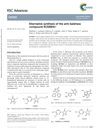
January 2014 in “RSC Advances” A new, less toxic and more efficient method to create the anti-baldness compound RU58841 was developed in 2014.
This chapter reviews various types of aromatic compounds and provides references, but reports no new experimental results.
 September 2024 in “African Journal of Biomedical Research”
 This study found that individuals with alopecia areata had significantly lower blood levels of vitamin D and slightly lower serum copper levels compared to healthy controls, suggesting the potential importance of assessing these factors in the chemical evaluation of patients with this condition.
 1 citations
,
April 2023 in “African Scientific Reports”
1 citations
,
April 2023 in “African Scientific Reports” This review summarizes the biological process of melanogenesis and evaluates natural skin-whitening treatments based on their mechanisms affecting melanin production, aiming to inform on the effects and awareness of skin-bleaching creams.
 January 2015 in “Side effects of drugs annual”
 This review discusses various sex hormones and related compounds, including estrogens and anabolic steroids, but reports no new findings; it highlights existing literature from 2014 regarding their use and effects.
 55 citations
,
July 1999 in “Clinics in Sports Medicine”
55 citations
,
July 1999 in “Clinics in Sports Medicine” This review discusses recent data on the use of anabolic-androgenic steroids and other steroid compounds and reports no new clinical results.
 2 citations
,
January 2006 in “Durham e-Theses (Durham University)”
2 citations
,
January 2006 in “Durham e-Theses (Durham University)” This study found that solid-state NMR combined with X-ray techniques provided critical insights into the structure and solvation of finasteride polymorphs, identifying gaps in existing patent characterizations.
74 citations
,
July 1995 in “PubMed” This study suggests that reversible hypopigmentation in homocystinuric patients may result from tyrosinase inhibition by homocyst(e)ine, with in-vitro experiments showing copper sulfate reversing this inhibition.
 February 2025 in “JAAD International”
 Five monthly sessions of minoxidil-dutasteride-copper peptide tattooing significantly improve hair regrowth in men with androgenetic alopecia.
2 citations
,
April 2025 in “Biomedicine & Pharmacotherapy” This research reports that copper-quercetin complexes show strong potential in antioxidation and cancer therapy, while their effects on specific cell death pathways warrant further investigation.
 73 citations
,
July 2016 in “Cosmetics”
73 citations
,
July 2016 in “Cosmetics” This review discusses the use of mushrooms and their bioactive compounds in cosmeceuticals and nutricosmetics and reports no new clinical findings, highlighting potential areas for future research and development.
 67 citations
,
February 2020 in “Journal of Ginseng Research”
67 citations
,
February 2020 in “Journal of Ginseng Research” This review evaluates and classifies the non-saponin components of Korean Red Ginseng, emphasizing their combined role with saponins in the plant's bioactivity, but reports no new clinical results.