 February 2026 in “Journal of Regenerative Medicine and Biology Research”
 This study explores the potential roles of exosomes in anti-aging applications, highlighting their ability to modulate inflammation, promote tissue regeneration, and transfer bioactive molecules to rejuvenate aging tissues and reverse cellular dysfunction.
 February 2026 in “American Scientific Research Journal for Engineering, Technology, and Sciences (Global Society of Scientific Research and Researchers)”
 This study analyzed gray hair, revealing that it differs from pigmented hair in follicular activity, oxidative balance, and structure, impacting coloring processes and necessitating adapted techniques to maintain hair quality.
 February 2026 in “Plastic and Aesthetic Research”
 This narrative review examines advancements in regenerative aesthetic medicine, focusing on injectable modalities like PRP, polynucleotides, and exosomes, but highlights the need for more robust evidence and standardization in clinical applications.
 January 2026 in “International Journal of Science and Research (IJSR)”
 In this study, artificial intelligence's integration into Indian aesthetic medicine has expanded from consumer apps to crucial roles in diagnostics, treatment planning, and clinic management, driven by demands for precise data over subjective opinions and enhancing competitive advantage.
 January 2026 in “Clinical Cosmetic and Investigational Dermatology”
 This expert opinion article presents insights from dermatologists and aesthetic physicians on using polynucleotides (Rejuran®) for skin hydration, rejuvenation, structural support, barrier repair, and scar remodeling, noting their favorable safety profile but highlighting the need for more robust evidence and research.
 January 2026 in “Archive ouverte UNIGE (University of Geneva)”
 This narrative review examined skin-sparing techniques in gynecomastia surgery and found satisfactory thoracic remodeling with acceptable morbidity and reduced scarring, but acknowledged methodological differences that limit decisive conclusions.
 December 2025 in “Aesthetic Plastic Surgery”
 This study reported that the new near-infrared LED device showed significant improvements in skin rejuvenation and a slight increase in hair growth, with further research recommended for broader validation.
 December 2025 in “Uludağ Üniversitesi Tıp Fakültesi Dergisi”
 This study found that among medical students and doctors, 93.9% used social media, with 68.5% seeking information on cosmetic procedures, and women were more likely to be influenced by advertisements for non-surgical cosmetic treatments.
 November 2025 in “IECCMEXICO”
 This review found that adipose-derived stem cells and stromal vascular fraction have robust clinical benefits in aesthetic surgery, particularly in facial rejuvenation, scar treatment, and volumetric restoration, with favorable safety profiles.
 October 2025 in “Dermatology and Therapy”
 This study investigates the complex impact of bariatric surgery on skin disorders, reporting improvements in conditions like acanthosis nigricans and psoriasis, while new issues such as xeroderma and alopecia may also emerge postoperatively.
 September 2025 in “Universal library of medical and health sciences.”
 This study examined the use of medical dermapigmentation to restore lip appearance after traumatic injuries, finding that a staged approach effectively camouflages scar tissue, enhances symmetry, and improves psychological well-being, demonstrating benefits in a clinical case of a dog bite.
 September 2025 in “Cureus”
 This narrative review highlights recent advancements in anti-ageing cosmetic procedures, emphasizing personalized interventions that improve patient outcomes and quality of life. The review synthesized evidence from 144 articles to assess the effectiveness and potential side effects of surgical and non-surgical techniques for facial rejuvenation.
 September 2025 in “Cureus”
 This systematic review found conflicting evidence on hair loss related to GLP-1 receptor agonists in adults with type 2 diabetes or obesity, with some studies noting hair regrowth and others reporting hair loss as a side effect. Further research is needed to understand this relationship.
 August 2025 in “The American Journal of Medical Sciences and Pharmaceutical Research”
 This study suggests that noninvasive carboxytherapy methods, like gel formulations and device-assisted delivery, can significantly improve skin conditions with high safety and no recovery time, particularly in sensitive areas.

This study utilized polarized light microscopy to examine hair shafts in ten children with rare genetic disorders, such as Netherton syndrome and ectodermal dysplasia, providing valuable diagnostic insights into hair thickness, composition, and structural irregularities associated with these conditions.
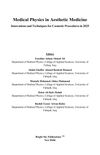 January 2025 in “Bright Sky Publications eBooks”
 This abstract presents the book "Buy Medical Physics in Aesthetic Medicine," which explores future innovations and techniques for cosmetic procedures expected in 2025, though specific findings or results from the book are not reported.
This review highlights the therapeutic potential of Hibiscus rosa-sinensis, detailing its significant medicinal value for treating various conditions such as wounds, infections, and diabetes, attributed primarily to its bioactive compounds like flavonoids and tannins.
This article highlights the gap between medically necessary dermatologic gender-affirming procedures and insurance coverage for transgender and gender diverse service members in the US Military, and discusses how dermatologists can support gender-affirming care and address existing healthcare disparities.
 January 2024 in “Clinical, cosmetic and investigational dermatology”
 This review suggests that dermatological cosmetic procedures can be safely performed on dark-complexioned skin with appropriate treatment adjustments, highlighting the need for careful consideration to prevent adverse effects.

This study reviews the increasing interest and reduced stigma surrounding men's plastic and cosmetic surgery, focusing on procedures like neuromodulator injections and hair transplants, highlighting their gender-specific aspects over the past decade.
 December 2023 in “Juan Cuevas eBooks”
 This source describes the fourth volume of the "Guía de Procedimientos en Cirugía Plástica Reconstructiva" as an essential, expert-compiled reference detailing the latest advanced techniques in reconstructive plastic surgery for surgeons, residents, and professionals in the field.
 November 2023 in “Global journal of medical research”
 This study highlights the importance of understanding the rheological properties of hyaluronic acid fillers, including viscosity, cross-linking, and concentration, to optimize their use in addressing facial aging by maximizing clinical effects.
 October 2023 in “Paediatrics & child health”
 This document serves as a resource for pediatricians and primary care providers to guide gender-affirming health care for transgender and gender-diverse youth, including potential medical transition options.
 September 2023 in “Bangladesh Journal of Neurosurgery”
 This case report shares that a 25-year-old man with cerebral arteriovenous malformation was successfully treated with stereotactic radiosurgery in Bangladesh, achieving complete obliteration of the AVM without significant clinical symptoms.
 July 2023 in “Journal of Education, Health and Sport”
 This literature review reports that micro-needle radiofrequency is increasingly recognized in aesthetic medicine as a safe, effective treatment for various skin conditions, but further research is needed to optimize treatment parameters for the best outcomes.
 July 2023 in “Revista Ibero-Americana de Humanidades, Ciências e Educação”
 This study found that combining ultrasound with vacuum therapy showed promise in reducing cellulite and improving skin texture more effectively than individual treatments, albeit with mild, temporary side effects; ongoing research is needed to standardize protocols and understand the mechanisms involved.
 April 2023 in “Digital Library of Theses and Dissertations (Universidade de São Paulo)”
 This study concluded that mesenchymal stem cells from adipose tissue harvested using laser-assisted liposuction with selective photo-stimulation are as effective and low-risk for cell therapy as those obtained through conventional liposuction, based on their differentiation potential, cellular proliferation, and cytokine expression.
The study found that adipose-derived mesenchymal stem cells obtained via laser-assisted liposuction with selective photo-stimulation are comparable in differentiation potential and tumorigenic risk to those from conventional liposuction for cell therapy applications.
 January 2023 in “Book of Abstracts”
 COVID-19 can cause different types of hair loss, with telogen effluvium being the most common.
 October 2022 in “Journal of Pharmaceutical Negative Results”
 This review examines the therapeutic effects of photobiomodulation on severe medical illnesses but reports no new clinical results; it emphasizes its potential in neurology, pulmonology, inflammation, dermatology, wound healing, and oncology.