 1 citations
,
September 2022 in “International Journal of Research Publication and Reviews”
1 citations
,
September 2022 in “International Journal of Research Publication and Reviews” This review discusses how nanotechnology can enhance the efficacy of hair care products by improving the delivery and benefits of active substances and offers insights into potential risks.
 1 citations
,
December 2021 in “International journal of research in dermatology”
1 citations
,
December 2021 in “International journal of research in dermatology” This review discusses the evolution of modern shampoos from basic cleansing agents to products with specific therapeutic uses and emphasizes the importance of dermatologists understanding shampoo mechanisms and appropriate selection for scalp and hair health.
 1 citations
,
December 2021 in “Annals of phytomedicine”
1 citations
,
December 2021 in “Annals of phytomedicine” This study found that a herbal hair dye formulated with a 1:2 ratio of henna and indigo successfully colored unpigmented hair dark brown to black, with favorable attributes compared to synthetic dyes.
 1 citations
,
March 2020 in “Current Science”
1 citations
,
March 2020 in “Current Science” In this survey-based study, researchers reported a high prevalence of hair loss among subjects in Delhi and the National Capital Region and noted widespread unawareness of its dietary, hormonal, genetic, and environmental causes.
 1 citations
,
July 2019 in “British Journal of Dermatology”
1 citations
,
July 2019 in “British Journal of Dermatology” This study found that 15% minoxidil topical solution was more effective than low-level laser therapy in improving hair regrowth and patient satisfaction in individuals with androgenetic alopecia.
 1 citations
,
July 2016 in “Cosmetics”
1 citations
,
July 2016 in “Cosmetics” This review highlights a case of cross sensitization to dyes from temporary henna tattoos and stresses the need for public awareness on the risks associated with these tattoos.
 1 citations
,
January 2016 in “Springer briefs in molecular science”
1 citations
,
January 2016 in “Springer briefs in molecular science” This chapter reviews the chemistry and potential benefits of plant-based hair dyes in cosmetics, but it reports no new clinical results.
 1 citations
,
December 2010 in “InnovAiT”
1 citations
,
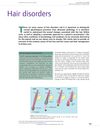
December 2010 in “InnovAiT” This article reviews common causes of hair loss and hair excess and discusses their management in primary care settings, but it reports no new clinical results.
 July 2026 in “International Journal of Applied Pharmaceutics”
 This review discusses the dermatological and systemic adverse effects of hair dye use, particularly focusing on the common allergen para-phenylenediamine, and reports no new clinical data.
 June 2026 in “Frontiers in Allergy”
 In this study, patients with scalp seborrheic dermatitis exhibited distinct patterns of allergen sensitization tied to symptoms, impaired skin barrier, and altered microbiota, emphasizing the need to consider allergen exposure, barrier status, and microbial balance when interpreting patch test results.
 April 2026 in “International Journal of Drug Delivery Technology”
 This review highlights the various causes and treatment options for alopecia, noting that while non-scarring types often see successful hair regrowth, scarring forms require early intervention to manage inflammatory destruction of hair follicles.
 February 2026 in “Chinese Medicine”
 Natural products might help treat hair greying.
 January 2026 in “International Journal of Science and Research Methodology”
 This review explored the therapeutic potential of Bhangra (Eclipta alba) for treating premature greying of hair, noting the plant's melanogenic, antioxidant, and revitalizing properties, but highlighted the need for further research to scientifically support its effectiveness.
 November 2025 in “International Journal for Research in Applied Science and Engineering Technology”
 This study describes the creation of a herbal hair oil using natural ingredients like curry leaves and hibiscus and found that the F1 oil formulation effectively reduces hair fall, removes dandruff, improves scalp blood flow, prevents early graying, and combats fungal infections.
 November 2025 in “Journal of Ayurveda and Integrated Medical Sciences”
 This study evaluated an herbal hair dye made from plant-based ingredients, finding it stable, non-toxic, and effective in providing lasting color, improving hair texture, and reducing hair fall, making it a viable and eco-friendly alternative to chemical dyes.
 October 2025 in “Revista Científica de Estética e Cosmetologia”
 This study highlights the importance of creating customized, evidence-based hair care solutions by considering scalp types and environmental factors, confirming the effectiveness of multidisciplinary approaches integrating dermatology, cosmetology, and trichology to develop safe and efficient products and treatments.
 June 2025 in “International Journal for Research in Applied Science and Engineering Technology”
 This study evaluated the physicochemical properties of an herbal shampoo formulated with natural ingredients like hibiscus and henna and compared it to a common marketed shampoo, finding it effectively replaced some chemical components with safer alternatives while maintaining similar characteristics.
 June 2025 in “INTERANTIONAL JOURNAL OF SCIENTIFIC RESEARCH IN ENGINEERING AND MANAGEMENT”
 This study assessed a herbal dry shampoo comprising natural ingredients like Shikakai and Reetha, finding it effectively passed physicochemical tests but highlighted the need for more research to optimize product quality and safety.
In this study, researchers developed and tested an herbal hair serum containing natural ingredients like banana flower extract and orange oil, which was stable and pH-balanced, with preliminary user feedback suggesting improved hair texture, reduced hair fall, and increased hair density.
 January 2025 in “International Journal of Advanced Research in Science Communication and Technology”
 Results are not reported for this study exploring how herbal hair dye, made from natural plant-based ingredients, might promote glossier, longer, and thicker hair while covering gray.
 January 2025 in “American Journal of Medical and Clinical Research & Reviews”
 In this literature review, potential health risks of toxic chemicals commonly found in cosmetic products were linked to issues such as cancer, reproductive abnormalities, and skin diseases, highlighting concerns over ingredients like talc, parabens, and phthalates.
 January 2025 in “American Journal of Stem Cells”
 This review discusses the role of melanocyte stem cells in skin pigmentation and potential regenerative therapies, but reports no new clinical results.
 January 2025 in “International Journal of Pharmaceutical Research and Development”
 This study evaluated a herbal oil formulation in an animal model, finding it significantly enhanced hair growth initiation and completion times compared to a control, suggesting it as a natural and safer alternative to synthetic hair growth treatments.
 October 2024 in “International Journal of Life Science Research Archive”
 This study formulated and evaluated a laboratory-scale herbal shampoo using natural ingredients like Ficus Religiosa and Aloevera, reporting good cleansing, froth stability, and ideal physicochemical properties, though further development is needed to enhance product performance and safety.
 August 2024 in “Journal of Home Economics Research”
 This source reports that among female youths in Umunneochi, common hair care products like serums, sprays, and lotions fall below average usage, and it concludes that consulting dermatologists and avoiding counterfeit products could prevent hair damage.
 July 2024 in “Annals of Phytomedicine An International Journal”
 In this study, the authors reviewed various herbal ingredients used in hair care products and found that components like aloe vera, hibiscus, amla, and fenugreek have traditional and scientifically validated benefits for addressing hair issues such as hair loss, dandruff, and damage.
 May 2024 in “Research Square (Research Square)”
 This study found that shea butter is the most used plant among women in Tamale, Ghana, for cosmetic purposes like skin smoothening and hair growth.
This study suggests that a herbal shampoo made from plant ingredients may be a promising natural remedy for hair fall and dandruff, demonstrating good quality and safety.
 April 2024 in “Pharmacognosy research”
 In this study, researchers developed a herbal hair dye using henna and other natural ingredients that achieved a color similar to natural black on blonde hair, though further testing on various hair shades is needed to explore its full benefits.
 January 2024 in “Uttar Pradesh journal of zoology”
 In this study, researchers found that chemical treatments like bleaching can cause severe damage to the hair cuticle, with previously modified hair showing complete deterioration compared to the partial degradation seen in virgin hair, highlighting the need for mindful cosmetic practices.