1 citations
,
April 2024 in “Lasers in Surgery and Medicine” This study developed a 3D computational model to simulate how skin, fat, and muscle deform under suction, reporting that as suction pressure increased, skin thickness decreased, while fat thickness increased, and muscle thickness remained stable, closely aligning with experimental results.
May 2018 in “Dermatologic Surgery” This overview highlights the Dermatologic Surgery journal's comprehensive coverage of dermatologic surgical procedures, but it reports no new research findings.
 1 citations
,
February 2021 in “Journal of Cosmetic Dermatology”
1 citations
,
February 2021 in “Journal of Cosmetic Dermatology” In this study, mathematical analysis suggested that a 30°-sapphire blade caused the least tissue injury during hair restoration, while a rectangular blade caused the most.
December 2025 in “Journal of Surgery Research and Practice” This study presented a method for female hairline transplantation that connects the Diverting Point and Part Line to recreate a natural hair flow, enhancing aesthetic outcomes by providing a more natural and feminine hairline.
 February 2023 in “EAS Journal of Medicine and Surgery”
 This study found that among the Idoma people of Benue State, Nigeria, approximately two-thirds have a curved (widow's peak) hairline, with this shape being predominant across both genders.
March 2018 in “Journal of Experimental Biology” This study found that the curl in hair is due to the arrangement of different cell types, with shorter paracortical cells inside the curve and longer orthocortical cells outside.
1 citations
,
January 2019 in “Dermatology Online Journal” This case report describes a rare occurrence of nevus comedonicus on the scalp of a 19-year-old woman, highlighting its unusual location and classic appearance.
 30 citations
,
May 2005 in “Pediatric dermatology”
30 citations
,
May 2005 in “Pediatric dermatology” This report reviews familial cases of aplasia cutis of the scalp, noting large irregular defects at the vertex or anterior along the sagittal suture in six families.
 February 2024 in “Journal of Dermatological Science”
 This study examined the formation of acquired curved hair and found that the fusion of hair matrix cells during follicle regeneration contributes to asymmetric follicle shapes and curved hair, potentially linked to changes in type IV collagen and protein expression levels.
4 citations
,
August 2008 in “Plastic & Reconstructive Surgery” This study reports that the composite galeal frontalis pericranial flap can be successfully used for reconstruction in anterior cranial base surgery, effectively sealing cerebrospinal fluid leaks, while minimizing complications like numbness and skin necrosis.
 2 citations
,
December 2019 in “Cureus”
2 citations
,
December 2019 in “Cureus” This report describes a case of secondary cutis verticis gyrata due to a cerebriform intradermal nevus, highlighting clinical management and screening guidelines.
 7 citations
,
March 2017 in “Annals of Plastic Surgery”
7 citations
,
March 2017 in “Annals of Plastic Surgery” In this study, researchers developed a new variant of the Mercedes flap with releasing incisions for reconstructing medium-sized scalp defects, demonstrating complete defect closure without complications in three patients following a single operation with excellent aesthetic outcomes.
 65 citations
,
September 1998 in “Eye”
65 citations
,
September 1998 in “Eye” This study observed that 19% of patients with Graves' orbitopathy experienced induced diplopia after orbital decompression, with high patient satisfaction reported following both coronal and translid approaches.
 1 citations
,
October 2019 in “Journal of Craniofacial Surgery”
1 citations
,
October 2019 in “Journal of Craniofacial Surgery” In this study, 3D planned resection and reconstruction for skull defects after resection of cSCC with bony invasion led to accurate procedures, though patient-specific factors should guide treatment decisions.
June 2018 in “Dermatologic Surgery” This overview discusses the Dermatologic Surgery journal's extensive focus on cosmetic and reconstructive procedures, offering no new research findings.
 February 2019 in “bioRxiv (Cold Spring Harbor Laboratory)”
 This study found that Prss53-mutated rabbits exhibited curved hair and skeletal dyskinesia, suggesting a link between Prss53 loss and these traits, potentially involving disrupted calcium metabolism.
April 2020 in “The Egyptian Journal of Plastic and Reconstructive Surgery” In this retrospective study of 29 patients with scalp burn alopecia, researchers utilized a simple method involving tissue expansion to reconstruct the temporal and lateral sideburn areas, resulting in satisfactory, symmetrical, and standardized aesthetic outcomes according to both objective and subjective evaluations.
 January 2006 in “Seibutsu Butsuri”
 Curly and straight hair differ in how their internal fibers are arranged.
13 citations
,
October 2008 in “PubMed” This study examined hair curvature in Japanese women, finding that 47% have curved hair, and identified structural differences in hair fiber, which resemble those in wool fibers.
5 citations
,
July 2024 in “Aesthetic Surgery Journal” This study found that facial rejuvenation with fat grafting around the prejowl sulcus provided better improvement in jowling and had fewer adverse effects compared to mandibular ligament release without fat grafting.
 3 citations
,
August 2006 in “Facial Plastic Surgery Clinics of North America”
3 citations
,
August 2006 in “Facial Plastic Surgery Clinics of North America” Newer midface lift techniques are safer, more reliable, and have quicker recovery times.
 June 2021 in “Journal of The American Academy of Dermatology”
 This study suggests that the "spade sign" is a highly specific histopathologic feature of acne keloidalis, although its absence does not rule out the condition.
 2 citations
,
May 1999 in “Hair transplant forum international”
2 citations
,
May 1999 in “Hair transplant forum international” This commentary discusses the declining status of scalp reduction in hair restoration practice and reports no new clinical findings.
 3 citations
,
May 2004 in “Journal of neurosurgery”
3 citations
,
May 2004 in “Journal of neurosurgery” This study found that endoscopy-assisted craniectomies with postoperative molding helmets led to excellent outcomes in infants with sagittal synostosis, with low morbidity and minimal complications.
12 citations
,
February 2017 in “Graefe s Archive for Clinical and Experimental Ophthalmology” This study compared open and closed surgical techniques for severe congenital ptosis using Gore-Tex slings and found that the closed approach offered better functional outcomes, while the open method provided superior cosmetic results.
 1 citations
,
July 2021 in “Aesthetic Plastic Surgery”
1 citations
,
July 2021 in “Aesthetic Plastic Surgery” This study concluded that a triangular flag-shaped incision design in hair transplantation achieved better hair alignment compared to the common elliptical incision, particularly in patients with specific hair directions.
 4 citations
,
December 1992 in “The American Journal of Cosmetic Surgery”
4 citations
,
December 1992 in “The American Journal of Cosmetic Surgery” The modified S pattern for scalp reduction is effective for removing more bald scalp and hiding scars in hair restoration.
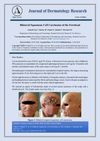
A 70-year-old man with skin cancer on both sides of his forehead was treated with surgery and cryotherapy, highlighting the need for early detection and prevention.
 2 citations
,
December 2021
2 citations
,
December 2021 This study found that the observed isotropic ss-ECD spectrum of finasteride is influenced by the anisotropy of locally oriented crystals, offering new possibilities for analyzing solid-state chiral materials.
This study examines the structure of the "sinuskissen" in cat hair follicles, revealing it as a loose connective tissue susceptible to changes in aqueous flow, and describes its variable three-dimensional shapes.