 1 citations
,
September 2023 in “Research Square (Research Square)”
1 citations
,
September 2023 in “Research Square (Research Square)” This study found that heart-inspired hollow hydrogel-based scaffolds enhanced regenerative capability in osteoporotic bone defects and increased cell number when using a mechanical-assisted post-bioprinting strategy.
 July 2026 in “International Journal of Drug Delivery Technology”
 This review highlights novel drug delivery systems for alopecia that enhance localization in the pilosebaceous unit, reduce systemic exposure, and support sustained drug release, with a focus on optimized follicular carriers ranging from 100-300 nm for improved drug residence compared to conventional methods.
 June 2026 in “Discover Nano”
 This review discusses current treatment strategies for alopecia and highlights the potential of lipid-based nanoparticles to improve drug delivery to the scalp and hair follicles, noting their ability to enhance skin penetration and drug stability while outlining associated challenges and the need for further research.
 June 2026 in “International Journal of Drug Delivery Technology”
 In this review, researchers discussed various novel drug delivery systems, including lipid nanocarriers and polymeric nanoparticles, that may enhance treatment for alopecia by improving drug localization in hair follicles and reducing systemic exposure, potentially offering better outcomes than conventional treatments.
 June 2026 in “University of Science and Technology Journal for Medical Sciences”
 In this study, both platelet-rich plasma gel and 1% phenytoin cream showed comparable results for wound healing in diabetic foot ulcers in rats, with PRP providing slightly advanced histological improvements; however, the differences were not statistically significant.
 June 2026 in “Frontiers in Materials”
 This review examines advancements in "smart" hydrogel dressings for complex wound healing, highlighting innovations in materials that provide multifunctionality, such as responsive drug delivery and regenerative capabilities. The study also addresses potential challenges in clinical application, like manufacturing and regulatory hurdles.
 May 2026 in “Commagene Journal of Biology”
 This review found that anti-aging peptides show promise in cosmeceuticals due to their targeted actions to rejuvenate skin, but challenges like peptide stability, penetration, and limited clinical data limit their current effectiveness.
 May 2026 in “International Journal of Nanomedicine”
 This review discusses the promising roles of nanozymes in burn wound treatment, highlighting their broad enzyme-like activities that include antibacterial, anti-inflammatory, and pro-angiogenic effects, along with advantages over traditional treatments such as reduced drug resistance and higher stability.
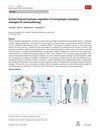
This review highlights that surface mechanical regulation can program macrophage behavior through specific mechanical cues on material surfaces, potentially advancing immunotherapies and regenerative medicine by enabling precise control over macrophage functions.
 April 2026 in “Journal of Pharmaceutical Investigation”
 This review discusses recent advancements in nanotechnology for treating hypertrophic scarring and atopic dermatitis, highlighting the potential of nanotherapeutic platforms in enhancing therapeutic effects by modulating the skin's microenvironment.
 April 2026 in “International Journal of Nanomedicine”
 This review explores quercetin's potential in multifunctional theranostic systems, highlighting its bioactivity and the challenges of improving its clinical application through innovative strategies like nanoencapsulation, while noting that research in this area is underdeveloped.
 February 2026 in “Frontiers in Bioengineering and Biotechnology”
 This review discusses the development of liposome-based delivery systems to enhance skin wound healing, highlighting their advantages and potential applications, but reports no new clinical results.
 January 2026 in “Microsystems & Nanoengineering”
 This study analyzed 853 articles to reveal that research on silica-based nanobiomaterials in regenerative medicine has rapidly increased, with distinct regional differences in impact and emerging focus areas in drug delivery and wound healing.
 January 2026 in “Nanoscale Advances”
 This review provides an overview of microneedle-assisted photomedicine, detailing diagnostic and therapeutic strategies, design principles, and challenges for translating this approach to skin disease management.
 December 2025 in “Sains Medisina”
 This review identified 12 herbal plants producing essential oils with pharmacological activities that stimulate hair growth, potentially through enhanced scalp microcirculation, inhibition of 5α-reductase, anti-inflammatory and antioxidant effects, anagen phase stimulation, and increased dermal papilla cell proliferation.

This study investigated the mechanisms of Platycladi Cacumen in treating androgenetic alopecia, identifying potential key components and targets but found no specific targets or regulatory mechanisms.

In this study, a pH-responsive microneedle patch was developed, showing potential in rat models for treating spinal cord injuries by reducing inflammation, promoting nerve regeneration, and supporting neurogenesis, which contributed to improved motor and neurological recovery.
 October 2025 in “Journal of Translational Medicine”
 This literature review discusses the challenges and potential strategies for creating fully functional hair follicles capable of active cycling, emphasizing the molecular mechanisms, signaling pathways, and innovative regenerative techniques, such as hair micropatterning and three-dimensional printing, crucial for optimizing hair follicle regeneration.
 September 2025 in “Advanced Pharmaceutical Bulletin”
 This review highlights the promise of non-viral gene delivery systems, particularly genosomes, over traditional viral vectors due to enhanced safety and efficiency in therapeutic nucleic acid delivery for genetic diseases like cystic fibrosis and malignancies.
 September 2025 in “BULLETIN OF STOMATOLOGY AND MAXILLOFACIAL SURGERY”
 In this review, researchers explored the complex mechanisms behind chemotherapy-induced side effects like nausea, fatigue, and hair loss, and discussed potential strategies using natural agents to manage these toxicities, improving understanding for targeted adjunct therapies.
 September 2025 in “Nano Biomedicine and Engineering”
 This review summarizes recent advances in nanomedicine-based therapies for psoriasis, highlighting their potential to provide targeted and sustained therapeutic effects by modulating key cellular components and signaling pathways involved in the disease, offering novel perspectives for future treatment development.
 August 2025 in “Fabad Journal of Pharmaceutical Sciences”
 This review highlights that bicalutamide, a non-steroidal antiandrogen used in prostate cancer treatment, is mainly effective through its (R)-enantiomer and emphasizes the need to monitor its adverse effects despite its targeted antiandrogenic action.
 June 2025 in “Medical academic journal”
 The study found that hybrid nanoparticles incorporating exosomes with cationic liposomes 2X3-DOPE significantly improved the delivery of both messenger RNA and small interfering RNA to rat cardiac mesenchymal stem cells in vitro, achieving up to 100% transfection efficiency for small interfering RNA.
 December 2024 in “Globus: an international journal of medical science, engineering and technology.”
 This study found that 10% Citrus aurantium peel oil significantly promoted hair growth in ICR mice by reducing the time needed for hair growth initiation and completion, and by increasing hair length, follicle diameter, and count, showing potential as a hair growth agent.
 October 2024 in “International Journal of Pharma Professional’s Research (IJPPR)”
 This study developed and characterized Quercetin-loaded nanogels, finding that they showed promising potential for enhanced drug delivery and stability in treating Alopecia, with an optimized batch achieving a drug release of 95.32% over 12 hours.
 July 2024 in “ADMET & DMPK”
 This review discusses the potential for surface-modified nanostructured lipid carriers to enhance hair regrowth by improving drug absorption and stability, focusing on their use with agents like minoxidil and finasteride for hair loss treatment.

This article reviews various topics including medically important plants in dermatology, supporting medicinal herbs for primary dysmenorrhea, and several drug delivery systems, without providing new clinical findings.
 January 2020 in “bioRxiv (Cold Spring Harbor Laboratory)”
 This study found that the ethyl acetate extract of Semecarpus anacardium leaves demonstrated cytotoxicity against MCF-7 cancer cells and induced apoptosis, suggesting potential as a cancer treatment with fewer side effects.
 January 2016 in “Springer eBooks”
 New materials and methods could improve skin healing and reduce scarring.
March 2021 in “Arrow - TU Dublin (Technological University Dublin)” This study tested a folate-conjugate drug delivery system and found its cytotoxicity depends on whether the treated cells overexpress folate receptors, suggesting potential for targeted chemotherapy.