 October 2019 in “Journal of Evolution of Medical and Dental Sciences”
 This case report describes a 56-year-old male with chronic watery diarrhea, hyperpigmentation, and alopecia, in whom colonoscopy revealed multiple polypoidal lesions from the distal transverse colon to the rectum.
This study identified the Arabidopsis cation chloride cotransporter CCC1 as essential for regulating pH and function in the trans-Golgi network/early endosome, with its absence causing significant growth and stress response defects.
2 citations
,
August 2022 in “World Journal of Clinical Cases” In this study, researchers found multiple somatic mutations and copy number variations in a patient with Cronkhite-Canada syndrome, providing novel insights into its potential genetic mechanisms.
August 2026 in “Acta Innovations” This study found that Eclipta alba (L.) Hassk herbal oil formulated with VCO demonstrated enhanced antioxidant, anti-inflammatory, and antibacterial activities, and provided UV protection, with EHO-18 identified as the best-performing version.
May 2026 in “International Journal of Current Pharmaceutical Review and Research” This article discusses the causes of polycystic ovary syndrome, including environmental pollutants, genetics, and oxidative stress, and explains how these factors contribute to symptoms like irregular menstrual cycles and obesity without reporting new clinical results.
20 citations
,
January 2001 in “Journal of Cutaneous Laser Therapy” This study found that wound healing after CO(2) laser resurfacing is faster with occlusive dressings, as they enhance cell migration from hair follicles, compared to untreated skin, which showed delayed re-epithelialization.
 7 citations
,
February 2016 in “TANG [HUMANITAS MEDICINE]”
7 citations
,
February 2016 in “TANG [HUMANITAS MEDICINE]” This study reports that the homeopathic drugs Lycopodium clavatum and Calcarea carbonica showed significant ameliorative effects on polycystic ovarian syndrome symptoms, with some differences in individual symptom response.
23 citations
,
October 2008 in “Journal of medicinal chemistry” This study suggests that PF-0998425 is an effective androgen receptor antagonist for sebum control and androgenetic alopecia with rapid metabolism reducing the risk of systemic side effects.
 111 citations
,
August 2002 in “Journal of Medicinal Chemistry”
111 citations
,
August 2002 in “Journal of Medicinal Chemistry” This study reports that 2-(1-Adamantyl)-4H-thiochromen-4-on-6-O-sulfamate is the most potent steroid sulfatase inhibitor identified so far, exhibiting 170-fold higher activity than the lead compound estrone sulfamate.
11 citations
,
September 1996 in “Journal of applied polymer science” In this study, treatment with aqueous KCN selectively converted disulfide bonds to monosulfide crosslinks in hair, leading to changes in microstructural properties and rubberlike elasticity under specific laboratory conditions.
 November 2023 in “ACS Applied Polymer Materials”
 In this study, the researchers developed a new method using H2O2/TiO2/UV for extracting human hair keratins rapidly, yielding higher protein and enabling the production of keratin films with better hemostatic performance and varied wound-healing properties compared to films from traditionally extracted keratin.
February 2025 in “Gastroenterology” Corticosteroids improved symptoms in a man with Cronkhite-Canada Syndrome.
 2 citations
,
October 2004 in “Organic Process Research & Development”
2 citations
,
October 2004 in “Organic Process Research & Development” This review discusses U.S. patents in organic process development published in July and August 2004 and reports no new experimental results.
51 citations
,
July 2003 in “Annals of the Rheumatic Diseases” This case study reports a successful use of co-trimoxazole in treating a 13-year-old girl with symptoms suggestive of autoimmune disorders and relapsing polychondritis.
 August 2025 in “The American Journal of Medical Sciences and Pharmaceutical Research”
 This study suggests that noninvasive carboxytherapy methods, like gel formulations and device-assisted delivery, can significantly improve skin conditions with high safety and no recovery time, particularly in sensitive areas.
 May 2021 in “The FASEB Journal”
 This study presents the crystal structure of human SRD5A2 with finasteride and reveals insights into its enzyme catalysis and inhibition mechanisms, which may inform drug development.
 7 citations
,
March 2018 in “Asian-Australasian journal of animal sciences”
7 citations
,
March 2018 in “Asian-Australasian journal of animal sciences” This study observed that the OCIAD2 and DCN genes in Liaoning cashmere goats have opposite effects on hair growth by interacting with the TGF-β signaling pathway, influencing follicle morphogenesis and periodic changes.
 October 2023 in “Journal of the American Academy of Dermatology”
 This source reports that clascoterone cream has been approved in the U.S. for treating acne vulgaris in patients aged 12 and older, suggesting it works by competing with dihydrotestosterone at androgen receptors to mitigate acne's effects.
 18 citations
,
February 2015 in “Acta Crystallographica Section D: Structural Biology”
18 citations
,
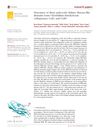
February 2015 in “Acta Crystallographica Section D: Structural Biology” This study reports that Ca 2+ binding alters the dynamics and surface properties of PKD-like domains in Clostridium histolyticum collagenases, enhancing their stability and potentially aiding in collagen-targeting vehicle development.
 10 citations
,
November 2010 in “Journal of Pharmacy Practice”
10 citations
,
November 2010 in “Journal of Pharmacy Practice” This article discusses polycystic ovary syndrome, highlighting treatment approaches for managing insulin resistance, hyperandrogenism, and fertility issues, but reports no new clinical results.
 February 2024 in “International Journal of Pharmaceutics”
 This study found that combining the natural product cedrol with minoxidil can improve the treatment of androgenetic alopecia by reducing the minoxidil dose needed, while a new nanocarrier system enhances drug delivery and effectiveness at hair follicles.
180 citations
,
February 2023 in “Journal of Chemical Information and Modeling” In this paper, Chemistry42—a software integrating AI with computational and medicinal chemistry—demonstrated efficiency in designing novel molecular structures targeting DDR1 and CDK20, with properties validated in both in vitro and in vivo studies.
 2 citations
,
November 2019 in “Journal für Klinische Endokrinologie und Stoffwechsel”
2 citations
,
November 2019 in “Journal für Klinische Endokrinologie und Stoffwechsel” This review discusses the complex and variable presentation of polycystic ovary syndrome, emphasizing the need for consistent diagnostic criteria and individualized treatment strategies but reports no new clinical results.
January 2025 in “Indian Journal of Experimental Biology” In this study, mice orally exposed to carbon-based nanoparticles for 30 days showed significant liver and kidney changes, behavioral alterations, and physiological disturbances, suggesting potential severe health risks due to the nanoparticles' slow clearance and formation of reactive oxygen species.
January 2023 in “Brazilian Journals Editora eBooks”  April 2018 in “The journal of investigative dermatology/Journal of investigative dermatology”
 This phase 2a trial evaluated Samcyprone for common wart treatment and found that while a sensitization reaction is necessary for therapeutic response, its level does not predict wart clearance.
This study found that an extract treatment showed similar efficacy and tolerability to calcipotriol/betamethasone ointment in reducing psoriasis severity and symptoms over 28 days in patients with mild-to-moderate plaque psoriasis.
 June 2025 in “Natural Product Communications”
 This study successfully synthesized novel cercidin analogues from Cercidophyllum japonicum, confirming their structure via NMR data. The researchers suggest these compounds could facilitate future antibiotic development by advancing structure-activity-relationship studies.
13 citations
,
October 2001 in “British Journal of Ophthalmology” This report discusses the use of intralesional cidofovir and suggests it might be a viable option for treating SCC due to its successful outcome without observed systemic toxicity in this case.
 December 2022 in “International journal of preventive, curative & community medicine”
 This article reviews current understanding and management strategies for polycystic ovary syndrome, emphasizing lifestyle changes alongside medical treatment, and reports no new clinical results.