 1 citations
,
February 2009 in “Clinical and Experimental Dermatology”
1 citations
,
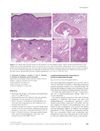
February 2009 in “Clinical and Experimental Dermatology” This study reports an improvement in lymphomatoid papulosis type A in a 52-year-old patient who concurrently used hormone-replacement therapy.
 September 2024 in “Frontiers in Veterinary Science”
 In this study, researchers observed that introducing an Environmental Enrichment Program improved the reproductive and zootechnical performance of Calomys callosus rodents by enhancing reproductive indices, parental care, and overall health, including reduced non-infectious lumbar alopecia.
May 2021 in “bioRxiv (Cold Spring Harbor Laboratory)” This study introduced rPanglaoDB, an R package that facilitates the integration of public scRNA-seq datasets to effectively characterize rare cell types, exemplified by generating the first unbiased transcriptome profile of fibrocytes.
1 citations
,
April 2022 in “HCA Healthcare Journal of Medicine” This article reviews 16 known cases of Blaschkoid linear lupus of the scalp, reports 2 new cases, and finds this subtype has distinct clinical and histological features that aid diagnosis.

This case study reports an unusual presentation of erosive lichen planus of the scalp linked to hepatitis C in a patient, highlighting challenges in establishing a definitive correlation between the two conditions.
 March 2025 in “American Journal of Medical Genetics Part A”
 In this study, researchers found that mosaic PLCD1 hotspot variants, even without the recognized germline "risk allele," may be a rare but significant genetic cause of nevus trichilemmocysticus, warranting DNA testing and sensitive sequencing technologies for accurate diagnosis.
 11 citations
,
August 2010 in “Pediatric dermatology”
11 citations
,
August 2010 in “Pediatric dermatology” This report details two cases of Lichen spinulosus in the submental area, treated effectively and safely with topical tacalcitol cream.
 April 2026 in “American Journal of Dermatopathology”
 This study identified a new dermoscopic feature, plexiform erythema, in lichen planopilaris lesions, suggesting it may indicate active disease and the potential need for more aggressive treatment.
2 citations
,
May 2025 in “Frontiers in Epidemiology” In this study, researchers emphasized the need for standardized definitions and improved methodologies in assessing LC prevalence, suggesting that future research explore prospective cohorts to refine estimates and examine long-term health outcomes.
24 citations
,
December 2018 in “Inflammation and Regeneration” This review discusses the roles of various PLA2 enzymes in skin health and disease, highlighting potential pathways for future diagnosis and therapy, but it reports no new clinical results.
 September 2021 in “Physiology News”
 This abstract contains only graphical design information and does not report any research findings or conclusions.
 September 2020 in “International journal of computer science and mobile computing”
 This article discusses the use of low-level laser therapy for hair regrowth in men and women but reports no new clinical results; it reviews types of lasers and evidence from animal and human studies.
7 citations
,
July 2013 in “InTech eBooks” This article describes the various presentations of oral lichen planus and notes it often requires topical or systemic immunosuppressive treatment for associated discomfort, but it reports no new clinical results.
17 citations
,
October 2023 in “Science Progress” This review discusses the biological properties and potential applications of PCL and barium titanate composites in biomedical fields and reports no new experimental findings; the authors highlight the need for further research.
3 citations
,
May 2025 in “Plant Cell & Environment” This study found that in Arabidopsis, the CLE14 peptide regulates root hair growth by promoting elongation, an effect that requires CLV2 and CRN proteins and involves ethylene signalling along with hydrogen peroxide and nitric oxide pathways.
January 2026 in “International Journal of Cosmetic Science” This study observed that eco-friendly PALF forms a protective physical barrier on the skin, helping limit the impact of environmental pollutants and offering additional benefits for skin and hair in various cosmetic formulations.
 59 citations
,
October 2012 in “Pharmaceutical Research”
59 citations
,
October 2012 in “Pharmaceutical Research” This study found that nanostructured lipid carriers with more soybean phosphatidylcholine provided better skin retention and follicular targeting for diphencyprone compared to other formulations and controls.
3 citations
,
January 2025 in “PubMed” This study compared the effectiveness of different thread types in improving collagen profiles in UVB-exposed aging model rats, finding that PCL threads were more effective than PDO and PLLA in enhancing dermal collagen characteristics.
1 citations
,
November 2022 in “Journal of Investigative Dermatology” This study found that ALRN-6924, a clinical-stage dual inhibitor, can selectively protect human scalp hair follicles from paclitaxel-induced toxicity and damage by inducing transient cell cycle arrest in healthy cells without affecting cancer cells, potentially reducing chemotherapy-induced alopecia.
January 2026 in “European Journal of Therapeutics” In this study, researchers reported that applying topical 7.5% dapsone led to a significant decline in lichen planopilaris activity within a month and a sustained two-year remission in a patient intolerant to other treatments, suggesting dapsone as a promising alternative for managing this condition.
 January 2025 in “Medical Research Archives”
 This review discusses various applications of low level laser therapy and argues for a holistic evaluation of patients but reports no new clinical findings.
December 2023 in “Modern engineering and innovative technologies” This article explores the theoretical foundations of the ChromaLens Precision Mapping system for analyzing hair, but it does not present any new experimental findings.

This study found that individuals with homozygous loss-of-function mutations in PLAAT3 experience a novel type of partial lipodystrophy linked to defects in white adipose tissue differentiation and function.
November 2019 in “European journal of internal medicine” This report documents a case of Cronkhite-Canada Syndrome in a 56-year-old Laotian man, who successfully improved with vitamin supplementation and medical treatment after experiencing weight loss, alopecia, and gastrointestinal polyposis.
49 citations
,
November 2021 in “Annual review of pathology” This review discusses the regulatory roles of lysophospholipids like LPA and S1P in diseases such as fibrosis, neuropathic pain, and cancer, but reports no new clinical results.
38 citations
,
January 2017 in “PPAR Research” This review discusses the role of PPAR-γ in the pathogenesis of primary cicatricial alopecia, including its involvement in lichen planopilaris and treatment trials using PPAR-agonists, and reports no new clinical results.
63 citations
,
April 2005 in “Mechanisms of development” This study found that heterozygous mice overexpressing Claudin-6 experienced alterations in epidermal and hair follicle differentiation, leading to distinctive coat characteristics and a disrupted epidermal permeability barrier.
1 citations
,
April 2021 in “Journal of the American Academy of Dermatology” This retrospective review found that platelet-rich plasma products from FDA-cleared devices for alopecia were inconsistent, highlighting a need for more detailed examination of preparation methods.
 1 citations
,
April 2018 in “The journal of investigative dermatology/Journal of investigative dermatology”
1 citations
,
April 2018 in “The journal of investigative dermatology/Journal of investigative dermatology” This study found that oral tofacitinib improved disease activity in patients with lichen planopilaris, suggesting it may be a promising treatment option for this condition.
 7 citations
,
November 2007 in “Annales de Dermatologie et de Vénéréologie”
7 citations
,
November 2007 in “Annales de Dermatologie et de Vénéréologie” A man was diagnosed with a rare form of lupus after showing unique skin symptoms that responded well to treatment.