6 citations
,
March 2005 in “The Journal of Dermatology” This letter to the editor discusses the potential exacerbation of discoid lupus erythematosus by radiation therapy and reports no new clinical findings.
3 citations
,
March 2024 in “Journal of the American Academy of Dermatology” Low-dose naltrexone helps improve symptoms and stabilize frontal fibrosing alopecia and lichen planopilaris.
August 2026 in “Canadian Journal of Health Technologies” This study found that Litfulo improved hair regrowth in patients aged 12 and older with severe alopecia areata but did not meaningfully improve anxiety or depression symptoms compared to placebo.
 33 citations
,
January 2009 in “Contraception”
33 citations
,
January 2009 in “Contraception” This review summarizes the use of chlormadinone acetate for hormone replacement therapy and contraception, highlighting its anti-androgenic effects, contraceptive efficacy, and clinical tolerability, without offering new clinical results.
 November 2021 in “Research Square (Research Square)”
 This study found that a 532 nm laser at 15 J/cm² enhanced the proliferation and differentiation of tendon-derived stem cells in rats, potentially accelerating tendon healing through the up-regulation of Nr4a1.
 17 citations
,
June 2011 in “The journal of investigative dermatology/Journal of investigative dermatology”
17 citations
,
June 2011 in “The journal of investigative dermatology/Journal of investigative dermatology” This study observed that mice with a Cx43 mutation exhibited slower and asynchronous hair regrowth with severe cuticle weathering, mimicking aspects of hair phenotype in some ODDD patients.

This study suggests that using cell-free dexamethasone-primed stem cell media may offer a promising alternative treatment for systemic lupus erythematosus, showing immunomodulatory benefits and therapeutic efficacy in reducing various complications.
 1 citations
,
January 2021 in “Arthritis Research & Therapy”
1 citations
,
January 2021 in “Arthritis Research & Therapy” The study reported a 7.80% prevalence of scarring alopecia in Chinese SLE patients and identified several risk factors, including mucocutaneous lesions and high disease activity, while renal and cardio-respiratory involvements were negatively associated with it.
 29 citations
,
February 2016 in “International Journal of Dermatology”
29 citations
,
February 2016 in “International Journal of Dermatology” This study found that patients with lichen planus were significantly more likely to have dyslipidemia, particularly with higher triglyceride levels.
 5 citations
,
November 2014 in “Hair transplant forum international”
5 citations
,
November 2014 in “Hair transplant forum international” This article introduces a series on low level laser light therapy, focusing on its science, regulatory aspects, and controlled trial methodologies, but reports no new clinical results.
101 citations
,
June 2003 in “The EMBO Journal” Phospholipase Cδ1 is crucial for normal skin and hair development.
 5 citations
,
January 2017 in “Skin appendage disorders”
5 citations
,
January 2017 in “Skin appendage disorders” In this case report, the authors linked acute psoriasiform contact dermatitis of the forehead and scalp to a low-laser light cap, identifying DMDE in the fabric as a likely cause.
 November 2025 in “Archives of Dermatological Research”
 This study found that Limelight (CB-EVs) exosomes significantly promoted hair elongation ex vivo without cytotoxicity, suggesting potential as a safe and effective hair growth therapy.
 May 2022 in “International Journal for Research in Applied Science and Engineering Technology”
 In this study, researchers explored the causes and treatment strategies for diffuse telogen effluvium, focusing on 60 patients with the condition linked to iron deficiency anemia, comparing the effectiveness of ferrous salts alone versus combined with Quilib lotion.
October 2025 in “Dermatology Practical & Conceptual” In this study, UVFD and sUVRD techniques revealed distinctive characteristics of GD lesions, suggesting that GD might be more common in younger individuals and females than previously thought, possibly due to underdiagnosis. Incorporating dermatoscopy in exams may help improve GD detection and management.
9 citations
,
May 1996 in “Pediatric Dermatology” This article discusses the colocalization of alopecia areata and lichen planus in pediatric dermatology and does not present new clinical results.
 1 citations
,
April 2025 in “Scientific Reports”
1 citations
,
April 2025 in “Scientific Reports” This study developed a culture method to expand and differentiate primary mammary basal cells, identifying key transcription factors like EGR1 and ELF3 that influence Claudin expression and actin organization, offering insights into epithelial cell biology and potential applications in related research fields.
 April 2017 in “Journal of Investigative Dermatology”
 This study suggests that sirolimus and propranolol may reduce abnormal lymphatic endothelial cell proliferation in lymphatic malformations, potentially improving vessel function and patient outcomes.
1 citations
,
June 2016 in “Annals of the rheumatic diseases” In this study, researchers found that retinoids might improve lupus nephritis resistant to conventional treatments, but the sample size was too small for significant results, and side effects were noted.
February 2025 in “Vestnik dermatologii i venerologii” This case report describes a 47-year-old patient with scarred alopecia diagnosed as discoid lupus erythematosus, where treatment with multiple medications led to clinical improvement.
 November 2022 in “Journal of Investigative Dermatology”
 In this study, analysis of over 800 Iranian patients with epidermolysis bullosa identified 15 with pathogenic PLEC variants, highlighting a correlation between variant locations and phenotypic manifestations of plectinopathies.
7 citations
,
April 2008 in “Progrès en Urologie” September 2026 in “Angewandte Chemie International Edition” In this study, SEU-302, a newly synthesized covalent organic framework, demonstrated potent photodynamic antibacterial effects, showing effective elimination of Staphylococcus aureus, wound healing promotion, and inflammation reduction both in vitro and in vivo, highlighting its therapeutic promise against bacterial infections.
September 2017 in “The journal of investigative dermatology. Symposium proceedings/The Journal of investigative dermatology symposium proceedings” This case report suggests that in African-American patients, the histology of Central Centrifugal Cicatricial Alopecia may resemble lichen planopilaris, indicating a potential diagnostic challenge.
April 2020 in “Journal of the Endocrine Society” This study suggests that hair cortisol measurement could serve as an alternative diagnostic method for Cushing’s disease, showing acceptable concordance with urinary free cortisol despite differing evaluated periods.
This study suggests that Arabs with systemic lupus erythematosus in Dubai show similar clinical features to patients from other Arab and Western countries, with a notable prevalence of positive anti-Ro antibodies.
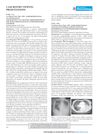 May 2025 in “The Journal of Rheumatology”
 This case report describes a patient with systemic lupus erythematosus whose unusual nephrological presentation led to a diagnosis of C3 glomerulopathy, highlighting the importance of considering atypical findings to broaden diagnostic approaches.
5 citations
,
March 2019 in “Scandinavian journal of rheumatology” This article discusses the potential misdiagnosis issues in cutaneous manifestations of lupus erythematosus and reports no new research findings.
7 citations
,
October 2024 in “Pharmaceutics” This study found that clindamycin-loaded PHA nanoparticles showed potent antibacterial effects against MRSA and enhanced wound healing in a mouse model of MRSA-infected wounds, indicating their potential as a novel treatment for these infections.
January 2010 in “Chinese Medical Journal of Metallurgical Industry” This study found that leflunomide combined with prednisone showed good efficacy and tolerance in treating lupus nephritis where cyclophosphamide was ineffective or intolerable.