5 citations
,
January 2018 in “Indian Journal of Dermatology/Indian journal of dermatology” This case report describes a 40-year-old woman who developed erythema annulare centrifugum, a type of skin rash, likely triggered by taking the drug aceclofenac.
 May 2023 in “Experimental Dermatology”
 This study found that both reflectance confocal microscopy and optical coherence tomography can visualize detailed hair follicle abnormalities in various skin disorders, but larger, higher-quality studies are needed for clinical implementation.
This review reports no new results and discusses various topical treatments, noting that fluocortin butyl ester offers anti-inflammatory effects without systemic side effects, while combinations outperform single-agent therapies in managing hyperpigmentation.
1 citations
,
January 2024 in “Dermatologic Therapy” This study found that combining excimer light at 308 nm with tacrolimus 0.1% was more effective in treating alopecia areata of the scalp compared to excimer light alone, as indicated by a greater reduction in the SALT score and better improvement in Treg function.
June 2026 in “British Journal of Dermatology” In this case study, a woman with alopecia areata experienced significant hair regrowth after starting ritlecitinib but developed an acneiform eruption, leading to the discontinuation of the drug and subsequent hair loss relapse; the eruption suggests a treatment-limiting adverse effect of JAK inhibitors.
34 citations
,
April 2001 in “PubMed” This study found that eflornithine HCl 13.9% cream reduces unwanted facial hair growth in women, with effects seen in up to 60% of participants over 4-8 weeks, with mostly minor skin irritation reported.
 41 citations
,
June 2010 in “Anais Brasileiros de Dermatologia”
41 citations
,
June 2010 in “Anais Brasileiros de Dermatologia” This study found that isotretinoin is a safe and well-tolerated acne treatment, with common adverse effects like cheilitis manageable through symptomatic medication and no significant changes in lipid or liver enzyme levels.
March 2023 in “Reactions Weekly” 13 citations
,
February 2019 in “Türk oftalmoloji dergisi” This review discusses various treatment options for chronic central serous chorioretinopathy, evaluating studies conducted since 2000, but reports no new clinical results.
 March 2024 in “Clinical, cosmetic and investigational dermatology”
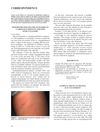
 In this report, a patient with vitiligo and systemic lupus erythematosus achieved complete skin repigmentation after 30 days of treatment with the oral JAK inhibitor tofacitinib, with no adverse reactions, suggesting its efficacy and safety as a potential treatment for vitiligo with coexisting autoimmune conditions.
 21 citations
,
January 2005 in “Pediatric Dermatology”
21 citations
,
January 2005 in “Pediatric Dermatology” An 8-year-old girl with vitiligo developed extra hair growth on her knee after using tacrolimus ointment.
7 citations
,
March 2023 in “JEADV. Journal of the European Academy of Dermatology and Venereology/Journal of the European Academy of Dermatology and Venereology” This letter discusses the potential of the Janus kinase 1 inhibitor abrocitinib for treating oral lichen planus but provides no new research findings.
February 2023 in “Reactions Weekly”  9 citations
,
February 2011 in “Biologics: Targets & Therapy”
9 citations
,
February 2011 in “Biologics: Targets & Therapy” This review discusses topical calcineurin inhibitors for cutaneous lupus erythematosus and reports no new clinical findings; the authors emphasize the need for more comparative studies with corticosteroids.
 September 2015 in “British Journal of Dermatology”
 Most clinicians follow discharge guidelines, many lupus patients don't use sunscreen regularly, dithranol is effective for psoriasis, biopsy methods should be based on lesion type, voriconazole may raise skin cancer risk, a new scale can help diagnose female hair loss early, and most melanomas may develop from existing moles.
This study found that an extract treatment showed similar efficacy and tolerability to calcipotriol/betamethasone ointment in reducing psoriasis severity and symptoms over 28 days in patients with mild-to-moderate plaque psoriasis.
 1 citations
,
November 2018 in “Therapeutic Delivery”
1 citations
,
November 2018 in “Therapeutic Delivery” This industry update reports on various advancements in therapeutic delivery during July 2018, highlighting active mergers, collaborations, and potential developments across fields like gene therapy, immuno-oncology, and rare diseases treatment; however, no new clinical results are presented.
 November 2022 in “The journal of investigative dermatology/Journal of investigative dermatology”
 This study found that applying ivermectin 1% cream significantly improved both visible symptoms like erythema and invisible symptoms such as stinging, burning, and dryness in rosacea patients over a period of at least 16 weeks.
 March 2025 in “Journal of the European Academy of Dermatology and Venereology”
 In a retrospective multicenter cohort study, this research observed that baricitinib was effective and well-tolerated in treating adult patients with alopecia areata, including those with severe cases, showing promise in improving outcomes over a 12-month period with manageable side effects.
 3 citations
,
August 2021 in “Journal of Investigative Dermatology”
3 citations
,
August 2021 in “Journal of Investigative Dermatology” Baricitinib was more effective than a placebo in regrowing hair in adults with alopecia areata after 36 weeks.
August 2026 in “International Journal of Dermatology” 32 citations
,
July 2003 in “Annals of the Rheumatic Diseases” This case report describes the successful treatment of a 13-year-old girl's autoimmune symptoms with co-trimoxazole, an antibiotic with immunomodulatory properties.
 July 2003 in “Journal of Cutaneous Medicine and Surgery”
 Some medications can improve skin conditions, while lifestyle factors like smoking and drinking may worsen them; treatments like monoclonal antibodies and imiquimod cream show promise for certain skin diseases.
February 2026 in “American Journal of Case Reports” This case report describes a 26-year-old woman with an uncommon presentation of varicella zoster virus interstitial keratitis misdiagnosed as corneal intraepithelial neoplasia; the correct identification using diagnostic tools such as AS-OCT prevented unnecessary surgical interventions and allowed for effective antiviral treatment.
13 citations
,
January 2017 in “Annals of dermatology/Annals of Dermatology” In this study, simvastatin/ezetimibe treatment led to partial hair regrowth in about 29% of patients with recalcitrant alopecia areata, suggesting it may be a viable alternative therapy for this condition.
 October 2024 in “Journal of the European Academy of Dermatology and Venereology”
 This study reported that ritlecitinib 50 mg and baricitinib 4 mg showed similar efficacy in treating severe alopecia areata, with no significant difference in hair regrowth outcomes at Week 24, but there remains considerable uncertainty and a need for further research.
10 citations
,
September 2024 in “Life” This review found that, among 103 patients treated off-label with abrocitinib for conditions beyond atopic dermatitis, favorable clinical outcomes were reported for most cases, except one isolated case involving erythematotelangiectatic rosacea.
 January 2024 in “Clinical and Experimental Dermatology”
 In this study, baricitinib treatment over an average of 18.5 months resulted in a 72% reduction in alopecia severity scores among patients aged 65 or older, with mild adverse effects and no severe complications reported.
24 citations
,
March 2009 in “Archives of dermatological research” This study found that a combination therapy of oral corticosteroid and oral PUVA led to scalp hair regrowth in patients with intractable alopecia totalis and universalis within two months.
 9 citations
,
June 2019 in “Archives of Dermatological Research”
9 citations
,
June 2019 in “Archives of Dermatological Research” This study found that both topical calcipotriol and narrow band ultraviolet B phototherapy improved hair regrowth and vitamin D3 levels in alopecia areata patients.