 December 2025 in “npj Breast Cancer”
 In the phase 3 CAPItello-291 trial, capivasertib combined with fulvestrant significantly increased progression-free survival in patients with advanced breast cancer with specific genetic alterations, but the authors highlight that managing side effects like diarrhea, rash, and hyperglycemia is crucial for optimizing treatment adherence and outcomes.
 1 citations
,
September 2023 in “Journal of the American Academy of Dermatology”
1 citations
,
September 2023 in “Journal of the American Academy of Dermatology” This study focused on baricitinib's effect on patients with severe alopecia areata, highlighting its efficacy for hair regrowth and its potential to improve health-related quality of life and psychological symptoms, as seen in two phase 3 trials.
1 citations
,
June 1999 in “American Journal of Contact Dermatitis” In this study, tazarotene 0.1% gel showed greater efficacy than tretinoin 0.025% gel in reducing acne lesions and demonstrated similar efficacy to adapalene 0.1% gel when used less frequently.
 2 citations
,
December 2020 in “American Journal of Dermatological Research and Reviews”
2 citations
,
December 2020 in “American Journal of Dermatological Research and Reviews” This study found that combining 308-excimer phototherapy with intramuscular triamcinolone acetonide was effective and well tolerated for treating resistant alopecia totalis, showing a 90% overall response rate in the ten patients studied, with the best results observed in younger patients.
 1 citations
,
December 2022 in “Journal of cosmetic dermatology”
1 citations
,
December 2022 in “Journal of cosmetic dermatology” This study found that combining a potent steroid with a vitamin D analogue may offer more convenient treatment for localized alopecia areata than using a superpotent steroid alone, with comparable efficacy but fewer side effects.
 4 citations
,
September 2022 in “Journal of The American Academy of Dermatology”
4 citations
,
September 2022 in “Journal of The American Academy of Dermatology” This study examined phase 3 clinical trial data and found that baricitinib improves hair regrowth in adults with alopecia areata and significant scalp hair loss, with the response varying based on the severity of hair loss at the start of treatment.
2 citations
,
November 2025 in “Healthcare” This study found that among young patients with acne vulgaris, combining a 675 nm red-light laser with isotretinoin led to more rapid and pronounced improvement in lesion severity compared to laser treatment alone, without adverse events.
5 citations
,
June 2012 in “PubMed” This article discusses leukocytoclastic vasculitis, particularly its triggers, manifestations, and treatments, and reports no new experimental results; the authors highlight valproic acid's association with this condition.
 August 2018 in “Journal of Investigative Dermatology”
 This study of alopecia areata patients found that a 10 mg twice-daily dose of oral tofacitinib led to significant hair regrowth, suggesting it may be beneficial for treatment.
February 2025 in “Canadian Journal of Health Technologies” This review assessed the clinical and cost-effectiveness of baricitinib, an oral treatment for severe alopecia areata in adults, to inform Canadian reimbursement recommendations, excluding Quebec.
 14 citations
,
July 2012 in “Journal of the American Academy of Dermatology”
14 citations
,
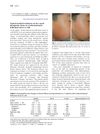
July 2012 in “Journal of the American Academy of Dermatology” This study found that topical tacalcitol improved roughness and scaling in erythromelanosis follicularis faciei et colli, although it was less effective for facial erythema.
 1 citations
,
January 2023 in “SAGE open medical case reports”
1 citations
,
January 2023 in “SAGE open medical case reports” This case study reports the first known instance of successful rapid hair regrowth in a psoriasis patient with alopecia universalis after starting deucravacitinib, suggesting potential for TYK2 inhibitors in managing alopecia areata.
 34 citations
,
August 2002 in “British Journal of Dermatology”
34 citations
,
August 2002 in “British Journal of Dermatology” This study observed that two patients treated with interferon α-2b and ribavirin for chronic hepatitis C experienced complete and reversible straightening of their natural curly hair, which recurred with treatment resumption.
4 citations
,
May 2018 in “Türk pediatri arşivi : İstanbul çocuk kliniği dergisi” This study reported dramatic improvements in five collodion baby patients with lamellar ichthyosis treated with oral retinoic acid, noting hair loss as the sole adverse effect, emphasizing the treatment's promising efficacy for physicians.
1 citations
,
January 2021 in “Journal of clinical and diagnostic research” In this study, adding topical calcipotriol 0.005% to topical clobetasol 0.05% significantly improved treatment efficacy for Alopecia Areata compared to using clobetasol alone, as evidenced by a greater reduction in SALT scores over 24 weeks.
 September 2024 in “Journal of the American Academy of Dermatology”
 This study found that baricitinib, when administered consistently over three years, maintained its efficacy in patients with severe alopecia areata who responded by Week 52 with notable hair regrowth, indicated by a SALT score of ≤20.
May 2019 in “Journal of clinical oncology” This Phase 1 study reported that topical application of BPM31543 was safe and well-tolerated in patients receiving taxane-based chemotherapy, with some experiencing less than 50% hair loss, suggesting potential efficacy in reducing chemotherapy-induced alopecia, although no maximum tolerated dose was identified.
1 citations
,
December 2020 in “Case reports in dermatological medicine” This case report discusses a 67-year-old male with pre-existing pemphigus vulgaris who showed nearly 90% resolution of his skin lesions after two weeks of acyclovir treatment, accompanied by continued use of systemic steroids.
 July 1996 in “Clinical and Experimental Dermatology”
 This study found that a single topical application of calcipotriol ointment did not affect systemic calcium levels in patients with chronic plaque psoriasis.
 September 2023 in “PubMed”
 This study reviewed baricitinib's efficacy and safety for treating alopecia areata and found that more patients achieved significant hair regrowth with baricitinib compared to placebo in two phase III trials. Mild to moderate side effects were reported, with additional study suggested for long-term effects.
22 citations
,
March 1999 in “International Journal of Clinical Practice” This review discusses the use of topical immunotherapy for severe alopecia areata and resistant viral warts, highlighting diphencyprone's advantages and the need for careful handling to avoid staff sensitisation; it reports no new clinical results.
 November 2025 in “SKIN The Journal of Cutaneous Medicine”
 In this study on adolescents with severe alopecia areata, baricitinib treatment showed effective scalp, eyebrow, and eyelash regrowth after 52 weeks, benefiting both responders and partial or non-responders, potentially reducing the psychosocial impact of the disease.
September 2022 in “Pharmacy Today”  July 1988 in “Journal of The American Academy of Dermatology”
 This article reviews therapeutic advances published between December 1986 and December 1987 but reports no new research findings; readers are advised to consult the original articles before considering new therapies.
5 citations
,
October 2022 in “British Journal of Dermatology” This study reports that two phase III trials demonstrated the effectiveness of the oral Janus kinase inhibitor baricitinib at 2 mg or 4 mg daily for treating severe alopecia areata in adults, marking a potential advance in managing this condition.
 3 citations
,
March 2019 in “Journal of Pigmentary Disorders”
3 citations
,
March 2019 in “Journal of Pigmentary Disorders” This presentation highlighted future directions in acne care, emphasizing the roles of topical and oral antibiotics, as well as skin microbiome studies. It also described how clascoterone targets androgen receptors in hair follicles and sebaceous glands to reduce sebum production.
7 citations
,
December 2022 in “Skin Appendage Disorders” This study found that among anti-TNF-α agents, certolizumab is the least likely to cause paradoxical reactions such as psoriatic alopecia and appears to be an effective and safe option for managing psoriasis and PsA while minimizing these risks.
 September 2018 in “International Journal of Advanced Community Medicine”
 This source describes the development of a new cream combining salicylic acid and retinol, assessed for its potential to alleviate itching in dermatitis and treat acne vulgaris, with stability and patch testing indicating no irritation or allergic reactions.
19 citations
,
April 2019 in “Veterinary dermatology” This study observed that oclacitinib, combined with oral glucocorticoids, achieved rapid and lasting clinical remission in four dogs with refractory juvenile-onset ischaemic dermatopathy, suggesting oclacitinib's potential as a useful immunosuppressive treatment in such cases.
 1 citations
,
May 2018 in “International Journal of Advanced Community Medicine”
1 citations
,
May 2018 in “International Journal of Advanced Community Medicine” In this research, a new cream containing salicylic acid was developed to treat acne vulgaris, showing no allergic reactions or skin irritation and maintaining stability in controlled conditions, suggesting potential future benefits for skin care and anti-acne treatment.