 April 2024 in “BMB Reports”
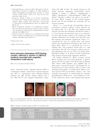
 This study used Cisd2 knockout mice models and found that these mice display premature aging characteristics and an increase in dysfunctional neutrophils, suggesting Cisd2's role in calcium homeostasis and neutrophil function via interactions with Calnexin and SERCA.
 11 citations
,
September 2011 in “British Journal of Dermatology”
11 citations
,
September 2011 in “British Journal of Dermatology” New ABCA12 gene mutations were linked to a skin condition with scaling and hair loss, and a treatment helped with hair loss in a related case.
13 citations
,
November 2018 in “Animal Genetics” This study suggests that a newly identified KRT 71 gene variant may be responsible for curly hair in Curly Coated Retrievers and potentially contributes to follicular dysplasia.
18 citations
,
July 2006 in “British Journal of Dermatology” This study reported no Cx30 expression in normal interfollicular human epidermis and minimal expression in some skin structures, with faint detection in porokeratosis of Mibelli patient skin.
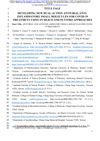
This study explored new molecular structures as potential COVID-19 treatments, identifying a compound called Hit15 that inhibited viral infection in lab settings and reduced inflammation markers in human neutrophils, suggesting further development is warranted.
 103 citations
,
January 2011 in “Blood”
103 citations
,
January 2011 in “Blood” This study found that thymus transplantation in infants with FOXN1 deficiency led to T-cell reconstitution and functional immunity, resolving serious infections and cytopenias.
July 2025 in “Pediatric Transplantation” In this case study, a rare viral infection called trichodysplasia spinulosa was diagnosed in a 10-year-old girl post-kidney transplant; she was treated successfully with reduced immunosuppression alongside leflunomide and valganciclovir, though the efficacy of valganciclovir remains uncertain.
November 2025 in “Journal of Investigative Dermatology” A new genetic mutation causing Xeroderma Pigmentosum was found in an 8-year-old girl, affecting her DNA repair.
November 2005 in “PubMed” In this study, the researchers successfully cloned and sequenced the hairless gene cDNA of Kunming mice, revealing high conservation and functional significance among various mammalian species.
 35 citations
,
August 2010 in “The American journal of pathology”
35 citations
,
August 2010 in “The American journal of pathology” This study reports that hypomorphic alleles of the Ass1 gene in mice resemble human CTLN1, providing a potential model for preclinical studies and indicating that standard treatments for CTLN1 can rescue phenotypes.
114 citations
,
May 2001 in “Development” This study found that overexpressing the Hoxc13 gene in mice causes hair loss and a skin condition similar to ichthyosis, identifying several gene targets that may regulate hair growth.
 11 citations
,
January 2020 in “BMC pediatrics”
11 citations
,
January 2020 in “BMC pediatrics” This case report identified two new SLC39A4 mutations in twin patients with acrodermatitis enteropathica, suggesting that different mutations in this gene may lead to varying clinical manifestations of the disorder.
1 citations
,
September 2017 in “Zhonghua neifenmi daixie zazhi” This article discusses the importance of routine karyotyping in patients with congenital adrenal hyperplasia, as it may reveal the presence of Turner syndrome and recommends early diagnosis and treatment; it reports no new clinical results.
 9 citations
,
October 2022 in “Nature Communications”
9 citations
,
October 2022 in “Nature Communications” In this study, researchers developed a new photoactivatable Cre recombinase mouse model, DiLiCre, which allows precise light-induced genetic modifications and cell tracing, demonstrating its effectiveness for advancing biological and biomedical research.
50 citations
,
December 2005 in “European Journal of Immunology” This study found that a specific mutation in the mouse RXRalpha gene significantly impacts immune responses and causes hair loss and skin cysts.
60 citations
,
September 2023 in “Science” This study found that the restoration of CD103⁺γδ T cells in humans is associated with sustained remission in inflammatory bowel disease, suggesting a conserved role for these cells in limiting disease progression.
 1 citations
,
May 2018 in “Clinical chemistry”
1 citations
,
May 2018 in “Clinical chemistry” This case report described a 9-year-old girl initially suspected to have complete androgen insensitivity syndrome, whose laboratory tests later suggested an alternative diagnosis involving atypical steroid metabolism patterns and hormonal responses.
December 2024 in “The American Journal of Gastroenterology” This case report highlights the successful use of tofacitinib in a 12-year-old patient with Crohn’s disease who developed alopecia areata following infliximab treatment, showing significant hair regrowth and complete resolution of alopecia within eight months while maintaining remission of Crohn’s symptoms.
29 citations
,
July 2015 in “Journal of Medical Genetics” This study identified a new gene involved in woolly hair by linking a homozygous variant in KRT25 to autosomal recessive woolly hair in two Pakistani families.
 December 2024 in “Kırıkkale Üniversitesi Tıp Fakültesi Dergisi”
 This study found that chromosomal microarray analysis identified copy number variations in 12% of patients with dysmorphic features and congenital anomalies, demonstrating its potential as a diagnostic tool, especially for rare CNVs and immune deficiency linked to the deletion of CTLA4.

In this study, researchers analyzed over 5,000 T cells per sample using scRNA+TCR-seq technology and found that dual TCR Tregs are present in high proportions across various mouse tissues, showing unique TCR pairing patterns, V(D)J usage, and mRNA expression compared to single TCR Tregs.
 August 2025 in “The Nishinihon Journal of Dermatology”
 In this case study, a 53-year-old male diagnosed with Cronkhite-Canada syndrome saw improvements in diarrhea and hair regrowth after starting treatment with prednisolone, and a year later, all polyps had disappeared, suggesting a potential link between the syndrome and Alopecia areata incognita.
 September 2024 in “Journal of Medicine and Life”
 In this study, researchers identified a recurrent nonsense mutation, c.409C>T (p.Arg137*), in the COL7A1 gene through whole exome sequencing in a family with autosomal recessive dystrophic epidermolysis bullosa, demonstrating the importance of this method for diagnosing genetically complex conditions.
April 2021 in “Journal of Investigative Dermatology” 22 citations
,
May 2007 in “Molecular Biotechnology” 6 citations
,
October 2001 in “British Journal of Ophthalmology” This article discusses the potential of intralesional cidofovir for treating SCC without systemic toxicity, noting that surgical excision remains the best treatment option; it reports no new clinical results.
124 citations
,
July 2017 in “eLife” This study found that COL17 deficiency in neonatal mice causes abnormal skin cell proliferation due to disrupted Wnt signaling, while replenishing or overexpressing COL17 can reverse this effect in both neonatal and aged skin.
 50 citations
,
July 2021 in “Nature Communications”
50 citations
,
July 2021 in “Nature Communications” This study found that the antiandrogen drug enzalutamide reduced TMPRSS2 levels and significantly decreased SARS-CoV-2 entry and infection in lung cells, supporting further clinical trials for COVID-19 treatment.
February 2026 in “Journal of Chittagong Medical College Teachers Association” This case report highlights a 17-year-old female with Kartagener's syndrome and ectodermal anomalies, such as alopecia and dental issues, suggesting a possible novel syndromic variant, with genetic testing recommended to distinguish it from a dual diagnosis.
November 2013 in “Faculty Opinions – Post-Publication Peer Review of the Biomedical Literature” Keratin 79 cells help form and regenerate hair canals.