 1 citations
,
November 2023 in “Journal of ovarian research”
1 citations
,
November 2023 in “Journal of ovarian research” In this study involving rats with letrozole-induced polycystic ovary syndrome, Agaricus subrufescens significantly reduced blood glucose, total cholesterol, testosterone levels, and renal markers, suggesting its potential protective effects on both metabolic and reproductive parameters.
 1 citations
,
July 2013 in “JAMA Dermatology”
1 citations
,
July 2013 in “JAMA Dermatology” This abstract is a website placeholder and reports no research findings or results; it contains navigation and policy information for JAMA Dermatology.
 March 2026 in “Inflammopharmacology”
 This study found that ursolic acid at 50 mg/kg improved biochemical, hormonal, and ovarian histopathological markers in a rat model of PCOS, suggesting its potential as a therapeutic option.
This review discusses polycystic ovary syndrome, focusing on its primary features of ovulatory dysfunction and hyperandrogenism, and reports no new findings.
August 2025 in “Obstetrics and gynecology.” This article reviews the management of polycystic ovarian syndrome, highlighting lifestyle modification and individualized pharmacological treatment strategies, and reports no new clinical results.
 January 2025 in “International Journal for Research Trends and Innovation”
 This review examines the factors contributing to Polycystic Ovary Syndrome in India, discussing genetic, lifestyle, and environmental influences, but provides no new clinical results.
 December 2024 in “Research Journal for Social Affairs”
 This review discusses the etiology, diagnosis, and management of polycystic ovary syndrome and reports no new clinical findings.
November 2024 in “Journal of Investigative Dermatology” Genetic changes in specific proteins contribute to hair loss in some women of African descent.
 December 2023 in “Magna Scientia Advanced Research and Reviews”
 This study proposes that combining trazodone and clomiphene citrate could potentially restore libido synaptic circuits and treat post-finasteride syndrome, which involves persistent sexual dysfunction after discontinuing finasteride treatment.

This review discusses the complexities of managing polycystic ovarian syndrome in females, examining its various phenotypes and treatment options, but it does not present new clinical findings.
 July 2023 in “Research Square (Research Square)”
 In this study conducted on rabbits, conventional blood treated with 120% sodium citrate was observed to achieve the highest platelet recovery and enrichment coefficient, while altering sodium citrate concentrate affected levels of growth factors PDGF and TGF-β1 after plasma activation.
 December 2022 in “International Journal of Current Science Research and Review”
 This review discusses the underdiagnosis and diverse treatment approaches for Polycystic Ovary Syndrome in India, highlighting the need for more open discussion and holistic treatment strategies.
 September 2022 in “Al-Azhar University Journal of Virus Researches and Studies”
 This study found that vitamin D supplementation significantly improved ovulation rates in PCOS patients undergoing treatment with clomiphene citrate.
 June 2022 in “COJ Biomedical Science & Research”
 PCOS management includes lifestyle changes and medications to improve fertility.
December 2019 in “Orvostudományi Értesítö” This article reviews treatment approaches for polycystic ovary syndrome, highlighting lifestyle changes, medications like metformin for insulin resistance, and fertility therapies, acknowledging the complexities and contraindications involved.
This study found that in the San Plácido parish of Ecuador, various medicinal plants were widely used by locals for treating common ailments, with the most utilized species being Matricaria chamomilla L. and Mentha rotundifolia L.
August 2019 in “Repozitorij Farmaceutsko-biokemijskog fakulteta (Sveučilišta u Zagrebu)” This review discusses the pathophysiological characteristics and treatment options for polycystic ovary syndrome, reporting no new clinical results; the authors emphasize combining non-pharmacological measures with pharmacological treatments for optimal patient management.
August 2019 in “Repozitorij Farmaceutsko-biokemijskog fakulteta (Sveučilišta u Zagrebu)” This review discusses the pathophysiology of polycystic ovary syndrome and its non-pharmacological and pharmacological treatment options, but reports no new clinical results.
 July 2019 in “International journal of reproduction, contraception, obstetrics and gynecology”
 This study concluded that women with obesity have a higher risk of developing polycystic ovarian syndrome compared to those without obesity.
 July 2019 in “Mayo Clinic proceedings”
 This case study concluded that weight loss is the initial recommended approach for treating secondary hypogonadism, as shown by improvements in testosterone levels and symptoms in an obese 37-year-old patient.
 March 2019 in “Evidence Based Women Health Journal (Online)”
 This study found that vitamin D supplementation increased the cumulative ovulation rate in vitamin D deficient women with polycystic ovary syndrome compared to those with normal vitamin D levels and a control group.
This review discusses the diagnostic criteria and management challenges for polycystic ovarian syndrome and reports no clinical results, highlighting complications associated with pregnancy in women with the condition.
 November 2018 in “International Journal of Current Pharmaceutical Research”
 This review discusses the causes, underlying mechanisms, diagnosis, and treatment strategies for polycystic ovary syndrome but reports no new clinical findings.
January 2018 in “Figshare” This study found that both ruxolitinib and tofacitinib were effective in promoting hair regrowth for patients with severe alopecia areata, with no significant difference in efficacy and relapse rate between them, and both were well tolerated throughout the treatment.
 November 2017 in “Elsevier eBooks”
 This article reviews the complications and health risks associated with polycystic ovary syndrome and reports no new clinical findings.
October 2017 in “Zenodo (CERN European Organization for Nuclear Research)” This study found that metformin improved quality of life for overweight and obese women with PCOS, while clomiphene citrate and inositol were more effective for non-obese and underweight women.
 January 2015 in “Springer eBooks”
 This chapter reviews polycystic ovary syndrome's clinical features, highlighting diagnostic criteria and management strategies, and reports no new findings; the authors emphasize the need for targeted treatment approaches.
June 2014 in “Dermatology Times E-News” An arthritis drug helped a person with severe hair loss regrow their hair.
This study provides detailed taxonomic and pharmacognostic analyses to authenticate and standardize seven herbal medicines, aiding in their differentiation from common adulterants for improved identification and classification.
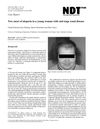
This article discusses various potential causes of hair loss in women undergoing renal replacement therapy and emphasizes the importance of thorough patient evaluation, but it reports no new research findings.