 3 citations
,
April 2020 in “Clinical endocrinology and metabolism journal”
3 citations
,
April 2020 in “Clinical endocrinology and metabolism journal” This review discusses imaging's role in the diagnosis and management of congenital adrenal hyperplasia and reports no new clinical results; it suggests a potential presentation route via incidental radiologic findings.
17 citations
,
January 2015 in “JOURNAL OF CLINICAL AND DIAGNOSTIC RESEARCH” This report presents a case of Cronkhite-Canada syndrome in an elderly Indian male, adding to the approximately 450 cases documented worldwide, but introduces no new results about the condition.
4 citations
,
September 2025 in “Journal of the American Academy of Dermatology” February 2017 in “Cancer Research” In this study involving women undergoing taxane-based chemotherapy, a twice-daily topical application of BPM31543 was well-tolerated and showed potential in reducing severe hair loss, prompting further investigation at higher doses.
 27 citations
,
September 1992 in “The Lancet”
27 citations
,
September 1992 in “The Lancet” ICL is a condition with low CD4+ T cells like AIDS but not caused by HIV, and normal CD4+ T cell counts may vary between men and women.
 October 2024 in “Journal of the Endocrine Society”
 In this case report, a rare association between Cushing's syndrome caused by ectopic ACTH from cervical cancer is documented, highlighting the diagnostic challenges, treatment complexity, and high morbidity and mortality, with the patient succumbing to septic shock post-surgery.
 21 citations
,
April 2015 in “Psychology Research and Behavior Management”
21 citations
,
April 2015 in “Psychology Research and Behavior Management” This review evaluates various cognitive-behavioral interventions for trichotillomania but does not report new clinical findings, highlighting the need for further research on their efficacy.
 September 2013 in “Metal Powder Report”
 This study found that dihydrotestosterone induces hair loss in male C57BL/6 mice, and this effect can be partially reversed by the androgen receptor antagonist bicalutamide.
October 2023 in “Nutrients” This study suggests that a complex of millet and wheat extract may enhance hair health by reducing oxidative stress and inflammation and potentially prolonging the anagen phase of hair growth in models.
 January 2025 in “Institutional Repositories DataBase (IRDB)”
 This study observed that topical application of maslinic acid stimulated hair growth in mice comparably to minoxidil, possibly through the Wnt/β-catenin pathway and involving ciliary gene activity, highlighting increased levels of trichogenic gene expression and protein levels.
April 2017 in “Journal of Investigative Dermatology” Deleting Crif1 in mouse skin disrupts skin balance and hair growth.
3 citations
,
February 2020 in “DOAJ (DOAJ: Directory of Open Access Journals)” This review discusses the challenges of managing intraoperative floppy iris syndrome during cataract surgery and highlights the importance of preoperative risk assessment and multidisciplinary collaboration, reporting no new clinical results.

This study reported that the Fe@C/CB electrocatalyst effectively detected Metol in water samples with a low detection limit, high sensitivity, and good stability, suggesting it as a promising tool for environmental monitoring.
 2 citations
,
December 2022 in “PNAS nexus”
2 citations
,
December 2022 in “PNAS nexus” In laboratory experiments, this study found that the topical prodrug SCD-153, a derivative of 4-methyl itaconate, reduced inflammation-related gene expression and induced significant hair growth in mice, suggesting it as a promising treatment candidate for alopecia areata.
 January 2007 in “Revista del Centro Dermatológico Pascua”
 This case report describes a 2-year-old boy diagnosed with trichothiodystrophy, characterized by fragile hair, intellectual damage, diminished fertility, and short stature.
May 2025 in “International Journal of Women’s Dermatology” This study found that patients with central centrifugal cicatricial alopecia were less likely to report treatment improvement and more commonly associated with certain hairstyling practices compared to those with other scarring alopecias.
 September 2025 in “PubMed”
 In this Delphi study, international experts established consensus-based guidelines for diagnosing and managing persistent chemotherapy-induced alopecia (pCIA), recommending prevention through scalp cooling and early use of minoxidil, while advising against bicalutamide and certain finasterides for breast cancer patients due to safety concerns.
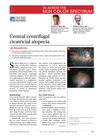 1 citations
,
April 2022 in “The Journal of Family Practice”
1 citations
,
April 2022 in “The Journal of Family Practice” This report describes early and late stages of central centrifugal cicatricial alopecia in two Black women, highlighting progression from a small to a large central patch of hair loss.
This study examined extracts from the heartwood of Kouyousan trees for anti-termite activity against Japanese termites. The researchers reported that cedrol showed strong anti-termite effects, with feeding deterrent activity at low concentrations and lethal effects at high concentrations, while isoabienol mainly contributed to feeding deterrence.
 201 citations
,
November 1964 in “Journal of neurophysiology”
201 citations
,
November 1964 in “Journal of neurophysiology” The cuneate nucleus has two main neuron types: relay neurons and interneurons.
September 2010 in “Reactions weekly” The combination of tretinoin, minoxidil, and betamethasone valerate may cause severe scalp inflammation.
 March 2025 in “Buletin Veteriner Udayana”
 In this study, a domestic cat diagnosed with scabiosis and Felicola subrostratus infestation was successfully treated with ivermectin, diphenhydramine, fish oil, sulfur soap, and topical fipronil, showing good treatment outcomes.
3 citations
,
August 2019 in “Journal of Cancer Research and Therapeutics” This case report describes an unusual combination of hypertrichosis, androgenic alopecia, and trichomegaly in a patient with metastatic colon adenocarcinoma treated with cetuximab, with no adrenal or hormonal abnormalities detected.
25 citations
,
August 2015 in “Molecules” This study found that mimosine dipeptide enantiomers inhibit melanogenesis and cyclooxygenase enzymes in B16F10 melanoma cells, suggesting potential for treating skin hyperpigmentation and inflammation.
7 citations
,
April 2021 in “Journal of Pharmacy and Pharmaceutical Sciences” This study found that while both cetirizine 1% and minoxidil 5% increased hair density in men with androgenetic alopecia, minoxidil showed a significantly higher improvement, and both treatments lost effectiveness after 8 weeks without use; cetirizine was well-tolerated with no significant adverse reactions.
 78 citations
,
June 2005 in “Annals of oncology”
78 citations
,
June 2005 in “Annals of oncology” This case study reported that a 74-year-old woman with metastatic rectal cancer experienced temporary trichomegaly, or eyelash lengthening, associated with cetuximab treatment, which resolved after discontinuation of the drug.
 24 citations
,
January 2020 in “JAAD Case Reports”
24 citations
,
January 2020 in “JAAD Case Reports” This article discusses the staging of central centrifugal cicatricial alopecia in women of African descent and reports no new clinical results.
July 2026 in “UCLA Department of Medicine Clinical Insights” This case report illustrates how cognitive-behavioral therapy effectively reduced hair-pulling behavior and improved self-confidence and interpersonal relationships in a patient with trichotillomania.
5 citations
,
January 2024 in “JID Innovations” In this study, researchers identified significant differences in protein expression patterns in scalps affected by central centrifugal cicatricial alopecia, notably upregulation of immune pathways and fibrosis markers and downregulation of metabolic proteins, suggesting unique disease mechanisms and potential therapeutic targets.
13 citations
,
January 2020 in “Annals of Oncology” Cryotherapy and compression therapy might help prevent chemotherapy nerve damage, but more research is needed.