29 citations
,
March 2000 in “Journal of Investigative Dermatology” The gene for Marie Unna hereditary hypotrichosis is located on chromosome 8p21.
2 citations
,
July 2022 in “Frontiers in Veterinary Science” This case report describes a rare instance of a Chinese Crested dog with leukocyte chimerism, normal female external genitalia, and hormonally active Sertoli cell tumors, demonstrating surgery as a curative treatment option.
21 citations
,
September 1997 in “British Journal of Dermatology” This study found that monilethrix in three unrelated European families is linked to the type II keratin gene cluster on chromosome 12q13, with no evidence of defects in type I keratins.
4 citations
,
August 2021 in “Pediatrics in review” This review explores disorders of sex development, emphasizing the need for a systematic, multidisciplinary approach and the benefits of genetic testing for better diagnosis and gender assignment planning, but it reports no new clinical findings.
100 citations
,
November 1997 in “Human Genetics” In this study, researchers found that the prevalent Glu 410 Lys mutation in hHb6 and a new Glu 403 Lys mutation in hHb1 are linked to monilethrix, suggesting a mutational hotspot in type II hair keratins.
7 citations
,
April 2000 in “Mammalian Genome” This study identified a new mutation in SELH/Bc mice causing distinctive whisker and body hair abnormalities, mapped near the type I keratin cluster on chromosome 11.
143 citations
,
January 2007 in “The American Journal of Human Genetics” This study identified four genetic loci on chromosomes 6, 10, 16, and 18 that may contribute to susceptibility for alopecia areata and suggested shared genetic factors with psoriasis.
8 citations
,
March 2004 in “Mammalian genome” KAP genes are crucial for hair development and show both shared and unique traits in humans, chimpanzees, and baboons.
 89 citations
,
October 1996 in “Dermatologic Clinics”
89 citations
,
October 1996 in “Dermatologic Clinics” This review discusses androgenetic alopecia and alopecia areata through a systems biology lens, emphasizing the role of multi-omics data integration to explore molecular mechanisms and potential therapeutic strategies, but offers no new clinical results.
26 citations
,
August 2008 in “Clinical endocrinology” This paper summarizes proceedings from a PCOS Special Interest Group, reporting recent advances in the understanding of PCOS follicular abnormalities, associated cardiovascular risks, and dermatological issues, but does not present new clinical findings.
 11 citations
,
March 2001 in “Clinics in Dermatology”
11 citations
,
March 2001 in “Clinics in Dermatology” This article discusses the complexities in diagnosing hair shaft disorders and the potential insights hair microscopy can provide, without reporting new clinical findings.
 2 citations
,
July 2016 in “Pharmacopsychiatry”
2 citations
,
July 2016 in “Pharmacopsychiatry” This case report describes a non-mosaic Turner-Syndrome individual with global cerebral atrophy, significant cognitive impairment, and severe treatment-resistant schizophrenia.
126 citations
,
October 1998 in “Experimental Dermatology” This review provides an overview of the hairless gene in mice and humans, discussing its structure, expression, and implications for understanding skin physiology and human disorders related to gene disruption, but it reports no new empirical findings.
 4 citations
,
January 2014 in “International Journal of Trichology”
4 citations
,
January 2014 in “International Journal of Trichology” This report presents a 12-year-old male with symptoms indicative of Marie-Unna type hereditary hypotrichosis, characterized by a specific pattern of hair loss evolving with age.
4 citations
,
January 2013 in “International Journal of Trichology” Monilethrix has no effective treatment, but avoiding hair trauma helps manage it.
 1 citations
,
September 2021 in “CRC Press eBooks”
1 citations
,
September 2021 in “CRC Press eBooks” This chapter reviews trichoscopic-pathologic correlations in Frontal Fibrosing Alopecia and reports no new clinical results; the authors discuss genetics, clinical patterns, and unusual variants associated with this condition.
 1 citations
,
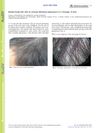
January 2018 in “Acta dermato-venereologica”
1 citations
,
January 2018 in “Acta dermato-venereologica” A teenager's hair with alternating white and dark bands, known as Pili annulati, is a genetic condition that is usually harmless and often considered attractive.
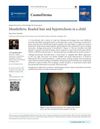 January 2026 in “Cosmoderma”
 In this clinical case study, a 9-year-old girl was diagnosed with monilethrix, a hereditary hair shaft disorder characterized by weak, beaded hair, with management focusing on minimizing hair trauma.
 November 2022 in “Journal of the Endocrine Society”
 This case report highlights a novel NR5A1 gene variant associated with a severe 46,XY disorder of sex development, stressing the importance of genetic screening in similar cases.
 4 citations
,
September 2010 in “Journal of Dermatological Science”
4 citations
,
September 2010 in “Journal of Dermatological Science” This article reviews keratosis follicularis squamosa, a keratinizing disorder predominantly found in the Japanese population, but reports no new clinical results.
5 citations
,
December 2014 in “Molecular cytogenetics” This study identified a 290 Kb microduplication in chromosome 1q22 in a family with members exhibiting neurodevelopmental disorders, suggesting a link between this genetic alteration and the observed neurological symptoms.
54 citations
,
January 1995 in “Human Molecular Genetics” This study mapped monilethrix, a hereditary hair and nail disorder, to the type II keratin cluster on chromosome 12q, marking the first primary human hair disorder localization and implicating defects in "hard" keratins.
21 citations
,
December 1991 in “Annals of the New York Academy of Sciences” This study suggests that hair keratin gene mutations in mice may be linked to specific loci on chromosomes 11 and 15, potentially influencing keratin expression or structure.
12 citations
,
January 2000 in “Biochemical and Biophysical Research Communications” This study characterized the intron-exon organization of human keratin 15 and keratin 19 genes to aid future mutation detection analyses related to potential genetic disorders of keratinization.
11 citations
,
February 2011 in “The Journal of Dermatology” This study observed four consanguineous families with congenital atrichia with papular lesions and identified three novel mutations in the hairless gene, which may contribute to the disorder.
 September 2023 in “International journal of science and healthcare research”
 In this report, a preterm neonate was found to have total irreversible hair loss due to congenital atrichia, confirmed by a mutation in the human hairless gene on chromosome 8p22, illustrating this rare autosomal recessive disorder.
This study mapped the curly mutation in mice to a specific region on chromosome 11, identifying it as a candidate model for studying human genetic hair disorders.
 May 2015 in “Journal of Dermatological Science”
 Researchers found a new area on chromosome 2 linked to a genetic hair loss condition.
8 citations
,
July 2015 in “Molecular cytogenetics” This case study describes a patient with Turner syndrome who, despite lacking many classic features, presented with multiple autoimmune diseases, suggesting a link between complex X chromosome rearrangements and increased autoimmune risk.
June 2026 in “The Journal of Sexual Medicine” This case report describes an extremely rare instance of seminoma in an adult with SRY-negative 46,XX testicular disorder of sex development, uniquely presenting as acute abdomen due to gonadal torsion.