December 2018 in “International journal of women’s dermatology” This case report highlights that frontal fibrosing alopecia may be underrecognized in young women and notes that no single treatment regimen has been proven consistently effective for this condition.
 September 2022 in “PubMed”
 Entadfi, a mix of finasteride and tadalafil, is used for BPH.
 November 2023 in “The journal of investigative dermatology/Journal of investigative dermatology”
 This study found that engineered high-affinity soluble CD200R agonists, including ARQ-234, showed superior efficacy in reducing immune responses in various preclinical models of inflammatory conditions, suggesting potential as a therapeutic for atopic dermatitis and other related diseases.
3 citations
,
March 2023 in “Cell Biology International” In this study, ASC-enriched autologous fat grafting was found to be more effective and satisfying than conventional fat grafting for treating facial contour deformities with hyperpigmentation.
 53 citations
,
May 2010 in “Dermatologic Surgery”
53 citations
,
May 2010 in “Dermatologic Surgery” This article appears to be a table of contents or navigation page for a journal, not presenting any new findings or research results.
 January 2025 in “International Journal of Scientific Research in Science and Technology”
 This study validated an HPLC analytical method for evaluating fenasteride in commercial products, finding it to be sensitive, selective, and within acceptance criteria for specificity, precision, and stability, making it suitable for quality control testing.
 December 2023 in “The journal of physical chemistry. B (1997 : Online)”
 This study explored the potential of human hair keratin as a filtration material, finding that it may effectively absorb the pollutants diclofenac and perfluorobutanesulfonate. The researchers reported significant binding affinities through molecular simulations, supporting further investigation into keratin's use for water purification.
22 citations
,
July 2024 in “Frontiers in Oncology” This study found that FLASH radiation within a Spread-out Bragg Peak retained its normal tissue-sparing effect compared to conventional radiation, with a 40% reduction in acute skin damage and an 18% reduction in fibrotic development in mice.
 15 citations
,
February 2021 in “Scientific Reports”
15 citations
,
February 2021 in “Scientific Reports” This study found that novel RNA aptamers specifically inhibited FGF5-induced cell proliferation, suggesting their potential as candidates for treating FGF5-related diseases or hair disorders.
 September 2021 in “Clinical research in dermatology”
 This review discusses frontal fibrosing alopecia and reports no new clinical results; the authors highlight the need for randomized controlled trials on 5AR inhibitors to assess their efficacy and safety.
3 citations
,
April 2025 in “International Journal of Pharmaceutics” Nanocrystals improve alopecia areata treatment by better targeting hair follicles.
15 citations
,
May 2023 in “Aesthetic Surgery Journal” This study highlights ongoing limitations in the administration and reporting of FACE-Q Aesthetic scale data, recommending that future research follow the User's Guide for proper administration and scoring, justify the study's time frame, and provide sample size calculations for key outcomes.
 June 2019 in “Reactions Weekly”
  46 citations
,
July 2008 in “Dermatologic Therapy”
46 citations
,
July 2008 in “Dermatologic Therapy” This study developed and evaluated a photographic scale to assess CCCA pattern and severity in African American women, finding it reproducible when used by investigators and participants.
 July 2010 in “Hair transplant forum international”
 This article discusses the first international certification examination by the American Board of Hair Restoration Surgery, with no new research findings reported.
May 2026 in “International Journal of Dermatology” This study investigated a unique frontal fibrosing alopecia-like presentation of alopecia areata, finding that patients experienced an insidious, chronic course with limited scalp hair regrowth, and showed a lower response to systemic corticosteroids compared to patchy alopecia areata.
 68 citations
,
May 2016 in “Experimental dermatology”
68 citations
,
May 2016 in “Experimental dermatology” This review discusses what is known about the pathobiology of frontal fibrosing alopecia and reports no new clinical findings, highlighting potential environmental and genetic factors in disease pathogenesis.
This study used molecular dynamics simulations to illustrate the complex molecular behavior of the hair surface F-layer, highlighting how fatty acids interact with 18-MEA under different conditions.
3 citations
,
July 2022 in “BMC chemistry” This study introduced and validated new spectrophotometric methods to simultaneously determine finasteride and tadalafil in Entadfi™ capsules with high sensitivity and without interference from excipients.
9 citations
,
July 2019 in “Dermatologic therapy” In this case report, a patient with frontal fibrosing alopecia and lichen planus responded well to treatment with alitretinoin, suggesting a potential therapeutic role for alitretinoin in similar cases.
In this narrative review, researchers evaluated existing literature on the treatment of frontal fibrosing alopecia, finding that while no curative treatment exists, clinical improvements can be achieved through personalized and combined therapy approaches.
1 citations
,
December 2014 in “Journal of the Society of Cosmetic Scientists of Korea” This study found that corticotropin-releasing factor influences cytokine expression related to hair growth in human dermal papilla cells and suggests CRF receptor antagonists could be potential treatments for stress-induced hair loss.
114 citations
,
October 2006 in “Journal of the European Academy of Dermatology and Venereology” In this study, clobetasol propionate foam demonstrated effectiveness and good patient compliance as a safe topical treatment for moderate to severe alopecia areata, with significant hair regrowth compared to placebo.
 17 citations
,
October 2017 in “Journal of Cutaneous Medicine and Surgery”
17 citations
,
October 2017 in “Journal of Cutaneous Medicine and Surgery” This review discusses the various treatment options for frontal fibrosing alopecia but reports no definitive results, as no treatment has proven effective in halting hairline recession or promoting hair growth.
 4 citations
,
September 2020 in “Annals of Translational Medicine”
4 citations
,
September 2020 in “Annals of Translational Medicine” This study found that concentrated nanofat, used alone or with decellularized nanofat, may enhance hair growth in mice by activating dermal papilla cells and the anagen phase.
 3 citations
,
January 2012
3 citations
,
January 2012 This study developed and validated an RP-HPLC-PDA method for accurately estimating Tamsulosin and Finasteride in bulk and tablet forms, achieving precise detection and linearity within specified concentration ranges.
4 citations
,
April 2019 in “DOAJ (DOAJ: Directory of Open Access Journals)” This review highlights available treatments for frontal fibrosing alopecia, noting that 5-alpha reductase inhibitors, intralesional steroids, and hydroxychloroquine currently have the most evidence supporting their use, while other treatments show variable results and require further study.
July 2024 in “Journal of Investigative Dermatology” The Fas/FasL pathway may play a role in alopecia areata.
 32 citations
,
September 2017 in “Journal of the American Academy of Dermatology”
32 citations
,
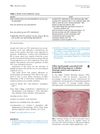
September 2017 in “Journal of the American Academy of Dermatology” In this study, researchers reported that oral isotretinoin effectively treated facial papules in frontal fibrosing alopecia, with histopathologic findings suggesting the involvement of elastic fibers and sebaceous glands in papule formation beyond perifollicular inflammation.