 1 citations
,
April 2016 in “Journal of The American Academy of Dermatology”
1 citations
,
April 2016 in “Journal of The American Academy of Dermatology” People with allergies or high eosinophil levels have a higher chance of severe hair loss from alopecia areata, and sudden hair loss can indicate chronic graft-versus-host disease.
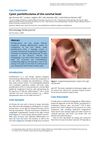 March 2026 in “Dermatology Online Journal”
 In this case report, the authors describe a rare cystic panfolliculoma in an 84-year-old man's right conchal bowl, noting its potential to mimic other tumors like basal cell carcinoma, which complicates diagnosis.
March 2026 in “Wound Repair and Regeneration” In this study, researchers used a mouse model to demonstrate that expression of MARCKSL1 in dendritic cells plays a crucial role in modulating fibrotic responses and scar formation during wound healing, suggesting that targeting this expression could offer new therapeutic strategies for scar prevention.
 February 2026 in “Frontiers in Medicine”
 In this case report, a three-generation family with Gorlin-Goltz syndrome showed a heterozygous PTCH1 splice-donor variant associated with the disease, and two affected relatives benefited from individualized, side-effect-guided dosing of the drug sonidegib, experiencing regression of basal cell carcinoma lesions.
 February 2026 in “American Journal of Clinical Dermatology”
 This source discusses how radiotherapy-induced skin fibrosis, a chronic side effect affecting cancer survivors' quality of life, is driven by ongoing inflammation and fibroblast activity, and emphasizes the need for comprehensive dermatologic management and better diagnostic tools.
 February 2026 in “Stem Cell Research & Therapy”
 This review article discusses recent advances in stem cell-based therapies for Alopecia Areata, noting preliminary clinical trials show significant hair regrowth, but emphasizes the need for thorough evaluation of long-term safety and efficacy.
 December 2025 in “IP Indian Journal of Clinical and Experimental Dermatology”
 This review reports that the treatment of androgenetic alopecia is shifting from single therapies to personalized, multimodal approaches incorporating both traditional and emerging pharmacologics, regenerative strategies, nutraceuticals, cosmeceuticals, and device-based interventions, with combination regimens showing improved outcomes.
October 2025 in “Preprints.org” This research concludes that adipose mesenchymal stem cells are uniquely evolved to manage skin inflammation in newborns and their released molecules are the safest and most effective for skin therapeutics.
 May 2025 in “The Journal of Rheumatology”
 This report describes two cases where female patients with chronic granulomatous disease developed manifestations of systemic lupus erythematosus, highlighting a rare association that may influence clinical evaluation and treatment planning.
 January 2025 in “American Journal of Translational Research”
 In this study, Erianin was found to significantly suppress alopecia areata in a mouse model by inhibiting effector T cell function, reversing systemic symptoms, and promoting hair growth.
 November 2023 in “Наука і техніка сьогодні”
 This research provides a comprehensive comparison of hair restoration methods used in Ukraine and the USA, examining the effectiveness of surgical and non-surgical treatments for alopecia, including FUE and FUT hair transplantation, PRP therapy, and low-level laser therapy.
 October 2023 in “Clinical case reports”
 This case study reports the first Palestinian case of an ovarian steroid cell tumor with virilization in a young female, highlighting the challenges in diagnosis and varied chemotherapeutic responses.
 September 2023 in “Stem Cells International”
 This study using human and animal models found that adipose-derived stem cell exosomes promoted hair growth and counteracted dihydrotestosterone's inhibitory effects, suggesting potential therapeutic applications for androgenetic alopecia.

This study found that wavy sinus hairs in cats were significantly associated with feline leukemia virus infection, suggesting this physical trait might be useful for identifying infected cats.
October 2021 in “European journal of cancer” This case report describes a rare coexistence of primary subcutaneous panniculitis-like T-cell lymphoma and lupus panniculitis in a 20-year-old Moroccan woman, highlighting the importance of repeated biopsies for accurate diagnosis in resistant cases.
 January 2019 in “SAGE Open Medical Case Reports”
 This paper reports a rare case where AL amyloidosis presented as isolated scalp alopecia, underscoring the importance of considering systemic amyloidosis in the differential diagnosis of alopecia.
This source reviews advancements in microneedle-based cosmeceutical delivery, discussing new technologies and highlighting a burgeoning area of research involving microneedling combined with stem cell delivery for anti-aging, without finding measurable changes in skin barrier function or appearance during the study period.
 May 2018 in “White Rose eTheses Online (University of Leeds, The University of Sheffield, University of York)”
 In this study, researchers found that alopecia areata patients show a significant reduction in suppressive regulatory T-cells and an increase in inflammatory T-cell populations, suggesting an immunological imbalance contributing to the disease.
 January 2018 in “Stem cells in clinical applications”
 This review discusses the potential of exosomes and the secretome in stem cell-based regenerative therapies but reports no new experimental findings.
 September 2012 in “The Egyptian Journal of Histology”
 In this study, flutamide at therapeutic doses caused significant histological changes in the testes and epididymis of adult albino rats, reducing androgen receptor immunoreactivity and increasing estrogen receptor immunoreactivity.
 January 2012 in “Elsevier eBooks”
 This chapter reviews therapies for skin and corneal regeneration and hair loss, discussing various treatments but presenting no new research findings.
 November 2011 in “APMIS. Acta pathologica, microbiologica et immunologica Scandinavica./APMIS”
 This study found that Polyomavirus A2 infection in mice led to the development of pilomatricomas in hair follicles, with the virus replicating initially in the skin and later infecting matrix cells.
 January 2006 in “Advances in developmental biology”
 This review discusses the roles of the hairless (HR) protein as a corepressor, particularly its impact on RORα-mediated transcriptional repression, and reports no new experimental findings.
This thesis explores the role of the actin cytoskeleton in plant cell growth, highlighting its involvement in signal transduction and the regulation of tip growth in cells like root hairs.
 October 1982 in “American Journal of Nursing”
 Wound healing is a complex process involving different cells and stages, leading to scar tissue formation and strength increase over time.
 November 1966 in “British Journal of Dermatology”
 This conference proceeding abstract provides no new research results, focusing only on event details from the British Association of Dermatology's Forty-Sixth Annual Meeting held in Oxford in 1966.
September 2026 in “Aging Cell” This study found that knocking down SFRP2 in an AGA model improved hair regeneration and reduced cellular dysfunction, suggesting that targeting the SFRP2-FSTL1 axis could be a promising therapeutic strategy for androgenetic alopecia.
 June 2026 in “Romanian Journal of Medical Practice”
 This case report describes a 72-year-old woman with a steroid cell tumor of the ovary, highlighting the critical role of imaging, biochemical evaluation, and pathology in diagnosing and managing hormonally active ovarian tumors that cause virilization in postmenopausal women.

This review synthesizes current advances in transcriptomics and RNA regulatory networks, alongside stem cell-derived skin organoid research, to propose a conceptual framework for understanding and potentially guiding regenerative skin repair, without claiming clinical readiness.
 April 2026 in “Frontiers in Cell and Developmental Biology”
 This study found that CD200-negative human hair follicle bulge cells have a higher hair-regenerative capability compared to CD200-positive cells, suggesting that reduced CD200 expression may enhance hair regeneration, providing insights for improving bulge cell-based hair restoration techniques.