 4 citations
,
December 2014 in “European Journal of Chemistry”
4 citations
,
December 2014 in “European Journal of Chemistry” This study synthesized and characterized new 2-hydroxypyrrolidine/piperidine derivatives using FeCl₃·6H₂O as a catalyst, but it reports no biological or clinical results.
 1 citations
,
November 2025 in “Clinical Chemistry and Laboratory Medicine (CCLM)”
1 citations
,
November 2025 in “Clinical Chemistry and Laboratory Medicine (CCLM)” This study developed a new measurement procedure using isotope dilution-liquid chromatography-tandem mass spectrometry for accurate quantification of DHEAS in human serum or plasma, demonstrating high selectivity, sensitivity, and low measurement uncertainty, making it suitable for routine standardization and clinical evaluation.
8 citations
,
October 2013 in “Chemistry Central Journal” This study found that microbial transformation of dihydrotestosterone with two types of fungi produced eight metabolites, among which metabolites 5–7 were significant inhibitors of butyrylcholinesterase, suggesting potential in Alzheimer's disease management.
3 citations
,
August 2025 in “Fermentation” In this study, researchers produced a biosurfactant from yeast that effectively reduces surface tension, acts as a good oil emulsifier, demonstrates antioxidant and antimicrobial properties, and exhibits no cytotoxicity, suggesting its potential use in eco-friendly cosmetic formulations.
 86 citations
,
April 2016 in “Nature Communications”
86 citations
,
April 2016 in “Nature Communications” This study suggests that Notch1 acts as a key signal in skin epithelium, promoting immune cell recruitment and aiding in normal skin repair after damage.
 9 citations
,
July 2022 in “EMBO molecular medicine”
9 citations
,
July 2022 in “EMBO molecular medicine” This study found that targeting IL-6, IL-1, and CCR6 signaling pathways may effectively reduce irradiation-induced alopecia and dermatitis in radiotherapy patients.
 January 2014 in “Durham e-Theses (Durham University)”
 In this study, the activation of Notch1 signaling in keratinocytes was found to play a key role in recruiting immune cells and facilitating skin repair after injury.
 January 2019 in “Applied Organometallic Chemistry”
 The compound (NH4)2Mn0.17Cu0.83Cl4.2H₂O has a specific structure, shows weak magnetism at low temperatures, and undergoes phase changes at high temperatures.
 14 citations
,
February 1994 in “Tetrahedron Letters”
14 citations
,
February 1994 in “Tetrahedron Letters” This study found that using anhydrous cerium(III) chloride with alkyl Grignard reagents significantly improved the addition to sterically hindered 17-ketosteroids, resulting in high yields and stereoselectivity.
 137 citations
,
April 2015 in “Nature Reviews Molecular Cell Biology”
137 citations
,
April 2015 in “Nature Reviews Molecular Cell Biology” This review discusses the distinct roles and surprising developmental flexibility of multiple somatic stem cell types in tissue maintenance and repair, reporting no new results but highlighting emerging questions about their regulation and origins.
 58 citations
,
January 2003 in “Biological & Pharmaceutical Bulletin”
58 citations
,
January 2003 in “Biological & Pharmaceutical Bulletin” This study identified novel compounds from Bombax ceiba stem bark, including shamimicin, with potent hypotensive effects, and reported that a specific fraction had adverse effects on heart, liver, and kidneys in mice.
This chapter reviews various types of aromatic compounds and provides references, but reports no new experimental results.
1 citations
,
March 2004 in “Patty's Toxicology” This review discusses the uses and toxicological data of eleven unsaturated halogenated hydrocarbons, including dichloroacetylene, allyl chloride, hexachlorobutadiene, β-chloroprene, vinyl chloride, trichloroethylene, and perchloroethylene, but presents no new findings.
 20 citations
,
February 2002 in “Expert Opinion on Therapeutic Patents”
20 citations
,
February 2002 in “Expert Opinion on Therapeutic Patents” This review discusses the potential uses of 5α-reductase inhibitors for conditions ranging from benign prostatic hyperplasia to skin disorders like acne and male pattern baldness, but it reports no new clinical results.
 January 2025 in “Organics”
 This study found that differently charged micelles influence the acid-base equilibria of cetirizine by altering its ionization constants, indicating potential interactions with biomolecules of various charges under physiological conditions.
 773 citations
,
August 2017 in “International Journal of Molecular Sciences”
773 citations
,
August 2017 in “International Journal of Molecular Sciences” This article reviews the potential advantages of secretome derivatives from human uterine cervical stem cells in MSC therapy and notes the need for regulatory standards to ensure safety and efficacy.
 610 citations
,
April 2014 in “Nature Reviews Immunology”
610 citations
,
April 2014 in “Nature Reviews Immunology” This review discusses the complex mechanisms regulating skin immunity to balance host defense with inflammation, but reports no new findings.
 520 citations
,
January 2017 in “AIMS biophysics”
520 citations
,
January 2017 in “AIMS biophysics” This review discusses the effects of photobiomodulation, particularly its potential to reduce inflammation in various conditions, but it does not report new clinical findings.
 480 citations
,
August 2014 in “Nature Biotechnology”
480 citations
,
August 2014 in “Nature Biotechnology” This review discusses manipulating the stem cell niche as a strategy in regenerative medicine to repair damaged tissues, highlighting the potential benefits and challenges but reporting no new results.
 431 citations
,
October 2008 in “Current Medicinal Chemistry”
431 citations
,
October 2008 in “Current Medicinal Chemistry” This review focuses on coumarin analogs with potential antibreast cancer activities but reports no new clinical results, highlighting their mechanisms of action and structure-activity relationships.
 363 citations
,
March 2017 in “Nature Communications”
363 citations
,
March 2017 in “Nature Communications” This study found that, in mouse tail epidermis, stem cells rapidly activate and regenerate new progenitors to repair wounds, with mechanisms affecting their proliferation, differentiation, and migration.
 320 citations
,
December 2018 in “Frontiers in Immunology”
320 citations
,
December 2018 in “Frontiers in Immunology” This review explores how preconditioning mesenchymal stromal cells can impact their secretome's therapeutic potential in regenerative medicine, emphasizing immunomodulatory and regenerative functions, but provides no new clinical results.
 301 citations
,
February 2019 in “Nature Communications”
301 citations
,
February 2019 in “Nature Communications” In this study, researchers found that wound healing in mouse skin recruits diverse fibroblasts, including myeloid-derived cells, which contribute to regenerating adipocytes.
 188 citations
,
March 2018 in “Frontiers in Immunology”
188 citations
,
March 2018 in “Frontiers in Immunology” This review discusses the role of regulatory T-cells in tissue repair and regeneration across various organs and reports no new clinical results.
 182 citations
,
June 2017 in “Biomaterials”
182 citations
,
June 2017 in “Biomaterials” This study found that adipose-derived mesenchymal stem cells produced more anti-inflammatory and pro-angiogenic cytokines on electrospun scaffolds, which enhanced wound healing and macrophage activity in a rat model.
 176 citations
,
August 2015 in “The journal of allergy and clinical immunology/Journal of allergy and clinical immunology/The journal of allergy and clinical immunology”
176 citations
,
August 2015 in “The journal of allergy and clinical immunology/Journal of allergy and clinical immunology/The journal of allergy and clinical immunology” This study identified a distinct cytokine activation signature in alopecia areata, involving TH2, TH1, IL-23, and IL-9/TH9 pathways, suggesting potential targeting strategies similar to those in psoriasis and atopic dermatitis.
 163 citations
,
April 2019 in “Nature Communications”
163 citations
,
April 2019 in “Nature Communications” This study found that mechanical skin stretching can stimulate hair stem cell proliferation and hair regeneration by activating a complex pathway involving WNT, BMP-2, and M2 macrophages.
 144 citations
,
November 2020 in “Frontiers in immunology”
144 citations
,
November 2020 in “Frontiers in immunology” This study summarizes how the IL-23/IL-17 axis contributes to inflammatory skin diseases like psoriasis and highlights that biologics targeting this pathway, including monoclonal antibodies against IL-23 and IL-17, have shown efficacy in clinical trials for these conditions.
 130 citations
,
September 2018 in “Cell Reports”
130 citations
,
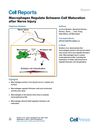
September 2018 in “Cell Reports” This study found that macrophages play a crucial role in nerve regeneration by regulating Schwann cell dynamics and remyelination, with Gas6 identified as a key factor in this process.
 124 citations
,
June 2020 in “Cell Stem Cell”
124 citations
,
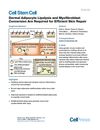
June 2020 in “Cell Stem Cell” This study found that in mice, dermal adipocytes initiate inflammation and aid repair after skin injury by releasing lipids, suggesting a role in managing inflammatory diseases and impaired wound healing.