16 citations
,
June 2015 in “The journal of investigative dermatology/Journal of investigative dermatology” This study found that DHHC13 is crucial for hair anchoring and skin barrier function, with its deficiency in Zdhhc13(skc4) mice leading to cyclic alopecia and skin abnormalities due to cornifelin deficiencies.
 April 2026 in “Institutional Repositories DataBase (IRDB)”
 This study investigated human hair follicle bulge cells and found that those with reduced CD200 expression exhibited enhanced hair regenerative capability, refining the functional understanding of bulge cell heterogeneity and providing insights for optimizing bulge cell–based hair regeneration techniques.
November 2025 in “FEBS Open Bio” In this study, the researchers using Shh-GFP+/- mice found that cyclophosphamide-induced alopecia involves the JAK/STAT1 pathway, where STAT1 binds the Shh gene promoter, decreasing Shh-expressing cells in hair follicles. Treatment with JAK inhibitors helped rescue hair loss, implicating the JAK/STAT1 pathway in this process.
 51 citations
,
May 2021 in “Nature Communications”
51 citations
,
May 2021 in “Nature Communications” This study found that ablating centrosomes in developing epidermis alters keratinocyte division without majorly affecting differentiation, suggesting early epidermal development is driven by high proliferation and cell delamination.
In this study, the researchers identified that perturbing both AKT1 and MDM2 significantly reduces epithelial-mesenchymal transition in melanoma, proposing Cialis and Finasteride as potential therapeutic candidates with favorable properties for managing aggressive melanoma.
2 citations
,
January 2022 in “The Application of Clinical Genetics” This case report presents the first Russian patient with Meier-Gorlin syndrome 5, expanding clinical understanding through the identification of two novel CDC6 gene variants.
24 citations
,
May 2009 in “The FASEB Journal” This study found that Akt2 and SGK3 are crucial for postnatal hair follicle development in mice, as their combined absence led to severe hair growth defects due to disrupted β-catenin-dependent transcriptional processes.
 6 citations
,
December 2011 in “Nature”
6 citations
,
December 2011 in “Nature” This study found that the circadian clock regulates the activation and heterogeneity of hair follicle bulge stem cells, affecting tissue homeostasis and tumorigenesis risk in mouse skin.
 25 citations
,
January 2014 in “Annals of Dermatology”
25 citations
,
January 2014 in “Annals of Dermatology” Sfrp2 increases during hair follicle catagen phase and slows keratinocyte growth.
 15 citations
,
December 2014 in “PLoS ONE”
15 citations
,
December 2014 in “PLoS ONE” This study identifies iRhom2 as a crucial regulator of hair follicle differentiation, showing that the iRhom2Uncv mutation leads to dysplasia and reduced TACE maturation, resulting in a hairless phenotype in mice.
 April 2021 in “Journal of Investigative Dermatology”
 In this study, researchers observed that different ERK signal activation dynamics during hair follicle regeneration are linked to cell fate specification and are affected by distinct upstream signaling pathways.
26 citations
,
January 1992 in “Carcinogenesis” This study suggests that chronic treatment with TPA in mouse skin selectively expands a keratinocyte subpopulation hyperinducible for ODC, which may be a key target for neoplastic transformation.
April 2024 in “Demiroglu Science University Florence Nightingale Journal of Medicine” This review highlights the role of the APCDD1 gene and associated pathways in hair follicle biology, offering new perspectives on genetic contributors to hair loss and suggesting potential avenues for developing targeted treatments and preventive strategies.
3 citations
,
April 2025 in “Science Advances” This study found that mice with a homozygous knockout of the Ten1 gene, developed through CRISPR-Cas9-mediated exon 3 deletion, exhibited telomere shortening and symptoms consistent with accelerated aging, such as reduced lifespan, skin changes, aplastic anemia, and cerebellar hypoplasia.
January 2008 in “Memorial University Research Repository (Memorial University)” This study found that the NHD domain, but not the PHD domain, of hPygo2 is crucial for Wnt-independent growth of ovarian cancer cells, and identified a key interaction with Treacle protein involved in ribosomal biogenesis.
 51 citations
,
February 2009 in “Journal of dermatological science”
51 citations
,
February 2009 in “Journal of dermatological science” In this study, β-catenin overexpression in human hair outer root sheath cells increased the expression of Pitx2, which activated the follicular differentiation pathway, suggesting Pitx2's potential role as a modulator in hair growth control.
83 citations
,
February 1991 in “Development” This study found that Fos protein expression is closely linked to epithelial cell differentiation, particularly during cornification and cell death, with overexpression observed in keratinization-blocked mutant epidermis.
8 citations
,
July 2024 in “Journal of Advanced Research” In this study, researchers report that CDK inhibitors like palbociclib and ribociclib, initially developed for cancer therapy, show potential in treating neutrophilic inflammation-related conditions such as ARDS and psoriasis, although their clinical repurposing requires further research on safety and dose adjustments.
 August 1994 in “Molecular Endocrinology”
 This study found that AtT-20 pituitary cells with higher cAMP-dependent kinase activity had larger calcium currents and significantly increased beta-endorphin release compared to cells with lower kinase activity.
29 citations
,
January 2013 in “The journal of investigative dermatology/Journal of investigative dermatology” In this study, silencing P-cadherin in human scalp hair follicles reduced melanogenesis and associated protein expression, suggesting P-cadherin is crucial for normal hair pigmentation via GSK3β-mediated Wnt signaling.
27 citations
,
October 1998 in “Differentiation” Basonuclin helps identify and track hair follicle development and cycling in mice.
35 citations
,
April 1998 in “PubMed” This study found that activating the erbB-2 oncogene in transgenic mice led to severe skin abnormalities and fatal defects, indicating erbB-2's significant role in skin and hair follicle development.
32 citations
,
July 2018 in “FEBS letters” In this study, researchers identified the CBL1-CIPK26 Ca 2+ sensor-kinase complexes as key modulators of the NADPH oxidase RBOHC crucial for root hair differentiation in plants.
January 2011 in “Anhui nongye kexue” This study reports that the recombinant expression vector pcDNA3.1-KK demonstrates specific expression in the skin of newborn mice.
79 citations
,
October 2003 in “PubMed” In this study, PKCepsilon transgenic mice showed increased TNFalpha shedding during skin tumor promotion, which may contribute to the development of metastatic squamous cell carcinoma.
 1 citations
,
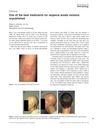
June 2018 in “International Journal of Dermatology”
1 citations
,
June 2018 in “International Journal of Dermatology” DNCB is highly effective for treating alopecia areata with minimal long-term side effects.
 April 2017 in “Journal of Investigative Dermatology”
 This study suggests that dermal Wnt/β-catenin activation timing is crucial for hair follicle initiation, with potential non-cell autonomous regulation of dermal condensate size.
88 citations
,
August 1998 in “Carcinogenesis” This study found that overexpression of ornithine decarboxylase and activated Ha-ras together led to a high rate of tumor development in a mouse model without additional carcinogens.
54 citations
,
October 2007 in “The FASEB Journal” This study suggests that hairlessness in nude mice may be due to insufficient expression of phospholipase C-δ1, a molecule essential for normal hair development downstream of the Foxn1 gene.
January 2026 in “Biomaterials”