 April 2017 in “Journal of Investigative Dermatology”
 This study demonstrated that mitochondrial function in keratinocytes is crucial for maintaining skin homeostasis and hair follicle development, as its impairment led to disrupted hair morphogenesis and early death in mice.

In this retrospective case series, therapeutic responses to immunomodulatory and incretin-based therapies for Dercum's disease showed considerable individual variation, suggesting these treatments might be exploratory options when surgery isn't feasible, though further controlled studies are needed for definitive conclusions.
16 citations
,
June 2015 in “The journal of investigative dermatology/Journal of investigative dermatology” This study found that DHHC13 is crucial for hair anchoring and skin barrier function, with its deficiency in Zdhhc13(skc4) mice leading to cyclic alopecia and skin abnormalities due to cornifelin deficiencies.
 April 2018 in “Journal of Investigative Dermatology”
 This study suggests that with aging, mouse corneal renewal increasingly relies on Lrig1+ stem cells as CD44 expression and Wnt activity decline.
 May 2026 in “Zenodo (CERN European Organization for Nuclear Research)”
 In this study, researchers described ONCO-NK-TRANSITION-GM1, a cancer therapy that's manufacturable with current pharmaceutical methods, showing a 60-80% complete response rate across various cancer types and costing $50 per dose, providing a more accessible alternative to existing treatments.
39 citations
,
February 1990 in “The journal of cell biology/The Journal of cell biology” This study identified trichohyalin as an early differentiation marker in hair follicles, with potential structural roles related to alpha-helical formations, based on the partial characterization of its cDNA in sheep.
12 citations
,
April 2017 in “Experimental and Therapeutic Medicine” This study found that patients with active severe alopecia areata exhibited decreased CD200 expression on T and B lymphocytes, which may be linked to an imbalance in Th1/Th2 immune equilibrium.
 25 citations
,
May 1994 in “Journal of Investigative Dermatology”
25 citations
,
May 1994 in “Journal of Investigative Dermatology” This study identified a novel gene, hacl-1, that is specifically expressed in the hair follicles of ICR mouse skin and is associated with their active state.
58 citations
,
May 2004 in “British Journal of Dermatology” This study found that topical immunotherapy affects angiogenesis and immune cell ratios in the scalp, potentially offering insights into the mechanisms underlying alopecia areata.
 18 citations
,
February 2022 in “Cell Death Discovery”
18 citations
,
February 2022 in “Cell Death Discovery” In this study, researchers found that hair follicle-derived mesenchymal stem cells, modified to overexpress extracellular matrix protein 1, significantly improved liver function and reduced liver damage in cirrhotic mice by inhibiting hepatic stellate cell activation and TGF-β/Smad signaling.
19 citations
,
September 2006 in “Journal of Pediatric Gastroenterology and Nutrition” In this case study, a 12-year-old girl with severe Crohn colitis achieved impressive clinical and endoscopic remission after receiving infliximab and azathioprine as first-line treatment, suggesting potential benefits of early intensive therapy.
 1 citations
,
June 2018 in “International Journal of Dermatology”
1 citations
,
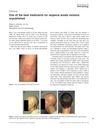
June 2018 in “International Journal of Dermatology” DNCB is highly effective for treating alopecia areata with minimal long-term side effects.
 1 citations
,
January 1995 in “Journal of Investigative Dermatology”
1 citations
,
January 1995 in “Journal of Investigative Dermatology” RU58841, a substance from France, can potentially block the effects of hormones that cause hair loss and excessive hair growth, performing better than a similar substance, cyproterone acetate.
 January 2025 in “Dermatology Reports”
 This case report describes a 61-year-old Italian man with a rare, localized variant of junctional epidermolysis bullosa linked to the R795X mutation in the COL17A1 gene, highlighting the importance of precise diagnosis for effective management of rare genetic disorders.
33 citations
,
May 2018 in “Stem Cell Reports” This study demonstrates that Krt15 marks long-lived, multipotent, and injury-resistant crypt cells in the small intestine, which may serve as the cell of origin in intestinal cancer.
 6 citations
,
September 2009 in “European journal of histochemistry”
6 citations
,
September 2009 in “European journal of histochemistry” This study found that CD90+ stem cells with fibroblast-like morphology are present in the lower part of the anagen hair follicle in dogs.
4 citations
,
October 2021 in “International Journal of Cosmetic Science” This study found that C. japonicum flower extract significantly increased melanin content and cellular activity in human melanocytes and may improve follicular depigmentation and vitiligo through cAMP signaling.
18 citations
,
May 2011 in “Journal of Investigative Dermatology” Wnt signaling affects the development and growth of Langerhans cells in mice.
 9 citations
,
February 2018 in “The Journal of Dermatology”
9 citations
,
February 2018 in “The Journal of Dermatology” This study identified a novel splice site mutation in the LIPH gene associated with autosomal recessive woolly hair, contributing to understanding the genetic basis of this condition.
 1 citations
,
January 2020 in “bioRxiv (Cold Spring Harbor Laboratory)”
1 citations
,
January 2020 in “bioRxiv (Cold Spring Harbor Laboratory)” This study suggests that Dicer, but not Tarbp2, plays a crucial role in regulating the growth phase of hair follicles in bulge stem cells during post-natal development in mice.

CaBP1 and 2 are necessary for maintaining calcium currents and hearing in inner ear cells.
 155 citations
,
May 2016 in “Nature communications”
155 citations
,
May 2016 in “Nature communications” This study found that mouse skin CD4(+) memory T cells are in equilibrium with the circulation under steady state but increase in specific clusters in response to infection or inflammation.
46 citations
,
May 1995 in “Proceedings of the National Academy of Sciences” This study demonstrated that a specific 9-kbp fragment of the bovine keratin 6 gene effectively directs tissue-specific and inducible expression in transgenic mice, suggesting potential applications for targeted gene therapy in hyperproliferative skin conditions.
 September 2013 in “Regenerative Medicine”
 This summary reports that γδ T cells play a role in regulating hair follicle formation during wound healing in adult skin.
February 2025 in “Experimental Cell Research” In this laboratory study, the researchers found that combining dermal papilla cell-derived exosomes with collagenous sequences significantly enhanced hair follicle stem cell migration and proliferation, highlighting a potential strategy for hair regeneration through modulation of the hsa-novel-238a-CASP9 axis.
6 citations
,
October 2023 in “JAAD Case Reports” This study describes dissecting cellulitis of the scalp (DCS) as a rare and aggressive form of chronic scalp inflammation presenting with pustules and nodules, commonly affecting males and African Americans, and leading to significant quality of life impacts and psychological distress.
2 citations
,
July 2022 in “The Kaohsiung Journal of Medical Sciences” This study demonstrated that the immunomodulatory drug FTY720 may enhance the survival of allogeneic fat grafts in mice by reducing immune rejection and improving neovascularization.
 5 citations
,
May 2011 in “European Journal of Medical Genetics”
5 citations
,
May 2011 in “European Journal of Medical Genetics” This case report describes a 44-year-old patient with late-onset partial lipodystrophy, mental retardation, epilepsy, ichthyosis, and glomerulonephritis, linked to a 10 Mb duplication of chromosome region 5q31.3-5q32.1.
6 citations
,
August 2016 in “Journal of Visualized Experiments” This article describes a method using the CUBIC protocol to clarify and visualize molecular and cellular interactions in mouse skin biopsies at single cell resolution, but does not provide new biological findings.

This phase Ib study found that combining pegylated liposomal doxorubicin and pembrolizumab was well-tolerated and effective, with durable antitumor responses and a median survival of over two years in heavily pretreated ER-positive metastatic breast cancer patients.