 4 citations
,
July 2012 in “Genesis”
4 citations
,
July 2012 in “Genesis” This study reported that a Megsin-Cre transgene enables genetic manipulation primarily in skin, forestomach, and esophagus tissues, offering a new tool for studying development and diseases in these areas.
39 citations
,
April 2023 in “Science Advances” This study identified that bone marrow-derived CD34+ cells act as fibroblast progenitors to enhance tissue regeneration in ischemic limbs by promoting angiogenesis through interactions with macrophages.
 1 citations
,
June 2018 in “International Journal of Dermatology”
1 citations
,
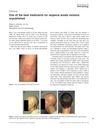
June 2018 in “International Journal of Dermatology” DNCB is highly effective for treating alopecia areata with minimal long-term side effects.
April 2024 in “Anais Brasileiros de Dermatologia”  April 2023 in “Journal of Investigative Dermatology”
 This study found that tissue transcriptomics and a normalization approach can effectively cluster nine inflammatory skin diseases and identify specific biomarkers, including PTEN as a marker for cutaneous lupus erythematosus.
In this study, deleting the -catenin gene in vitamin D receptor-null mice did not prevent tumor development, suggesting -catenin's predicted protective role was not observed.
32 citations
,
September 2013 in “Breast cancer research” This study identified a specific SNP in the CACNB4 gene associated with a higher risk of chemotherapy-induced alopecia in breast cancer patients, which may help develop interventions to improve their quality of life.
 1 citations
,
February 2025 in “Scientific Reports”
1 citations
,
February 2025 in “Scientific Reports” In this study, researchers found that CD4 is expressed on murine K5+ keratinocytes, and its expression is crucial for maintaining epidermal stem cell balance and wound repair capacity, particularly during aging.
This study found that CMV infection in a mouse model of allogeneic transplantation was associated with increased allo-reactive T cell expansion and exacerbated graft-versus-host disease, highlighting the need for effective GvHD prophylaxis and treatment.
January 2013 in “Biology of blood and marrow transplantation” The authors developed a severe mouse model of chronic graft-versus-host disease and reported that rapamycin treatment improved survival compared to placebo, potentially by promoting regulatory T cell expansion.
 1 citations
,
June 2022 in “Chinese medical journal/Chinese Medical Journal”
1 citations
,
June 2022 in “Chinese medical journal/Chinese Medical Journal” This study identified two novel mutations in the CDH3 gene causing HJMD in a Chinese patient, expanding the genetic and phenotypic understanding of the disorder.
This study identified a high proportion of dual TCR Treg cells in both lymphoid and non-lymphoid tissues of mice, revealing their tissue specificity, TCR repertoire characteristics, and functional phenotypes.
 31 citations
,
October 2018 in “Frontiers in Cell and Developmental Biology”
31 citations
,
October 2018 in “Frontiers in Cell and Developmental Biology” The conclusion is that CD90 is not a specific marker for fibroblast subtypes and better methods are needed to identify them.
 April 2024 in “Pigment cell & melanoma research”
 This study explored the diversity of melanocyte stem cell subpopulations in the hair follicles of adult female mice and identified novel groups with distinct immune privilege regulation, suggesting a heterogeneous landscape that future research should consider.
 August 2016 in “Journal of Investigative Dermatology”
 This study reported improvement in hair loss lesions in C3H/HeJ mice with alopecia areata following treatment with the CCR5 inhibitor maraviroc, alongside reduced infiltration of specific T cells in the lesions.
July 2024 in “Journal of Investigative Dermatology” This study found that systemic treatment with DS77754007, a KLK5 inhibitor, improved skin symptoms in a mouse model of Netherton Syndrome more effectively than certain antibody treatments, suggesting KLK5 inhibition as a promising therapeutic approach for this condition.
 June 2020 in “bioRxiv (Cold Spring Harbor Laboratory)”
 This study found that overexpression of β-catenin in bipotent Schwann-cell precursors promotes melanocyte development in limb areas by inducing MITF and repressing FoxD3, especially during a specific developmental timeframe.
March 2026 in “Skin Appendage Disorders” This study identified CD28, GZMB, and CD1C as key immune regulators in alopecia areata, highlighting CD28 as a potential therapeutic target with a promising safety profile, using a proteome-anchored multi-omics approach to uncover actionable targets for this autoimmune hair-loss disorder.
 1 citations
,
April 2019 in “The journal of investigative dermatology/Journal of investigative dermatology”
1 citations
,
April 2019 in “The journal of investigative dermatology/Journal of investigative dermatology” This study found that anagen stage protein homogenates and specific epitopes from melanogenesis proteins activated CD8 T cells, suggesting alopecia areata is an anagen-specific disease.
 December 2022 in “Research Square (Research Square)”
 In this study, the researchers developed a quantum algorithm, QuantAnts machines, which identified complexes of CD9, CD34, and CD74 as potential targets for certain cancers involving the RAS pathway.
 January 2016 in “Experimental Dermatology”
 This article in Experimental Dermatology does not include an abstract or any new research findings.
1 citations
,
May 2025 in “BMC Cancer” In this study, the researchers found that different CDK4/6 inhibitors used in treating HR+/HER2- advanced breast cancer have varying safety profiles and impacts on patient quality of life.
91 citations
,
December 2019 in “The EMBO Journal” This study found that the E3 ligases NEDD4 and NEDD4L regulate intestinal stem cell priming by degrading the LGR5 receptor, and their loss leads to increased Wnt activation and crypt proliferation, which in turn accelerates intestinal tumor progression in mice.
11 citations
,
June 2016 in “Stem Cell Research” This study found that a multicolor panel of four surface markers can identify new stem cell populations in mouse hair follicles, providing insights into stem cell diversity and gene expression discrepancies during tissue culture.
 27 citations
,
August 2006 in “Laboratory Investigation”
27 citations
,
August 2006 in “Laboratory Investigation” In this study, the combination of SCF and ET-1 was found to significantly enhance skin pigmentation and melanin content in human skin xenografts on SCID mice compared to either treatment alone.
3 citations
,
April 2012 in “Cancer research” This study reports that side-population stem cells, distinct from hair follicle stem cells, may play a significant role in the malignant progression of squamous cell carcinomas in mice.
88 citations
,
August 2014 in “PLOS genetics” This study found that mice lacking syndecan-1 experienced cold stress and metabolic issues due to reduced intradermal fat, which was restored by thermoneutral housing or rosiglitazone treatment.
18 citations
,
July 2023 in “International Journal of Molecular Sciences” This study found that KY19382, a small molecule activating the Wnt/β-catenin pathway, significantly improved wound healing by enhancing cell migration, increasing collagen and stem cell markers, and accelerating re-epithelialization and neo-epidermis formation in a murine model without causing significant cytotoxicity.
April 2016 in “The journal of investigative dermatology/Journal of investigative dermatology” This study reports that cannabinoid receptor type 1 may influence psoriasis development by modulating laminin-511 expression, suggesting a potential target for treatment.
 April 2018 in “Journal of Investigative Dermatology”
 This study found that Basonuclin 1 knockdown in human primary keratinocytes significantly reduces cell proliferation and affects migration, indicating its role in coordinating the re-epithelization phase of wound healing.