 14 citations
,
January 2011 in “Journal of Cutaneous Pathology”
14 citations
,
January 2011 in “Journal of Cutaneous Pathology” This study found that CK15 is an unreliable marker for assessing bulge zone integrity in cicatricial alopecia follicles due to its altered expression in diseased conditions.
7 citations
,
September 2022 in “International journal of molecular sciences” This study identified and analyzed numerous lncRNAs, miRNAs, and mRNAs involved in hair follicle development in cashmere goats, highlighting key regulatory pathways and suggesting roles for specific RNAs in enhancing hair follicle cell proliferation.
 August 2023 in “Gastroenterology”
 This study describes the diagnosis and successful management of Cronkhite-Canada syndrome in a 78-year-old man, highlighting improvement in symptoms and endoscopic findings after treatment with prednisone and supportive therapies.
 3 citations
,
February 2022 in “Journal of the American Academy of Dermatology”
3 citations
,
February 2022 in “Journal of the American Academy of Dermatology” This article highlights a lack of published data on vitamin D deficiency prevalence among individuals with central centrifugal cicatricial alopecia, despite its known link to other forms of hair loss.
January 2017 in “Elsevier eBooks” Congenital Adrenal Hyperplasia is mainly caused by enzyme deficiencies, leading to varying symptoms like hormone imbalances and physical changes.
56 citations
,
September 2010 in “Veterinary pathology” This study found that certain C57BL/6 mouse substrains have a genetic vulnerability to skin lesions resembling central centrifugal cicatrical alopecia in humans, potentially worsened by high vitamin A levels.
 27 citations
,
September 1992 in “The Lancet”
27 citations
,
September 1992 in “The Lancet” ICL is a condition with low CD4+ T cells like AIDS but not caused by HIV, and normal CD4+ T cell counts may vary between men and women.
11 citations
,
January 2009 in “World Journal of Gastroenterology” This study reports the first documented case of Cronkhite-Canada syndrome in a patient with myelodysplastic syndrome, where corticosteroids dramatically improved the patient's condition.
 November 2021 in “Chattagram Maa-O-Shishu Hospital Medical College Journal”
 This descriptive study reported that Chronic Cutaneous Lupus Erythematosus was the most prevalent subtype, highlighting distinct clinical and pathological features among Cutaneous Lupus Erythematosus subtypes.
 September 2019 in “The journal of investigative dermatology/Journal of investigative dermatology”
 This study identified a mutation in the CST6 gene linked to a rare syndrome with symptoms affecting hair and skin, revealing cystatin M/E's role in maintaining epidermal homeostasis and hair follicle development.
13 citations
,
February 2019 in “Türk oftalmoloji dergisi” This review discusses various treatment options for chronic central serous chorioretinopathy, evaluating studies conducted since 2000, but reports no new clinical results.
 April 2023 in “The journal of investigative dermatology/Journal of investigative dermatology”
 This study found that an E-cadherin mutant preserved normal cadherin levels and prevented inflammation and lethality in mouse skin lacking p120, highlighting p120's role in regulating cadherin-mediated cell adhesion and inflammation.
1 citations
,
September 2023 in “Prostate International” In this study, a 12-week treatment with Angelicae Gigantis Radix and Glycyrrhizae Radix complex was well tolerated and showed therapeutic effects on moderate lower urinary tract symptoms in men.
 1 citations
,
June 2015 in “Australasian Journal of Dermatology”
1 citations
,
June 2015 in “Australasian Journal of Dermatology” This case report describes a patient with Cronkhite–Canada syndrome, where immunosuppression and nutritional support led to disease remission.
 29 citations
,
January 2016 in “International Journal of Dermatology”
29 citations
,
January 2016 in “International Journal of Dermatology” This study reports that the duration of hair loss is positively associated with the severity of central centrifugal cicatricial alopecia in African-American women.
 125 citations
,
May 2019 in “Phytomedicine”
125 citations
,
May 2019 in “Phytomedicine” This review discusses the historical development, mechanisms of action, and potential new clinical applications of the drug cepharanthine, highlighting its multi-faceted pharmacological properties; it reports no new clinical results.
 March 2024 in “Stem cell research & therapy”
 This study found that conditioned medium from human dental pulp stem cells (particularly under hypoxic conditions) improved keratinocyte survival and hair regrowth in a chemotherapy-induced alopecia mouse model and did not promote tumor growth, suggesting potential for safe therapeutic use.
January 2016 in “e-Oftalmo CBO Revista Digital de Oftalmologia” This review discusses central serous chorioretinopathy, detailing its etiology, associated factors, diagnostic imaging, and therapeutic options, but provides no new clinical findings.
October 2025 in “Clinical and Experimental Pediatrics” In this case report and literature review, researchers identified a novel mutation in the CLDN1 gene linked to neonatal ichthyosis-sclerosing cholangitis syndrome and found that its phenotype varies widely, suggesting a multidisciplinary approach is crucial for management.
 59 citations
,
January 2010 in “International Journal of Pediatric Endocrinology”
59 citations
,
January 2010 in “International Journal of Pediatric Endocrinology” This review discusses the pathophysiology, diagnosis, and treatment of nonclassic congenital adrenal hyperplasia due to 21-hydroxylase deficiency and provides no new clinical results.
3 citations
,
December 2023 in “Aging” In liver cancer cells, this study found that upregulating hsa_circ_0002980 inhibits cell proliferation, metastasis, and EMT by modulating the miR-1303/CADM2 axis, suggesting it as a potential therapeutic target.
 22 citations
,
November 2013 in “Clinical and experimental dermatology (Print)”
22 citations
,
November 2013 in “Clinical and experimental dermatology (Print)” This study suggests that Ecklonia cava, particularly its component dioxinodehydroeckol, may promote hair growth by enhancing dermal papilla and outer root sheath cell activity in culture and mice models.
 5 citations
,
January 2014 in “Journal of Cutaneous and Aesthetic Surgery”
5 citations
,
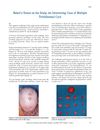
January 2014 in “Journal of Cutaneous and Aesthetic Surgery” A woman had 13 non-cancerous cysts on her scalp successfully removed in one surgery.
23 citations
,
January 2017 in “BMC Medical Genetics” This study presents the first reported Spanish case of Hypotrichosis with Juvenile Macular Dystrophy, identifying a new CDH3 mutation and highlighting the importance of clinical and genetic evaluation for accurate diagnosis.
 May 2024 in “Biochemical pharmacology”
 This study found that targeting CISD1 with the compound NL-1 reduced mitochondrial dysfunction and reactive oxygen species accumulation, protecting against cisplatin-induced hearing loss in cell models and mice, without affecting cisplatin's cancer-fighting effectiveness.
 204 citations
,
May 2014 in “The Journal of Sexual Medicine”
204 citations
,
May 2014 in “The Journal of Sexual Medicine” This study concluded that current cross-sex hormone treatments for trans men and trans women are effective with a low risk of side effects in the short term, though they did observe specific clinical changes.
28 citations
,
February 2007 in “Cancer Research” This study found that inhibiting C/EBP transcription factors in mouse skin reduced papilloma formation and caused systemic hair loss, suggesting C/EBP may be a potential therapeutic target.
May 2025 in “BMC Genomics” This study found that circ 0020938 suppresses hair follicle stem cell proliferation by interacting with the miR-142-5p/DSG4 axis, which aids in the hair follicle cycle's proper progression.
8 citations
,
August 2022 in “Pharmaceutics” This study found that erythrocyte-anchored CPA-encapsulated nanoparticles improved the delivery and accumulation of Cepharanthine in the lungs, enhancing its effectiveness in treating acute lung injury by reducing inflammatory responses.
 November 2018 in “DergiPark (Istanbul University)”
 This case report describes successful treatment of Malassezia overgrowth and resulting dermatitis in a Chinchilla cat using Terbinafine HCL and Omega fatty acid supplements, emphasizing Malassezia's potential as a marker for underlying diseases.