 October 2022 in “Legume Research”
 This study developed a protocol for callus induction and found that certain hormone concentrations enhance the production of flavonoids, phenols, and terpenes in Bituminaria bituminosa.
1 citations
,
October 2019 in “European Journal of Dermatology” There are no new clinical results reported in this discussion of pityriasis rubra pilaris diagnosis and treatment, which notes frequent treatment failures and highlights reliance on clinical and histopathological findings.
23 citations
,
January 1986 This review discusses the chemical stability of protein envelopes found in the epidermis and other stratified squamous epithelia, but reports no new clinical results.
 28 citations
,
February 2014 in “PLoS ONE”
28 citations
,
February 2014 in “PLoS ONE” This study reports that transplantation of an ESCs-collagen-chitin biomimetic membrane leads to successful in situ skin regeneration, including hair follicle cell proliferation and formation of dermatoglyphs, in nude mice with full-thickness skin defects.

In this case study, researchers reported the first documented instance of malignant transformation of congenital triangular alopecia into basal cell carcinoma in a 48-year-old woman, underscoring the importance of assessing long-standing alopecic areas for malignancy.
13 citations
,
August 2023 in “Developmental Cell” In this study, researchers observed that mechanosensory neurons initially develop similar morphologies across different skin regions but diverge post-natally, adapting to the type of skin they innervate, with bone morphogenetic protein signaling crucial for forming Meissner corpuscles in glabrous skin.
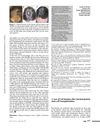 May 2018 in “European Journal of Dermatology”
 Adjusting the medication tacrolimus resolved a boy's red nail beds after a stem cell transplant.
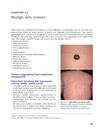
This chapter classifies various benign skin tumors and discusses their characteristics, treatment indications, and potential for recurrence, but reports no new clinical findings.
7 citations
,
May 1993 in “Journal of the European Academy of Dermatology and Venereology” This review examines the role of cell adhesion molecules in the pathogenesis of various inflammatory and neoplastic skin diseases, suggesting their potential utility in diagnosis and treatment without presenting new clinical results.
2 citations
,
May 2023 in “Indian Journal of Dermatology Venereology and Leprology” A new genetic mutation in the CAST gene may link PLACK syndrome to alopecia areata.
7 citations
,
February 2009 in “Cell and tissue biology” 19 citations
,
February 2013 in “Archives of Dermatological Research” October 2020 in “Pediatrics in Review” This case report describes a newborn diagnosed with dominant dystrophic epidermolysis bullosa due to a COL7A1 mutation, following the presentation of blisters that healed without further complications.
17 citations
,
January 2010 in “PubMed” CD10 helps distinguish between basal cell carcinoma and benign hair follicle tumors.
August 2024 in “Skin Research and Technology” This report describes the diagnosis and treatment of traumatic anserine folliculosis in children, highlighting its distinct skin features and suggesting tretinoin cream as an effective remedy.
 August 2022 in “Research Square (Research Square)”
 This study found that implanting HAP stem cells in a mouse model accelerated wound closure and reduced scar formation, suggesting potential for scar-free wound healing.
 6 citations
,
May 2021 in “Stem Cell Reviews and Reports”
6 citations
,
May 2021 in “Stem Cell Reviews and Reports” This study identified and characterized progenitor cells from equine feet that may play a role in the pathogenesis and recovery of laminitis, suggesting potential therapeutic targets for treatment.
 6 citations
,
February 2014 in “Actas Dermo-Sifiliográficas”
6 citations
,
February 2014 in “Actas Dermo-Sifiliográficas” This study found that acanthosis nigricans and skin tags in nondiabetic, obese patients were significantly associated with higher insulin levels, suggesting they may serve as clinical markers of hyperinsulinemia.
3 citations
,
September 1998 in “International Journal of Dermatology” In this case study, long-term treatment with acitretin significantly improved chronic skin conditions like erythematosquamous plaques and follicular hyperkeratoses in a patient, but stopping the treatment led to severe worsening of symptoms.
1 citations
,
July 2024 in “Journal of Investigative Dermatology” Immune cells boost stem cell activity in hairy moles, causing more hair growth.
July 2025 in “Journal of Investigative Dermatology” Tissue-engineered skin substitutes can model junctional epidermolysis bullosa and may help develop gene therapy.
48 citations
,
July 1993 in “Archives of Dermatological Research” Merkel cells are abundant in facial vellus hair follicles, especially during the anagen phase.
 1 citations
,
April 2017 in “Journal of Investigative Dermatology”
1 citations
,
April 2017 in “Journal of Investigative Dermatology” This study evaluated the effects of topical glucocorticoids on human skin using non-invasive imaging methods and observed changes such as alterations in skin layer thickness, keratinocyte size, and collagen and elastin signal intensity.
4 citations
,
December 2014 in “Indian Journal of Dermatology” This case report documents a rare presentation of congenital milia en plaque on the scalp of a five-year-old boy, with blaschkoid extension to the nuchal area, highlighting its uncommon location and onset.
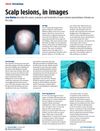 January 2015 in “Independent Nurse”
 Different scalp conditions can lead to hair loss or tumors, with treatments varying from creams to surgery; early detection is crucial.
 February 2024 in “Australasian journal of dermatology”
 This study found that in atrophic acne scars, inflammation infiltrates the pilosebaceous unit over time, affecting resident stem cells and hindering the normal regeneration of the epidermis and adnexal structures, leading to scarring.
 10 citations
,
August 2016 in “Anais brasileiros de dermatologia/Anais Brasileiros de Dermatologia”
10 citations
,
August 2016 in “Anais brasileiros de dermatologia/Anais Brasileiros de Dermatologia” This study found that nail abnormalities, particularly longitudinal ridging, were more frequent in vitiligo patients (78%) compared to healthy controls (55%).
11 citations
,
January 2010 in “Journal of oral and maxillofacial surgery” March 2026 in “The Journal of Steroid Biochemistry and Molecular Biology” This study found that mice lacking both vitamin D and calcium-sensing receptors in epidermal keratinocytes are predisposed to developing squamous cell carcinoma as they age, due to impaired oxidative stress response and reduced DNA repair capabilities.
 2 citations
,
December 2022 in “Journal of toxicologic pathology”
2 citations
,
December 2022 in “Journal of toxicologic pathology” This review outlines the histological structures of the skin, highlighting species and regional differences in dermal absorption and obstacles encountered in toxicological assessments due to epidermal thickness variability, contact dermatitis reactions, and stem cell vulnerabilities.