15 citations
,
November 2024 in “Pharmaceutics” This review discusses how recent advancements in computational and lab-based methods have enhanced peptide drug discovery, noting the efficiency and cost benefits over traditional approaches and the potential for targeting difficult protein interactions, including protein degradation using proteolysis-targeting chimeras.
14 citations
,
August 2021 in “Journal of Pharmaceutical Sciences” This study found that cholesterol- and phospholipid-free multilamellar niosomes improved skin deposition and targeted deeper hair follicles better than hydrophobic PLGA nanoparticles for transdermal drug delivery.
8 citations
,
January 2021 in “Journal of Pharmaceutical Investigation” 6 citations
,
July 2016 in “Doklady Biochemistry and Biophysics” This study found that GD-23, a dipeptide ligand of TSPO, exhibited an anxiolytic effect in the elevated plus maze test, which was inhibited by selective neurosteroid synthesis inhibitors, suggesting a neurosteroidogenic mechanism.
4 citations
,
November 1970 in “PubMed” This study found that mustard oil and unsaturated fatty acids completely suppressed dermatophyte growth and prevented hair penetration at concentrations of 1% and above in Sabouraud's dextrose agar medium.
 March 2025 in “Archives of Dermatological Research”
 This source explores injectable minoxidil as a hair loss treatment, noting its enhanced bioavailability but also the potential for adverse effects and higher costs compared to other formulations, with a call for further research on its efficacy and access relative to alternatives.
 October 2024 in “Journal of the Endocrine Society”
 This study examined uncharacterized CYP21A2 gene variants related to non-classic congenital adrenal hyperplasia and found that several mutations reduce enzyme activity, which may help improve diagnostic and treatment strategies.
 October 2024 in “Journal of the Endocrine Society”
 This study found that certain CYP21A2 mutations significantly reduce enzyme activity, contributing to non-classic congenital adrenal hyperplasia phenotypes, which may aid in enhancing diagnosis and treatment strategies.
This study introduced the C-CAT, a new assessment tool for central centrifugal cicatricial alopecia, and found that established treatments improved symptoms in most patients over six months.
 4 citations
,
December 2017 in “International journal of research in ayurveda and pharmacy”
4 citations
,
December 2017 in “International journal of research in ayurveda and pharmacy” This review discusses the traditional and pharmacological uses of Cuscuta reflexa, but it reports no new clinical results, calling attention to its potential antihypertensive, antidiabetic, and antioxidant properties.
53 citations
,
August 2017 in “Journal of Investigative Dermatology”  1 citations
,
August 2023 in “Expert opinion on drug delivery”
1 citations
,
August 2023 in “Expert opinion on drug delivery” This study found that cedrol-loaded dissolvable microneedles efficiently delivered cedrol to the deep dermis, effectively promoting hair growth in C57BL/6 mice, suggesting a promising strategy for treating hair loss.
 October 2024 in “Bangladesh Journal of Botany”
 This study found that cinnamic acid stress inhibited root growth more in cucumber seedlings than in figleaf gourd, potentially due to differences in hormone content and production rates.
 December 2025 in “Scientific Reports”
 In this study, cedrol was found to reduce lipid accumulation in the liver and adipose tissues of dexamethasone-treated mice by antagonizing glucocorticoid receptors, suggesting its potential utility in treating dexamethasone-induced lipid metabolism disorders.
 July 2024 in “PLANT PHYSIOLOGY”
 In this study on Arabidopsis, the researchers identified CIPK13 and CIPK18 as crucial genes for root hair growth, finding that deficiencies in these genes resulted in shorter root hairs and reduced growth rates due to altered calcium oscillations.
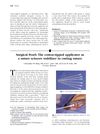 July 2005 in “Journal of The American Academy of Dermatology”
 This article discusses the various uses of the cotton-tipped applicator in dermatologic surgery, highlighting its innovative role as a suture scissors stabilizer, but reports no clinical results.
3 citations
,
October 2021 in “Turkish Journal Of Neurology” This study identifies novel genetic variants in the NOTCH3 and HTRA1 genes associated with CADASIL and CARASIL, highlighting their potential in supporting clinical diagnosis and informing treatment strategies.
 January 2022 in “International Journal of Medical Sciences”
 This study investigated the effects of cedrol on colorectal cancer and found that it inhibited cell proliferation and induced cell cycle arrest and apoptosis in cell models, while in vivo, it suppressed cancer progression and improved survival at a well-tolerated dose.
October 2021 in “bioRxiv (Cold Spring Harbor Laboratory)” This study introduces the Hair Cell Analysis Toolbox (HCAT), a machine-learning software that automates the analysis of cochlear hair cells, enabling unbiased and comprehensive imaging data interpretation.
 January 2026 in “Frontiers in Pharmacology”
 This study suggests that cedrol may improve mitochondrial function, gut microbiota, and intestinal barrier integrity, indicating its potential value in treating inflammatory bowel disease.
September 2019 in “Journal of Investigative Dermatology” CCCA in women of African ancestry may be caused by PADI3 gene mutations and intense hair grooming.
36 citations
,
March 2014 in “Molecular and Cellular Biology” This study found that Cidea is critical for regulating lipid storage and sebum secretion in sebaceous glands, with its deficiency causing hair issues and impaired skin functions in mice.
 December 2022 in “BMC women's health”
 In this pilot study, the CNC® device improved body image perceptions in patients with chemotherapy-induced alopecia but did not significantly affect psychological wellbeing; it may help prevent discomfort and enhance everyday life compared to traditional wigs.
908 citations
,
July 2015 in “British Journal of Dermatology” This article reviews the cellular and molecular processes of acute and chronic wound healing, emphasizing the need for collaboration between researchers and clinicians to advance therapeutic solutions; it presents no new clinical results.
365 citations
,
March 2021 in “Frontiers in Bioengineering and Biotechnology” This review discusses the potential of nanocarriers to enhance transdermal drug delivery and the combination of these carriers with physical methods, but it reports no new experimental results.
222 citations
,
January 2003 in “Critical Reviews in Therapeutic Drug Carrier Systems” This review discusses the capabilities of ethosomes as drug delivery carriers and reports improved outcomes in a clinical study with an ethosomal acyclovir formulation.
170 citations
,
September 2020 in “Viruses” This review highlights that drug repositioning offers a cost-effective alternative to traditional drug discovery, especially for treating orphan and resistant diseases like COVID-19, by repurposing existing drugs such as Hydroxychloroquine and Remdesivir.
92 citations
,
April 2021 in “Pharmaceutics” This review discusses the applications and challenges of lipid nanosystems in various fields, comparing techniques for evaluating nanoparticle properties, and reports no new experimental results.
52 citations
,
August 2021 in “Microorganisms” This review observes higher ACE2 expression in myocardial and lung tissues of heart failure and COPD patients but finds no link between RAAS inhibitors and COVID-19 severity.
47 citations
,
December 2021 in “Applied Sciences” This study demonstrated that Stellaria media extract may enhance wound healing in vitro by promoting cell migration and proliferation, with notable antioxidant and antimicrobial properties.