 14 citations
,
July 2016 in “Environmental Toxicology and Pharmacology”
14 citations
,
July 2016 in “Environmental Toxicology and Pharmacology” In this animal study, cedrol treatment reduced chemotherapy-induced alopecia in mice by preventing hair follicle damage, while minoxidil did not prevent alopecia under similar conditions.
1 citations
,
July 2025 in “Methods and Protocols” This study supports the use of the chicken chorioallantoic membrane as an effective pre-clinical model for burn wound research and the screening of new therapeutic agents.
35 citations
,
December 2017 in “Journal of Experimental Botany” In this study, CSLD3 overexpression in Arabidopsis enhanced root and hypocotyl growth by increasing cell elongation, with root growth highly sensitive to ethylene and phosphate starvation conditions.
 7 citations
,
August 2015 in “Dermatologic Surgery”
7 citations
,
August 2015 in “Dermatologic Surgery” This study found that cross beam laser is a reliable tool for assessing scalp laxity in hair restoration surgery, with results comparable to the Mayer elasticity scale.
 October 2023 in “Journal of the Endocrine Society”
 This case report describes a challenging diagnosis of Cushing’s syndrome using endocrine tests and imaging, which ultimately identified an adrenal etiology. Successful treatment involved a non-invasive desmopressin stimulation test and right adrenalectomy, leading to improvement in symptoms and health outcomes for the patient.
April 2020 in “Journal of the Endocrine Society” This study suggests that hair cortisol measurement could serve as an alternative diagnostic method for Cushing’s disease, showing acceptable concordance with urinary free cortisol despite differing evaluated periods.
4 citations
,
December 2021 in “Journal of clinical laboratory analysis” This study identified a splicing-site deletion in the DCAF17 gene associated with Woodhouse-Sakati syndrome in a large consanguineous pedigree, leading to typical phenotypic features.

This study in a nine-year-old boy from Lebanon identified a gene mutation (c.1066dup p.(Arg356Profs*16)) associated with a rare inborn error of immunity, characterized by craniosynostosis, jaundice, and several other symptoms, expanding the known genotypic and phenotypic spectrum of this condition.
 January 2017 in “International journal of biomedical engineering and clinical science”
 This case report describes significant skin and oral mucosa lesions in a 19-year-old patient with cri-du-chat syndrome, highlighting their impact on her nutritional status and quality of life.

This review highlights the increasing global incidence and broad socio-economic impact of celiac disease, emphasizing the need for improved recognition and management to address its multidimensional implications, including comorbidities and dietary challenges.
April 2026 in “Therapeutic Advances in Drug Safety” This study developed a new clustering model to improve detection of drug-induced cognitive disorder risk signals, finding that it identified drugs with moderate risk signals, like Carbidopa/Levodopa, missed by traditional methods, enhancing clinical assessment comprehensiveness.
7 citations
,
December 2007 in “Poultry Science” In this study, beta-catenin expression was found to be significant in embryonic goose skin during early feather bud development, with patterns similar to Shh expression, suggesting its importance in normal development.

CaBP1 and 2 are necessary for maintaining calcium currents and hearing in inner ear cells.
This study found that high-charge-density cassia HPTC improves deposition efficiency and conditioning benefits in shampoos compared to quaternized guar, suggesting its potential as an alternative or adjunct conditioning agent.
December 2019 in “Case Medical Research” June 2026 in “Journal of Investigative Dermatology” This study reported that the anti-γc antibody hC2 restored hair follicle homeostasis and suppressed hair loss in an AA-like mouse model by inhibiting autoreactive T-cell activity, suggesting that hC2 may offer a safer and more effective treatment for alopecia areata compared to current Jak inhibitors.
June 2026 in “JEADV Clinical Practice” In this case report, a 77-year-old woman developed alopecia areata after discontinuing cemiplimab treatment for metastatic cutaneous squamous cell carcinoma, suggesting an immune-related adverse effect potentially linked to systemic immune activation.
 February 2020 in “Biophysical journal”
 This study confirms that zebrafish engineered with Cantú Syndrome mutations in ABCC9 and KCNJ8 genes exhibit gain-of-function characteristics in their cardiovascular KATP channels, similar to mammalian counterparts.
 April 2024 in “BMB Reports”
 This study used Cisd2 knockout mice models and found that these mice display premature aging characteristics and an increase in dysfunctional neutrophils, suggesting Cisd2's role in calcium homeostasis and neutrophil function via interactions with Calnexin and SERCA.
32 citations
,
April 2020 in “PLoS Biology” This study found that Rab5c is crucial for proper HSPC development in zebrafish embryos by regulating Notch and AKT signaling through endocytic trafficking, with both deficiency and overactivation leading to production defects.
3 citations
,
December 2020 in “Skin Appendage Disorders” This case report highlights a family member with a confirmed diagnosis of hypotrichosis with juvenile macular dystrophy due to a CDH3 gene mutation, emphasizing the importance of genetic testing for accurate counseling.
2 citations
,
May 2020 in “Journal of the American Academy of Dermatology” Hair shaft changes may be linked to CCCA, but their role is unclear.
 1 citations
,
January 2022 in “Research Square (Research Square)”
1 citations
,
January 2022 in “Research Square (Research Square)” This study found that CRISPR/Cas9 efficiently edited two cellulose synthase-like genes in spinach, significantly altering root hair growth patterns and suggesting potential for large-scale genome editing in this crop.
 April 2024 in “arXiv (Cornell University)”
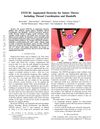
 In this study, the researchers developed an advanced robotic system called STITCH for performing suture tasks, which completed an average of 2.93 sutures autonomously and 4.47 sutures with human intervention in physical trials.
 8 citations
,
August 2020 in “PLOS Computational Biology”
8 citations
,
August 2020 in “PLOS Computational Biology” This study presents a computational approach, CATNIP, which repurposes drugs using only their biological and chemical information, predicting new uses like adrenergic uptake inhibitors for Parkinson's and vandetanib for Type 2 Diabetes.
This study found that mutations in the PADI3 gene, which is important for hair shaft formation, may contribute to central centrifugal cicatricial alopecia among patients.
 September 1998 in “British Journal of Plastic Surgery”
 This article describes the structure and offerings of microsurgical workshops at Canniesburn Hospital, noting that no new research findings are reported.
5 citations
,
April 2020 in “Journal of Mind and Medical Sciences” This paper presents a new device for navigational surgery utilizing the fluorescent properties of Indocyanine Green, offering enhanced intra-operative imaging capabilities by identifying tissues with an infrared CMOS camera.
June 2020 in “Journal of Investigative Dermatology” Hair shaft malformation contributes to Central Centrifugal Cicatricial Alopecia.
This study examined extracts from the heartwood of Kouyousan trees for anti-termite activity against Japanese termites. The researchers reported that cedrol showed strong anti-termite effects, with feeding deterrent activity at low concentrations and lethal effects at high concentrations, while isoabienol mainly contributed to feeding deterrence.