September 2022 in “Indian Journal of Paediatric Dermatology” This case report documents the first confirmed mutation-proved instance of Clouston syndrome in a large Chinese-Malaysian family, linked to the c.263C>T (A88V) mutation in the GJB6 gene, with no available treatment but highlighting the importance of genetic counseling.
 9 citations
,
February 2013 in “Hormone and Metabolic Research”
9 citations
,
February 2013 in “Hormone and Metabolic Research” This study reported that CYP21A2 heterozygous mutations do not significantly contribute to the pathogenesis of polycystic ovary syndrome.
 8 citations
,
January 2022 in “Infectious diseases News Opinions Training”
8 citations
,
January 2022 in “Infectious diseases News Opinions Training” This review discusses gene polymorphisms in COVID-19 patients but reports no new clinical findings.
3 citations
,
December 2013 in “Balkan Journal of Medical Genetics” This case report highlights the use of microarray analysis to identify cryptic chromosomal rearrangements in a young woman with intellectual disability and multiple congenital anomalies.
 January 2024 in “Genetics in Medicine Open”
 In this report, two adult patients with Tatton-Brown-Rahman syndrome exhibited new cardiac features, such as atrial fibrillation and ventricular and atrial dilatation, highlighting the importance of cardiovascular follow-up in adults with this condition.
 10 citations
,
August 2020 in “Drug metabolism and drug interactions”
10 citations
,
August 2020 in “Drug metabolism and drug interactions” This case series found that patients with the NUDT15 415C>T variant experienced severe azathioprine toxicity, suggesting genotype-based dosing could reduce adverse effects.
15 citations
,
October 2012 in “Journal of child neurology” In this study, two unrelated Honduran patients with Sjögren-Larsson syndrome had the same genetic mutation but displayed different disease severities, suggesting that factors beyond the ALDH3A2 mutation influence clinical outcome.
2 citations
,
May 2019 in “Small ruminant research” This study identified polymorphisms in HGT-KRTAP7-1 and KRTAP8-1 genes in Argentine llamas that may impact fiber characteristics by altering amino acid residues critical for keratin-associated protein properties.
 29 citations
,
July 2013 in “The Journal of Sexual Medicine”
29 citations
,
July 2013 in “The Journal of Sexual Medicine” This review discusses the potential role of androgen receptor CAG repeat polymorphism testing in hypogonadism management for both sexes, but its clinical utility remains unclear and requires further investigation.
43 citations
,
April 2010 in “Clinical genetics” This study identified four novel mutations in the C2orf37 gene among Woodhouse–Sakati syndrome patients, doubling known mutations, and found no significant link between isolated symptoms like deafness and dystonia and these mutations.
 December 2023 in “American journal of medical genetics. Part A”
 In this study, researchers identified compound heterozygous variants in the MBTPS1 gene associated with ectodermal dysplasia features in a 14-year-old female, broadening the known disorder spectrum linked to these genetic mutations.
 January 2024 in “International Journal of Biochemistry and Molecular Biology”
 This study found that Iraqi women with PCOS who carry the reference wild type alleles of OCT1 had a significant hormonal and metabolic response to metformin, unlike those with mutant alleles.
 March 2025 in “American Journal of Medical Genetics Part A”
 In this study, researchers found that mosaic PLCD1 hotspot variants, even without the recognized germline "risk allele," may be a rare but significant genetic cause of nevus trichilemmocysticus, warranting DNA testing and sensitive sequencing technologies for accurate diagnosis.
 October 2024 in “Journal of the Endocrine Society”
 This study found that certain CYP21A2 mutations significantly reduce enzyme activity, contributing to non-classic congenital adrenal hyperplasia phenotypes, which may aid in enhancing diagnosis and treatment strategies.
This study found that the AMHR2-482A>G gene polymorphism is associated with an increased likelihood of polycystic ovary syndrome and altered hormone levels in affected women.
July 2002 in “Science s STKE” In this study, the researchers reported that altering β-catenin signaling in a transgenic mouse model led to changes in skin cell fate, notably converting hair follicle cells into epidermal cells and forming cysts instead of follicles.
 36 citations
,
July 2014 in “Neuromuscular Disorders”
36 citations
,
July 2014 in “Neuromuscular Disorders” This study investigated a patient with spinal and bulbar muscular atrophy who had 68 CAG repeats, revealing early onset and unique symptoms not previously documented in the condition.
 11 citations
,
April 2019 in “International Journal of Molecular Sciences”
11 citations
,
April 2019 in “International Journal of Molecular Sciences” This study found that genetic polymorphisms of OCT1 influence the effectiveness of metformin treatment in improving insulin sensitivity among PCOS patients, suggesting a role for personalized treatment strategies.
 October 2022 in “Journal for Research in Applied Sciences and Biotechnology”
 This study found that polymorphism of the SHBG gene (rs1799941) is associated with an increased risk of Polycystic Ovary Syndrome in Iraqi women.
 21 citations
,
October 2019 in “The journal of investigative dermatology/Journal of investigative dermatology”
21 citations
,
October 2019 in “The journal of investigative dermatology/Journal of investigative dermatology” This study identified specific germline and somatic mutations in the Phospholipase C Delta 1 gene as high-risk factors for developing hereditary trichilemmal cysts, involving a monoallelic two-hit mechanism.
 3 citations
,
January 1992 in “Clinical Pediatric Endocrinology”
3 citations
,
January 1992 in “Clinical Pediatric Endocrinology” This study observed wide clinical diversity among five patients with the same VDR gene mutation causing vitamin D-dependent rickets type II, suggesting involvement of a nuclear accessory factor and a nongenomic action of the vitamin.
 14 citations
,
January 2013 in “Hormone and Metabolic Research”
14 citations
,
January 2013 in “Hormone and Metabolic Research” This study found that in patients with nonclassical 21-hydroxylase deficiency, genotypes do not reliably predict the severity of hyperandrogenic symptoms, suggesting other genetic factors may influence the phenotype.
 19 citations
,
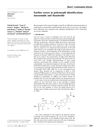
July 2006 in “Acta crystallographica”
19 citations
,
July 2006 in “Acta crystallographica” This study determined that previous reports mistakenly identified different polymorphs of furosemide and finasteride, which are actually identical, due to incomplete data collection in single-crystal X-ray diffraction analysis.
 9 citations
,
March 2020 in “Gene”
9 citations
,
March 2020 in “Gene” In this study, certain genetic variations in the ESR1 and ESR2 genes were strongly associated with polycystic ovary syndrome and related metabolic issues in Tunisian women.
 March 2026 in “Journal of Personalized Medicine”
 In this study involving South African breast cancer patients, researchers identified certain genetic variations in cytochrome P450 and other enzymes potentially linked to differences in tamoxifen treatment outcomes, suggesting a need for more comprehensive pharmacogenomic studies to optimize therapy in African populations.
January 2024 in “Biomarker Insights” This study found significant associations between PCOS susceptibility and specific genetic variants in the APOA5 and PLIN1 genes among Western Saudi women, identifying novel alleles and genotypes that may influence PCOS risk and related clinical characteristics.
10 citations
,
November 2021 in “PLoS ONE” This study suggests that the T allele of the SNP rs2476601 in the PTPN22 gene may increase the risk of alopecia areata, although further studies are necessary to validate this finding across different populations.
September 2018 in “Fertility and Sterility” In this study, researchers observed that overweight Taiwanese women with PCOS who carry the HSD3B1 1245C allele have a significantly higher risk of developing androgenic alopecia compared to those with the wild-type allele.
5 citations
,
June 2020 in “Medicine” This report discusses a 22-year-old patient with MELAS syndrome carrying the m.10158T>C mutation, and highlights the need for extensive genetic testing when initial hot-spot mutation tests are negative.
15 citations
,
August 2013 in “Gene” This study found that the MTHFR gene C677T mutation appears to be a susceptibility factor for alopecia areata in the Turkish population.