21 citations
,
February 1988 in “Toxicology” This study found that high doses of TCB caused severe toxicity in cotton top marmoset monkeys, with clinical and histological changes similar to those in humans and other primates exposed to PCBs.
January 2026 in “Animals” This study researched the dun coat color in Mongolian horses, finding that variations in TBX3 expression in different skin areas are linked to Bider markings, suggesting TBX3's role in this specific pigment pattern, while further investigation is needed on its regulation.
November 2025 in “The Journal of Immunology” In this study, researchers observed elevated levels of epidermal γδ T cells, keratinocytes, and an upregulation of the BST2 gene among immune cells in C3H/HeJ mice with alopecia areata, suggesting a potential role in disease pathogenesis.
36 citations
,
October 2007 in “Journal of Investigative Dermatology” This study found that overexpression of betacellulin in transgenic mice delayed hair follicle morphogenesis and cycling, increased keratinocyte proliferation, and enhanced wound angiogenesis without affecting wound healing strength.
 April 2017 in “Journal of Dermatological Science”
 This study found that B cells have dual roles in tumor immunity, with regulatory B cells potentially hindering immune responses against tumors in the melanoma mouse model.

This study observed that TBX3 mRNA expression levels were region-specific and correlated with pigmentation patterns in dun Mongolian horses, providing insights into the genetic mechanisms behind their distinctive Bider markings.
 11 citations
,
March 2014 in “Journal of Investigative Dermatology”
11 citations
,
March 2014 in “Journal of Investigative Dermatology” In this study, basal cell carcinoma developed in Ptch-deficient mice only after chemical treatment, not skin wounding, suggesting a second unknown event is necessary for tumor formation.
 December 2013 in “Appetite”
 This study identified a nonfunctional Itpr3 gene in BTBR mice, attributed to a 12-bp deletion, which likely causes their simultaneous hair loss and taste perception deficits.
8 citations
,
October 2020 in “Clinical Psychopharmacology and Neuroscience” This case series found that low-frequency repetitive transcranial magnetic stimulation may benefit some patients with trichotillomania, although one of five patients experienced worsening symptoms after treatment.
7 citations
,
March 2004 in “Journal of the American Academy of Dermatology” Tiger tail banding and hair abnormalities are reliable indicators for diagnosing trichothiodystrophy.
 June 2026 in “Research Square”
 This study identified a group of dermal fibroblasts near hair follicle stem cells in mice that facilitate hair regeneration by creating a biomechanically compliant extracellular matrix, enhancing stem cell activation and promoting a positive feedback loop for tissue regeneration.
 December 2023 in “The journal of cell biology/The Journal of cell biology”
 This study developed the mTurquoise2-Col4a1 mouse model and used fluorescent tagging of collagen IV to offer new insights into basement membrane dynamics during hair follicle budding, revealing that basement membranes are flexible and stable structures in developing skin tissue.
110 citations
,
April 2009 in “Cell Motility and the Cytoskeleton” This review discusses the intracellular activity of β-thymosins and their role in modulating the actin cytoskeleton, but it reports no new experimental results.
 1 citations
,
January 2016 in “ARC Journal of Urology”
1 citations
,
January 2016 in “ARC Journal of Urology” This study found that Thermobalancing therapy using Dr Allen's Device significantly improved symptoms and quality of life in men with benign prostatic hyperplasia, but larger prostate sizes may require longer treatment.
 6 citations
,
October 2012 in “Journal of Heredity”
6 citations
,
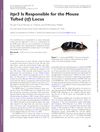
October 2012 in “Journal of Heredity” This study identified the Itpr3 gene as responsible for the tufted hair loss phenotype in the BTBR mouse strain.
January 2008 in “Linchuang pifuke zazhi” This study found that betamethasone increased tyrosinase activity and melanin content in amelanotic melanocytes from human hair follicles, suggesting a potential mechanism for glucocorticoid treatment in vitiligo.
12 citations
,
March 2013 in “The American journal of dermatopathology/American journal of dermatopathology” This article reports on three new cases of Birt–Hogg–Dubé Syndrome and emphasizes the role of genetic analysis in its diagnosis due to clinical challenges.
In this study, melatonin implantation altered BMP2 gene expression associated with hair follicle growth in Inner Mongolia Cashmere Goats, particularly reducing expression during the follicles' resting period.
February 2024 in “Neurophotonics” This review highlights the potential of transcranial photobiomodulation (tPBM) as a non-invasive and affordable treatment for brain diseases, summarizing recent advances and successful protocols based on over two decades of research.
40 citations
,
May 2005 in “Journal of Cell Science” In this study, transgenic mice expressing a truncated form of latent transforming growth factor-β-binding protein exhibited altered hair cycles due to increased active transforming growth factor-β, impacting keratinocyte proliferation and hair cycle phases.
 October 2023 in “Journal of dermatological science”
 This study highlights that mutations in the MBTPS2 gene can lead to dermatological disorders like IFAP syndrome and severe bone diseases such as X-Linked Osteogenesis Imperfecta, emphasizing the significance of understanding these genetic variants for disease mechanisms and associations.
70 citations
,
February 2009 in “Biological Trace Element Research” 12 citations
,
December 2022 in “Current Protein and Peptide Science” This review discusses the molecular mechanisms and clinical applications of thymosin β4, highlighting its potential benefits for inflammation, wound healing, tumor metastasis, and other medical conditions but reports no new experimental results.
April 2019 in “The journal of investigative dermatology/Journal of investigative dermatology” This study in mice suggests that defects in hair follicles with mesenchymal TSC2 disruption may result from an impaired TGFβ1 response, indicating a potential novel treatment approach for tuberous sclerosis complex.
 5 citations
,
January 2018
5 citations
,
January 2018 This study optimized a screening assay to identify molecules that inhibit or enhance TRPM5 ion channel activity, which may have implications for treating dysfunctions linked to cardiac arrhythmias and diabetes.
This study found that prophylactically administering amotosalen-treated allogeneic donor T cells at transplantation significantly improved immune reconstitution and protection against murine cytomegalovirus infection without inducing graft-versus-host disease.
62 citations
,
March 2017 in “Journal of Investigative Dermatology” Mutations in the ACTB gene cause Becker’s nevi and may lead to muscle issues in Becker’s nevus syndrome.
11 citations
,
May 2012 in “Genesis” This study in mutant mice found that Bmpr2 and Acvr2a are individually redundant, but together essential for normal hair follicle development, with their reduction causing rapid hair cycling and graying.
 4 citations
,
October 2011 in “International Journal of Dermatology”
4 citations
,
October 2011 in “International Journal of Dermatology” Bardet-Biedl syndrome may include under-recognized skin problems related to its metabolic disturbances.
 April 2016 in “Journal of Investigative Dermatology”
 This study found that administering botulinum toxin A via Flex-PADs to mouse footpads inhibited sweating similarly to traditional injections, suggesting a promising patient-friendly delivery method for hyperhidrosis treatment.