 19 citations
,
October 2013 in “Headache: The Journal of Head and Face Pain”
19 citations
,
October 2013 in “Headache: The Journal of Head and Face Pain” This review discusses conventional and alternative treatments for trigeminal autonomic cephalalgias, including cluster headache, paroxysmal hemicrania, and SUNCT, and recommends specific medications without reporting new clinical findings.
 8 citations
,
June 2022 in “Frontiers in Medicine”
8 citations
,
June 2022 in “Frontiers in Medicine” This study found that tofacitinib is an effective and more tolerable treatment than systemic corticosteroids for moderate-to-severe alopecia areata, and its combination with corticosteroids may offer improved efficacy.
 15 citations
,
January 2020 in “BioMed Research International”
15 citations
,
January 2020 in “BioMed Research International” In this study of patients with androgenetic alopecia, botulinum toxin type A was found to significantly increase hair counts and improve hair density and coverage, with enhanced results observed when combined with oral finasteride, revealing a safe and effective treatment approach without adverse effects.
 July 2024 in “Journal of the American Academy of Dermatology”
 Botulinum toxin may help treat male pattern baldness.
1 citations
,
January 2024 in “Arab Board Medical Journal” This study found that tofacitinib was an effective and well-tolerated treatment for alopecia areata, with significant to moderate hair regrowth in 78% of patients observed.
This study found that both intradermal BCG vaccine and intralesional triamcinolone acetonide were similarly effective for treating patchy alopecia areata, though intralesional triamcinolone was preferable due to fewer side effects associated with BCG vaccine.
 October 2022 in “Journal of Armed Forces Medical College, Bangladesh”
 In this clinical trial, Tofacitinib effectively promoted hair regrowth in patients with alopecia areata, alopecia totalis, and alopecia universalis, with 75.6% experiencing no side effects, making it a promising treatment option according to the study.
 February 2024 in “Health Sciences”
 This review discusses the non-cosmetic uses of botulinum neurotoxin A, including its effectiveness for idiopathic hyperhidrosis and potential use for androgenic alopecia, and reports no new clinical results; the authors highlight the need for more clinical trials.
 2 citations
,
September 2022 in “Dermatologic Therapy”
2 citations
,
September 2022 in “Dermatologic Therapy” In this study, tofacitinib showed a mixed response in treating refractory alopecia areata, with some patients experiencing complete or partial hair regrowth and others showing no response, particularly those with alopecia universalis.
October 2023 in “The Open Dermatology Journal” Baricitinib is effective for severe alopecia areata with manageable side effects, mainly upper respiratory infections.
June 2026 in “Khyber Journal Of Medical Sciences” This study found that among adults with severe alopecia areata, alopecia totalis, or alopecia universalis, oral tofacitinib was more effective than methotrexate in reducing hair loss over a 12-week period, though long-term safety and efficacy remain unestablished.
 January 2026 in “BULLETIN OF STOMATOLOGY AND MAXILLOFACIAL SURGERY”
 In this randomized controlled trial, both Botulinum Toxin-A and Triamcinolone Acetonide showed substantial effectiveness in treating patchy Alopecia Areata, but Botulinum Toxin-A avoided complications while Triamcinolone led to skin atrophy in 16.7% of patients.
January 2026 in “Journal of Advanced Research” This study found that fermentation products from Bacillus sp. TC5 can effectively promote hair regrowth and improve transdermal drug absorption, suggesting their potential as eco-friendly agents in developing cosmeceuticals for hair restoration and skin repair.
 1 citations
,
May 2025 in “Frontiers in Medicine”
1 citations
,
May 2025 in “Frontiers in Medicine” In this case series, dual-targeted therapy was observed to provide promising clinical responses in refractory inflammatory bowel disease, with 88.23% to 100% response rates across 9 months and an endoscopic response in 88.89% of evaluated patients, though some adverse events occurred.
1 citations
,
May 2017 in “Journal of Clinical Oncology” This study found that applying BPM 31543 twice daily was safe, well-tolerated, and showed signs of reducing chemotherapy-induced alopecia in women receiving taxane-based chemotherapy.
 April 2024 in “Clinical and experimental dermatology”
 This retrospective study evaluated the use of tofacitinib as an induction therapy for severe alopecia areata and found it promising and comparable to the standard oral mini-pulse treatment, though pulse steroids may be considered if tofacitinib response is inadequate.
 November 2025 in “SKIN The Journal of Cutaneous Medicine”
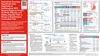
 This phase 3 trial found that over 50% of adolescents with severe alopecia areata achieved successful hair regrowth after 52 weeks on baricitinib 4-mg, with no new safety concerns reported compared to existing safety profiles.
 June 2023 in “Journal of Burn Care & Research”
 This study found that combining bone marrow aspirate concentrate with platelet-rich plasma significantly improved wound healing in mice compared to other treatments.
 6 citations
,
February 2023 in “Advances in Therapy”
6 citations
,
February 2023 in “Advances in Therapy” This study found that patients with rheumatoid arthritis, atopic dermatitis, and alopecia areata receiving baricitinib had low incidence rates of adverse events, especially among low-risk individuals, with varying rates among those at higher risk.
 1 citations
,
November 2001 in “Acc Current Journal Review”
1 citations
,
November 2001 in “Acc Current Journal Review” This review found that 5α‐reductase inhibitors were associated with slightly increased rates of decreased libido, erectile and ejaculatory dysfunction, gynecomastia, and mood disorders compared to placebo, though their long-term effects remain unclear.
 January 2024 in “Wiadomości Lekarskie”
 This study reviews modern treatment techniques for large, life-threatening pulmonary emboli and concludes that pulmonary artery thrombectomy is a safe and effective method, though it remains underutilized. Results are not reported in the abstract.
 17 citations
,
January 2019 in “Dermatologic Therapy”
17 citations
,
January 2019 in “Dermatologic Therapy” The article in Dermatologic Therapy discusses clinical experiences with using tofacitinib to treat alopecia areata in 63 patients, but no specific results are reported in the abstract.
 1 citations
,
July 2022 in “British Journal of Dermatology”
1 citations
,
July 2022 in “British Journal of Dermatology” Baricitinib was effective in treating hair loss in adults with alopecia areata according to patient feedback.
 January 2025 in “Journal of Crohn s and Colitis”
 In this study, tofacitinib showed promising efficacy and safety for biologic-naïve elderly patients with moderate-to-severe ulcerative colitis, achieving steroid-free remission and clinical response over 52 weeks.

This case report highlights the successful treatment of a 37-year-old male with steroid-resistant beard alopecia areata using baricitinib, a JAK-1/2 inhibitor, over 9 months, resulting in reduced hair loss and improved hair density.
 9 citations
,
October 2019 in “Dermatologic Therapy”
9 citations
,
October 2019 in “Dermatologic Therapy” This study observed that oral tofacitinib was reasonably well-tolerated but had limited efficacy in treating alopecia areata, with a clinical response seen in 41.4% of patients over six months.
 November 2023 in “Dermatology and Therapy”
 This study found that treatment with baricitinib 4 mg over 52 weeks led to clinically meaningful regrowth of eyebrows and eyelashes in patients with alopecia areata, even without complete scalp hair regrowth.
This review examines current literature on botulinum toxin type A for androgenetic alopecia, reporting an association with increased hair growth and improved hair density, though further research is needed.
 May 2023 in “Research Square (Research Square)”
 This study found that botulinum toxin type A may reduce apoptosis in dermal papillary cells induced by dihydrotestosterone through the circ_0135062/miR-506-3p/Bax axis.
 4 citations
,
May 2019 in “Sultan Qaboos University Medical Journal”
4 citations
,
May 2019 in “Sultan Qaboos University Medical Journal” Tofacitinib helped regrow hair in a patient with severe hair loss and improved their quality of life without side effects.