
This source explores the diverse benefits of basil oil, highlighting its use in aromatherapy for stress relief, as a remedy for skin and respiratory issues, and in traditional medicine for its antiseptic and anti-inflammatory properties.
 February 2023 in “Journal of vaccines and immunology”
 This article reviews the clinical features and potential associated conditions of alopecia areata, including its progression and histopathological characteristics, but reports no new clinical findings.
32 citations
,
January 1971 in “Annals of Internal Medicine” This study observed that severe bronchitis may occur in individuals with anhidrotic ectodermal dysplasia when exposed to a dusty environment, potentially due to abnormalities in the bronchial mucosa.
 August 2023 in “International Journal of Science and Research (IJSR)”
 This review compiles insights from ancient texts and recent studies on Kadali (Musa paradisiaca), highlighting its potential medical use in treating various disorders, including bleeding, eye, menstrual, bronchitis, diabetes, and uraemia.
95 citations
,
August 2022 in “JAMA Network Open” This study documented an increased health care burden due to post-COVID conditions in the 6 months following the acute phase of infection, providing vital evidence for resource planning.
51 citations
,
July 2003 in “Annals of the Rheumatic Diseases” This case study reports a successful use of co-trimoxazole in treating a 13-year-old girl with symptoms suggestive of autoimmune disorders and relapsing polychondritis.
32 citations
,
July 2003 in “Annals of the Rheumatic Diseases” This case report describes the successful treatment of a 13-year-old girl's autoimmune symptoms with co-trimoxazole, an antibiotic with immunomodulatory properties.
 9 citations
,
December 2002 in “Novartis Foundation Symposium”
9 citations
,
December 2002 in “Novartis Foundation Symposium” In this research, LEF1 was identified as a crucial transcription factor for submucosal gland development in mouse and ferret tracheas, though it requires other factors to induce gland formation.
8 citations
,
July 2003 in “Annals of the Rheumatic Diseases” This case study describes the successful treatment of a 13-year-old girl with relapsing polychondritis and autoimmune symptoms using co-trimoxazole, highlighting its potential role in managing autoimmune diseases.
5 citations
,
July 2003 in “Annals of the Rheumatic Diseases” In this case study, a 13-year-old girl with multiple autoimmune symptoms was successfully treated with the antibiotic and immunomodulatory drug co-trimoxazole.
 2 citations
,
October 2022 in “International journal of Ayurvedic medicine”
2 citations
,
October 2022 in “International journal of Ayurvedic medicine” This review examines the traditional uses and biological activities of Glycyrrhiza glabra in Ayurveda, but reports no new clinical results; the authors identify a gap in evidence supporting its medicinal potential.
2 citations
,
February 2020 in “International Journal of Research in Pharmaceutical Sciences” This review compiles evidence on the health benefits of Ziziphus mauritiana, covering its traditional uses and pharmacological effects, but reports no new experimental results.
 1 citations
,
June 2023 in “International Journal of Pharmaceutical Sciences and Medicine”
1 citations
,
June 2023 in “International Journal of Pharmaceutical Sciences and Medicine” This review found that Sansevieria trifasciata contains numerous chemical compounds and has been traditionally used to treat various ailments, with prior studies confirming its pharmacological activities such as anti-ulcer, antibacterial, antioxidant, antidiabetic, and anticancer effects, among others.
 1 citations
,
October 2018 in “Infectious diseases in clinical practice”
1 citations
,
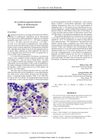
October 2018 in “Infectious diseases in clinical practice” This case report documents what may be the second reported instance of azithromycin-induced agranulocytosis, highlighted by a sudden drop to zero in absolute neutrophil count in a 67-year-old man.
 December 2024 in “Ankara Universitesi Eczacilik Fakultesi Dergisi”
 This review highlights Nigella sativa L. (black cumin) as a plant with numerous health benefits, noting its rich nutritional profile and reported therapeutic effects such as antioxidant and anti-inflammatory activities, identified through various in vitro, in vivo, and clinical research studies.
June 2022 in “Pham Ngoc Thach Journal of Medicine and Pharmacy” This study identified key natural compounds such as polyphenols and flavonoids in tongue fern and established optimal extraction conditions using methanol.
This overview discusses the medicinal uses and pharmacological activities of Eclipta alba, yet reports no new experimental findings; it emphasizes the plant's significant role in traditional medicine.
 3 citations
,
April 2021 in “GSC Biological and Pharmaceutical Sciences”
3 citations
,
April 2021 in “GSC Biological and Pharmaceutical Sciences” This review discusses the traditional uses and reported bioactivities of Elephantopus scaber, but provides no new experimental results; the authors call for more research on its anticancer potential.
 1 citations
,
June 2023 in “International journal of basic science in medicine”
1 citations
,
June 2023 in “International journal of basic science in medicine” In this review, the potential medicinal benefits of Adiantum capillus-veneris L. (a plant used in traditional medicine) were highlighted, particularly its antioxidant, antimicrobial, and anti-inflammatory effects, although the authors noted the need for more research on its impact on respiratory diseases.
 June 2013 in “Revista cubana de plantas medicinales”
 This study found that Sida cordifolia collected in Colombia is a good source of steroidal saponins, which may contribute to its antioxidant and antifungal properties.
 47 citations
,
March 2018 in “Journal of Pharmaceutical and Biomedical Analysis”
47 citations
,
March 2018 in “Journal of Pharmaceutical and Biomedical Analysis” This study identified 43 compounds in Platycladi Cacumen, including flavonoids, and found significant chemical variation in flavonoid content across different regions and processed products.
 45 citations
,
February 2018 in “Journal of basic and clinical physiology and pharmacology/Journal of basic & clinical physiology & pharmacology”
45 citations
,
February 2018 in “Journal of basic and clinical physiology and pharmacology/Journal of basic & clinical physiology & pharmacology” This review summarizes the ethno-medicinal uses, phytochemical constituents, and biological activities of Acorus calamus, highlighting its potential therapeutic benefits and the importance of further scientific work on this plant.
 30 citations
,
February 2018 in “Journal of Pharmacy and Pharmacology”
30 citations
,
February 2018 in “Journal of Pharmacy and Pharmacology” This review discusses the traditional uses and pharmacological properties of Hedychium spicatum, noting that while some traditional uses are supported by scientific studies, further research on its applications is needed.
 19 citations
,
January 2010 in “International Journal of Ayurveda Research”
19 citations
,
January 2010 in “International Journal of Ayurveda Research” In this study, topical application of Tectona grandis seed extracts on albino mice significantly accelerated hair growth initiation time and increased the percentage of hair follicles in the anagenic phase compared to the standard minoxidil treatment.
 17 citations
,
April 2015 in “Tropical Journal of Pharmaceutical Research”
17 citations
,
April 2015 in “Tropical Journal of Pharmaceutical Research” This review highlights the traditional use and potential therapeutic activities of Asiasari Radix in drug discovery, but it reports no new clinical results.
 4 citations
,
January 2018 in “Urology & Nephrology Open Access Journal”
4 citations
,
January 2018 in “Urology & Nephrology Open Access Journal” This case report details an instance of acute kidney injury following the inhalation of hair dye during a hairstyle session.
 2 citations
,
October 2024 in “Tropical Journal of Pharmaceutical and Life Sciences”
2 citations
,
October 2024 in “Tropical Journal of Pharmaceutical and Life Sciences” This review explores Dracaena trifasciata, known as mother-in-law's tongue, detailing its botanical properties, traditional medicinal uses, and the pharmacological and phytochemical characteristics observed in various studies.
 2 citations
,
January 2024 in “Journal of Pharmacognosy and Phytochemistry”
2 citations
,
January 2024 in “Journal of Pharmacognosy and Phytochemistry” The study highlights Teak's (Tectona grandis) diverse applications beyond high-quality timber, emphasizing its bioactive compounds' pharmacological potential in cancer treatment and other uses across traditional medicine, cosmetics, and biodiesel production.
 1 citations
,
January 2025 in “International Research Journal of Multidisciplinary Scope”
1 citations
,
January 2025 in “International Research Journal of Multidisciplinary Scope” This review systematically summarizes the ethnopharmacology, phytochemistry, and pharmacological activities of Caryota mitis, highlighting its rich phytochemical profile and potential uses in treating various ailments, though many traditional uses still require further scientific validation.
 1 citations
,
November 2023 in “Naunyn-Schmiedeberg's archives of pharmacology”
1 citations
,
November 2023 in “Naunyn-Schmiedeberg's archives of pharmacology” This review focused on the bioactive compounds and pharmacological properties of Lawsonia inermis (henna) and found that it contains various beneficial compounds with potential therapeutic applications, such as antioxidant and anti-inflammatory effects, indicating a need for further investigation into its medical benefits.