9 citations
,
October 2015 in “Cutaneous and ocular toxicology” This case report observed vemurafenib-induced pityriasis amiantacea, a scalp scaling reaction, in a patient with metastatic melanoma, which was managed symptomatically without altering vemurafenib treatment.
 December 2022 in “Otorhinolaryngology, Head and Neck Pathology.”
 In this study, the combination of photobiomodulation therapy and Respiro Myrtol forte reduced pain and inflammation more effectively than either treatment alone in patients after septoplasty.
3 citations
,
January 2023 in “Journal of Cosmetic Dermatology” This study found that combining Fractional CO2 laser with platelet-rich plasma led to better improvement in vitiligo treatment compared to platelet-rich plasma alone, based on patient satisfaction and lesion size reduction.
1 citations
,
March 2013 in “Journal of Dermatological Case Reports” This case report describes an atypical presentation of lichen planopilaris affecting only facial vellus hair, without scalp involvement, in a 46-year-old man.
 October 2018 in “Annals of oncology”
 This study reported that topical BPM31543 was safe and well-tolerated for patients on taxane-based chemotherapy, with some efficacy indicated in reducing hair loss at all dosages tested.
16 citations
,
April 2025 in “Journal of the American Academy of Dermatology” In this study, an expert panel established a consensus guideline indicating that photobiomodulation is a safe and effective treatment for various conditions, including peripheral neuropathy and androgenic alopecia.
 2 citations
,
January 2022 in “Journal of the American Academy of Dermatology”
2 citations
,
January 2022 in “Journal of the American Academy of Dermatology” This article discusses the use of virtual reality as a sensory distraction technique during intradermal injections for hair loss treatment and reports no new clinical results.
December 2024 in “Journal of the European Academy of Dermatology and Venereology” This systematic review and meta-analysis found that bimatoprost, especially when used with NB-UVB phototherapy, FxCO2 laser, or mometasone, may be an effective and well-tolerated treatment option for vitiligo, achieving significant patient satisfaction and repigmentation, despite some limitations like small sample sizes and high costs.
 July 2024 in “Bozok Tıp Dergisi”
 This study found that using a new method to apply platelet-rich plasma during surgery improved early outcomes for patients with hip avascular necrosis, including those with a history of Covid-19.
 5 citations
,
January 2021 in “IEEE Access”
5 citations
,
January 2021 in “IEEE Access” In this study, researchers demonstrated that treating platelet rich plasma with microsecond pulsed electric fields effectively activates platelets and induces similar or higher growth factor release compared to traditional bovine thrombin, suggesting a potential clinical use that may be more cost-effective and practical.
 January 2026 in “Journal of Hard Tissue Biology”
 This study found that red LED photobiomodulation significantly enhanced both the metabolic activity and proliferation of human placenta-derived pericytes, alongside increased expression of angiogenic markers, suggesting a potential non-invasive approach to aid tissue repair and vascular regeneration.
 17 citations
,
May 2018 in “PeerJ”
17 citations
,
May 2018 in “PeerJ” This study found that VB-1, a vitexin compound, may promote hair follicle growth by enhancing Wnt/β-catenin signaling in human dermal papilla cells in vitro.
11 citations
,
May 2012 in “Genesis” This study in mutant mice found that Bmpr2 and Acvr2a are individually redundant, but together essential for normal hair follicle development, with their reduction causing rapid hair cycling and graying.
 44 citations
,
February 2012 in “The journal of neuroscience/The Journal of neuroscience”
44 citations
,
February 2012 in “The journal of neuroscience/The Journal of neuroscience” This study observed that Ptprq mutant mice exhibit significant abnormalities in hair bundle structure and vestibular dysfunction, suggesting similar issues may contribute to hearing loss and vestibular problems in humans with PTPRQ mutations.
 June 2020 in “Journal of Investigative Dermatology”
 This study of photobiomodulation therapy devices for androgenetic alopecia found variable improvements in hair grade across different skin types and devices, suggesting a need for larger, more comprehensive trials.
April 2025 in “Journal of Biophotonics” This study found that 808 nm laser photobiomodulation altered mitochondrial respiration and enhanced osteogenic protein expression in human dental pulp stem cells, with the effects being dose-specific and more pronounced at 15 J/cm².
 9 citations
,
April 2024 in “Cureus”
9 citations
,
April 2024 in “Cureus” This study outlines the features and diagnosis of Vogt-Koyanagi-Harada disease, highlighting its association with specific genes, its prevalence among pigmented races, and treatment with systemic steroids and immunosuppressants.
 9 citations
,
July 2018 in “European Journal of Dermatology”
9 citations
,
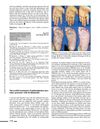
July 2018 in “European Journal of Dermatology” Brodalumab effectively treated a man's severe hand and foot psoriasis.
14 citations
,
May 2017 in “Journal of Investigative Dermatology” This study reports a novel homozygous mutation in the DST gene causing a unique form of epidermolysis bullosa simplex with prurigo papules in a 39-year-old Syrian man.
 1 citations
,
January 2023 in “Annals of Dermatology”
1 citations
,
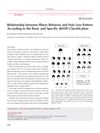
January 2023 in “Annals of Dermatology” The BASP classification helps predict patient behavior and improve treatment for hair loss.
 39 citations
,
June 2019 in “Toxins”
39 citations
,
June 2019 in “Toxins” This review explores the therapeutic potential of bee venom for treating various skin diseases, discussing its mechanisms and effects but reports no new clinical findings.
 May 2022 in “Annals of Oncology”
 This study found that photobiomodulation may accelerate hair regrowth one month after chemotherapy in breast cancer patients, but no significant differences were observed at two and three months post-therapy.
1 citations
,
August 2021 in “Journal of The American Academy of Dermatology” This study investigates the effects of ice cooling and vibration on reducing pain during platelet-rich plasma injections for alopecia, especially due to concerns about lidocaine reducing PRP efficacy.
16 citations
,
July 2022 in “The Laryngoscope” This study found that platelet-rich plasma injections for vocal fold scarring and atrophy showed a favorable safety profile and subjective improvements in vocal quality and fatigue over a three-month follow-up.
 November 2020 in “Journal of The American Academy of Dermatology”
 This study reported that using plain bottles instead of commercial kits for extracting platelet-rich plasma may be an effective method for treating hair loss.
13 citations
,
January 2021 in “The American journal of gastroenterology” In this study, sirolimus treatment reduced the size of venous malformations and improved anemia, transfusion dependence, and quality of life in patients with blue rubber bleb nevus syndrome, though mild adverse effects were reported.
1 citations
,
August 1983 in “PubMed” This study reported that VCP combination chemotherapy achieved a complete response in 53% of advanced non-Hodgkin's lymphoma patients, although more intensive treatment may be needed for improved outcomes.
This chapter summarizes the efficacy of NB-UVB monotherapy for vitiligo and notes that patients treated with tacrolimus showed significantly better repigmentation.
 September 2026 in “Stem Cell Reviews and Reports”
 Bulge progenitor cells show promise for regenerating hair follicles and increasing hair density.
 56 citations
,
April 2015 in “American journal of medical genetics. Part A”
56 citations
,
April 2015 in “American journal of medical genetics. Part A” This study reports on eight previously unpublished cases of Bohring-Opitz syndrome with ASXL1 mutations, suggesting the importance of screening for Wilms tumors in these patients.