
This case report describes perifollicular melanocyte regeneration in the affected skin of a patient with bullous pemphigoid, highlighting an underreported aspect of the condition in skin of color patients, and emphasizing the need for increased awareness and earlier diagnosis in this demographic.
September 2023 in “Journal of the American Academy of Dermatology” In this study of pediatric melanocytic lesions, researchers at Massachusetts General Hospital observed no concurrent BAP1 loss and BRAFV600E positivity, characteristics of adult BIMT, suggesting that these tumors may develop at a later age rather than in childhood.
 October 2022 in “Journal of ophthalmology”
 This review discusses the implementation and mechanisms of photobiomodulation therapy in various medical fields, including ophthalmology, and reports no new clinical results.
 November 2022 in “The journal of investigative dermatology/Journal of investigative dermatology”
 This study found that cPPARγ and dnPPARγ isoforms are differentially expressed in healthy human skin, suggesting that PPARγ modulators may have compartment-specific effects depending on isoform presence.
June 2025 in “British Journal of Dermatology” This reported case of lichen planopilaris in siblings suggests a potential genetic predisposition, supporting the hypothesis of inherited susceptibility in this condition.
 2 citations
,
June 2019 in “International Journal of Dermatology”
2 citations
,
June 2019 in “International Journal of Dermatology” This study found that while a modified BASP classification for pattern hair loss could classify previously unrecognized types, it was less accurate and harder to use than the existing BASP classification.
 10 citations
,
December 2017 in “Chemosphere”
10 citations
,
December 2017 in “Chemosphere” In this study, BPA rapidly increased dendritic spine and synapse densities in cultured rat hippocampal neurons, with involvement of estrogen receptors and ERK1/2 and p38 pathways, but disrupted dihydrotestosterone's effects on synaptic plasticity.
46 citations
,
November 2022 in “The Journal of Dermatology” This review discusses recent findings on the mechanisms driving bullous pemphigoid, highlighting epitope spreading and the roles of regulatory T cells, and reports no new experimental results.
16 citations
,
June 2022 in “Journal of Pediatric Endocrinology and Metabolism” This study found an association between higher phthalate exposure and increased incidence of precocious puberty in girls, suggesting a need to reduce children's exposure to these endocrine disruptors.
 September 2026 in “Stem Cell Reviews and Reports”
 Bulge progenitor cells show promise for regenerating hair follicles and increasing hair density.
 3 citations
,
June 2022 in “Dermatology and therapy”
3 citations
,
June 2022 in “Dermatology and therapy” This case report found that a novel botanical treatment halted disease progression and promoted hair regrowth in four patients with lichen planopilaris, indicating potential for use as a safe alternative therapy.
1 citations
,
December 2020 in “International journal of molecular sciences” This study suggests that biallelic loss of the Hedgehog signaling repressor Patched alone in Keratin 5+ epidermal cells is insufficient to drive basal cell carcinoma development unless exogenous stimuli trigger accumulation of BCC precursor cells.
 2 citations
,
February 2004 in “Biopolymers”
2 citations
,
February 2004 in “Biopolymers” This study found that 4-(4-Phenoxybenzoyl)benzoic acid derivatives may act as antioxidants by scavenging certain reactive oxygen species but exhibit prooxidant behavior under specific conditions.
18 citations
,
May 2006 in “Journal of Cutaneous Medicine and Surgery” This study reports the first known case of linear lichen planopilaris following Blaschko's lines in a nonfacial region.
 143 citations
,
September 1991 in “Archives of Dermatology”
143 citations
,
September 1991 in “Archives of Dermatology” In this study, patients with generalized pustular psoriasis were classified into subgroups to better understand the disease's variability and assist in treatment selection, highlighting the role of localized infections in triggering flares.
32 citations
,
May 1999 in “Biochemical and Biophysical Research Communications” This study found that the gene BSSP, a serine protease, is predominantly expressed in sebaceous glands and is overexpressed in nude mouse skin.
4 citations
,
August 2018 in “Journal of pediatric neurology” This article reviews Becker's nevus syndrome, covering its symptoms, causes, and cosmetic treatment options, without presenting new clinical findings.
 3 citations
,
January 2019 in “Journal of Dermatology”
3 citations
,
January 2019 in “Journal of Dermatology” This letter to the editor discusses the natural course of epidermolysis bullosa simplex with mottled pigmentation in a Japanese family but does not present new clinical results.
 125 citations
,
May 2007 in “Journal of The American Academy of Dermatology”
125 citations
,
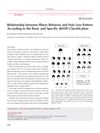
May 2007 in “Journal of The American Academy of Dermatology” This study describes the development of the BASP classification system, providing a universal and systematic approach for classifying pattern hair loss in both men and women.
 1 citations
,
January 2023 in “Annals of Dermatology”
1 citations
,
January 2023 in “Annals of Dermatology” The BASP classification helps predict patient behavior and improve treatment for hair loss.
 8 citations
,
February 2005 in “British Journal of Haematology”
8 citations
,
February 2005 in “British Journal of Haematology” This report describes a case of a man developing hair changes, including Beau's lines and Pohl-Pinkus constrictions, following ABVD chemotherapy.
November 1997 in “Open Archive (Karolinska Institutet)” This research observed that mutations in the PTCH gene are common in both sporadic and hereditary basal cell cancers, suggesting a critical role of the PTCH signaling pathway in skin tumor development.
September 2023 in “Journal of the American Academy of Dermatology” Bullous pemphigoid can look like erythema multiforme, so awareness is needed for proper treatment.
 37 citations
,
October 2015 in “Anais Brasileiros de Dermatologia”
37 citations
,
October 2015 in “Anais Brasileiros de Dermatologia” This study found diverse clinical presentations of lichen planopilaris, with classic lichen planopilaris being the most common, highlighting the importance of recognizing this variability for accurate diagnosis.
February 2026 in “Advanced Science” This study found that the combination of TTNPB and CHIR99021 enhanced the derivation of highly advanced neural stem cells from human pluripotent stem cells, with improved chromatin accessibility and neuroectodermal gene expression, and these cells successfully engrafted in rat hippocampi to ameliorate depression-like symptoms.
 105 citations
,
December 2009 in “Archives of dermatology”
105 citations
,
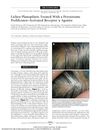
December 2009 in “Archives of dermatology” This overview discusses primary cicatricial alopecias, focusing on lichen planopilaris, and highlights the challenges in treatment and the progressive nature of hair loss despite symptom management, without providing new clinical results.

This study identified a genetic locus associated with rhabdomyosarcoma susceptibility in mice and found that specific differentiation markers are linked to the regression of basal cell carcinoma.
13 citations
,
January 2010 in “Immunopharmacology and immunotoxicology” This study found that increased Bcl-2 protein expression after DPCP treatment was associated with hair regrowth in alopecia areata patients, suggesting its role in inhibiting apoptosis.
November 2024 in “Journal of Investigative Dermatology” Bimekizumab quickly improves psoriasis symptoms and skin at the molecular level.
 December 2020 in “Nippon Laser Igakkaishi”
 This review covers the mechanisms and reported clinical effects of Photobiomodulation therapy, particularly in the fields of plastic surgery and dermatology, without presenting new clinical results.