 146 citations
,
June 2012 in “PLoS ONE”
146 citations
,
June 2012 in “PLoS ONE” This study observed that quiescent label-retaining cells in the intestine, identified by Paneth cell markers, can switch to a proliferative state and activate Bmi1 expression during tissue injury, contributing to tissue regeneration.
 137 citations
,
April 2015 in “Nature Reviews Molecular Cell Biology”
137 citations
,
April 2015 in “Nature Reviews Molecular Cell Biology” This review discusses the distinct roles and surprising developmental flexibility of multiple somatic stem cell types in tissue maintenance and repair, reporting no new results but highlighting emerging questions about their regulation and origins.
 134 citations
,
January 2010 in “Biomedical research”
134 citations
,
January 2010 in “Biomedical research” This study found that subcutaneous administration of conditioned medium from adipose-derived stem cells promoted hair growth in mice, and hypoxia enhanced this effect by altering growth factor secretion.
 129 citations
,
October 2007 in “The New England Journal of Medicine”
129 citations
,
October 2007 in “The New England Journal of Medicine” This article discusses the evaluation and management of a 45-year-old woman with diffuse scalp-hair loss and reports no new clinical findings.
 124 citations
,
June 2020 in “Cell Stem Cell”
124 citations
,
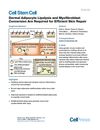
June 2020 in “Cell Stem Cell” This study found that in mice, dermal adipocytes initiate inflammation and aid repair after skin injury by releasing lipids, suggesting a role in managing inflammatory diseases and impaired wound healing.
 104 citations
,
January 2014 in “Journal of Clinical and Experimental Dentistry”
104 citations
,
January 2014 in “Journal of Clinical and Experimental Dentistry” This review outlines the oral toxic effects of chemotherapy and stresses the need for evaluating dental health prior to treatment to mitigate these complications, but it reports no new clinical results.
 101 citations
,
November 2011 in “Nature Communications”
101 citations
,
November 2011 in “Nature Communications” Wnt/β-catenin signaling is crucial for cell fusion in placental development.
 97 citations
,
September 2006 in “Pharmaceutical Research”
97 citations
,
September 2006 in “Pharmaceutical Research” This review discusses advances in protecting against chemotherapy-induced alopecia and reports no new clinical results; calcitriol and cyclosporine A emerged as promising agents in animal models with broader efficacy across multiple chemotherapy drugs.
 91 citations
,
March 2011 in “Stem Cell Reviews and Reports”
91 citations
,
March 2011 in “Stem Cell Reviews and Reports” This article describes protocols for isolating and expanding human epidermal neural crest stem cells and discusses their potential for cell-based therapies in regenerative medicine, but reports no new clinical results.
 84 citations
,
March 2010 in “Infectious Disease Clinics of North America”
84 citations
,
March 2010 in “Infectious Disease Clinics of North America” The document concludes that rapid identification, isolation, and strict infection control are crucial to manage SARS outbreaks.
 83 citations
,
March 2015 in “International Journal of Dermatology”
83 citations
,
March 2015 in “International Journal of Dermatology” This retrospective study found that adipose-derived stem cell-conditioned media increased hair density and thickness in women with female pattern hair loss over 12 weeks, with no severe adverse effects reported.
 83 citations
,
November 2002 in “British Journal of Dermatology”
83 citations
,
November 2002 in “British Journal of Dermatology” This study found no direct relationship between low serum ferritin and chronic diffuse telogen hair loss in women, questioning the usefulness of serum ferritin measurement and iron supplementation for managing this condition.
 81 citations
,
December 2009 in “Journal of Dermatological Science”
81 citations
,
December 2009 in “Journal of Dermatological Science” This review discusses the paracrine effects of adipose tissue-derived stem cells on surrounding cells and tissues, noting their potential therapeutic benefits, but reports no new clinical results.
 76 citations
,
February 2021 in “International Journal of Molecular Sciences”
76 citations
,
February 2021 in “International Journal of Molecular Sciences” This review examines how mesenchymal stem cells and their derivatives may enhance skin regeneration and rejuvenation, but it reports no new clinical results; the authors suggest iPSC-derived MSCs hold promise for future therapies.
 76 citations
,
July 2019 in “Cellular and Molecular Life Sciences”
76 citations
,
July 2019 in “Cellular and Molecular Life Sciences” This article reviews the role of stem cells in tissue development, tumor formation, and organoid generation, and highlights the potential of epigenetic regulation in advancing regenerative medicine and cancer treatment, without presenting new experimental results.
 75 citations
,
January 2009 in “International journal of trichology”
75 citations
,
January 2009 in “International journal of trichology” This review examines the differential aging of melanocytes in hair follicles and skin, and reports no new findings; the authors suggest further research is needed to understand these processes.
 68 citations
,
May 2012 in “Annals of Oncology”
68 citations
,
May 2012 in “Annals of Oncology” This study reports that permanent and severe alopecia is a newly identified complication of the FEC 100–docetaxel regimen used for adjuvant breast cancer treatment.
 67 citations
,
July 2016 in “Reviews in Endocrine and Metabolic Disorders”
67 citations
,
July 2016 in “Reviews in Endocrine and Metabolic Disorders” This review discusses the complex relationship between stress and various skin conditions, highlighting the role of the skin in the stress response and the brain-skin communication pathways, but reports no new research findings.
 65 citations
,
January 2018 in “Nature Reviews Endocrinology”
65 citations
,
January 2018 in “Nature Reviews Endocrinology” This review discusses the unique features of dermal white adipose tissue, its interaction with hair follicles, and its role in skin physiology, reporting no new experimental findings.
 64 citations
,
July 2011 in “Dermatologic Therapy”
64 citations
,
July 2011 in “Dermatologic Therapy” This review discusses treatments for chemotherapy-induced alopecia, highlighting scalp cooling for hair loss prevention and 2% topical minoxidil for regrowth acceleration as effective options, but reports a need for more rigorous trials to validate promising new therapies.
 62 citations
,
February 2011 in “Expert review of dermatology”
62 citations
,
February 2011 in “Expert review of dermatology” This review discusses the incidence, reversibility, and impact of chemotherapy-induced alopecia and concludes that scalp cooling is the most effective prevention method in most cases, though some questions remain.
 61 citations
,
March 1990 in “Clinical pharmacology and therapeutics/Clinical pharmacology & therapeutics”
61 citations
,
March 1990 in “Clinical pharmacology and therapeutics/Clinical pharmacology & therapeutics” In this study, albendazole treatment in patients with hydatid disease was associated with decreased microsomal enzyme function and induced its own metabolism, but also showed potential hepatotoxicity and severe side effects, necessitating careful monitoring.
 57 citations
,
December 2021 in “Nature Communications”
57 citations
,
December 2021 in “Nature Communications” In this study, enteroendocrine cells were shown to coordinate intestinal stem cell migration towards a wound in Drosophila by releasing a ligand that activates non-canonical Wnt signaling, aiding efficient tissue repair.
 57 citations
,
March 2011 in “The American Journal of Dermatopathology”
57 citations
,
March 2011 in “The American Journal of Dermatopathology” This study found that permanent alopecia can occur after certain chemotherapy treatments and presents as nonscarring hair loss similar to androgenetic alopecia, with specific histological features that could be misdiagnosed without proper clinicopathological correlation.
 53 citations
,
August 2019 in “American journal of human genetics”
53 citations
,
August 2019 in “American journal of human genetics” This study found that FOXN1 haploinsufficiency is a significant genetic factor causing T cell lymphopenia at birth, linked to reduced thymic function in both humans and mice.
 53 citations
,
May 2001 in “The American journal of the medical sciences”
53 citations
,
May 2001 in “The American journal of the medical sciences” This article reviews common skin eruptions in chemotherapy patients and discusses how recognizing these patterns can help avoid unnecessary changes to cancer treatment; it reports no new clinical results.
 52 citations
,
May 2013 in “Supportive Care in Cancer”
52 citations
,
May 2013 in “Supportive Care in Cancer” Scalp cooling significantly reduces hair loss in chemotherapy patients.
 47 citations
,
February 2021 in “Pharmacological research”
47 citations
,
February 2021 in “Pharmacological research” This review discusses the potential of endogenic and exogenous exosomes in dermatology and cutaneous aesthetics, highlighting their capacity to repair and rejuvenate skin tissue, but reports no new experimental results.
 40 citations
,
January 2009 in “Skin Pharmacology and Physiology”
40 citations
,
January 2009 in “Skin Pharmacology and Physiology” This review discusses the potential use of cultured primary fetal cells from a single organ donation to produce therapeutic products, emphasizing the need for process consistency and safety verification, but reports no clinical results.
 39 citations
,
October 2014 in “Schweizerische medizinische Wochenschrift”
39 citations
,
October 2014 in “Schweizerische medizinische Wochenschrift” This study found that while cyclophosphamide remains effective for severe autoimmune conditions, it is associated with gastrointestinal side effects, infections, some cases of irreversible amenorrhoea, and a higher risk of malignancies, emphasizing the need for long-term monitoring.