 July 2023 in “Photobiomodulation, photomedicine, and laser surgery”
 In this study, photobiomodulation treatment using a red low-level laser significantly increased hair density in men with androgenetic alopecia over 10 weeks, yet no additional improvement was observed between the 5-week and 10-week marks.
 May 2014 in “Hair transplant forum international”
 This spotlight highlights the Brazilian Association of Hair Restoration Surgery and shares the positive experiences of the International Society of Hair Restoration Surgery members with their Brazilian colleagues, reporting no new findings.
 26 citations
,
June 2020 in “Polymers”
26 citations
,
June 2020 in “Polymers” This study reported that a magneto-responsive transdermal microneedle system delivered Minoxidil effectively and significantly increased hair density by 800% in mice with androgenetic alopecia after 10 days.
8 citations
,
September 2011 in “Scanning” This study found that multiphoton microscopy effectively visualizes the microstructure of in vivo mouse skin, offering a clear view of various skin layers and components like corneocytes and collagen fibers.
4 citations
,
February 2018 in “Facial Plastic Surgery” In this research, a minimally invasive endoscopic brow lifting technique was presented as a viable option to reshape and fixate heavy eyebrows in mestizo patients, offering an effective approach that requires careful patient analysis to determine the appropriate technique and desired outcomes.
September 2025 in “Journal of Polymer Science” This review article highlighted the diverse applications of functionalized materials from bacterial cellulose, detailing advances in both in situ and ex situ methods for enhancing these materials' properties, particularly for medical applications, and proposed directions for future research.
176 citations
,
January 2013 in “Proceedings of the National Academy of Sciences” This study reveals an antagonistic competition between BMP and Wnt signaling within stem cells, influencing their fate towards hair germ characteristics based on the BMP/Wnt activity ratio.
1 citations
,
September 2024 in “Cosmetics” This study found that permanent makeup pigments were applied at similar depths as traditional tattoo inks in mice but faded over time due to larger inorganic pigments.
 18 citations
,
September 2013 in “Technology”
18 citations
,
September 2013 in “Technology” This study introduces a new multimodal imaging technology to visualize and quantify cell dynamics in natural skin over long durations, demonstrated in GFP bone marrow-transplanted mice, to study dynamic skin regeneration.
 12 citations
,
March 2021 in “Journal of Medical Internet Research”
12 citations
,
March 2021 in “Journal of Medical Internet Research” This study tested the feasibility of using multimodal recruitment strategies to assemble a diverse group of 438 women for a web-based survey on ovulation and menstruation health, finding that internet and community fair methods achieved higher enrollment and completion rates compared to clinic recruitment.
 February 2023 in “JEADV Clinical Practice”
 This case report describes a girl with uncombable hair syndrome who showed significant improvement in hair combability and growth rate after two cycles of oral biotin supplementation.

In preclinical studies, topical CUR61414 reduced Hh signaling and shrank BCCs in mice, but this study found no clinical efficacy in human superficial or nodular BCCs.
 September 2026 in “Scientific Reports”
 This study discovered a conserved "fiber-like-motif" of melanosomes aligned in hair across various mammalian species, shedding light on the internal structure that influences hair's thermal and mechanical properties.
1 citations
,
January 2013 in “Lung India” This letter discusses how differentiating features in clinical and radiological findings can help distinguish pulmonary Langerhans cell histiocytosis and Birt-Hogg-Dube syndrome from lymphangioleiomyomatosis, noting overlapping symptoms but specific distinctive traits.
June 2023 in “Zenodo (CERN European Organization for Nuclear Research)”  31 citations
,
August 2022 in “Frontiers in Oncology”
31 citations
,
August 2022 in “Frontiers in Oncology” This review discusses the potential benefits of photobiomodulation for managing side effects of cancer therapy and provides specific guidelines for its use in supportive cancer care, without presenting new clinical results.
 18 citations
,
July 2019 in “Clinical Endocrinology”
18 citations
,
July 2019 in “Clinical Endocrinology” The researchers reported that among Mediterranean Sicilian women with PCOS, Phenotype B exhibited the most severe metabolic abnormalities, notably obesity and altered glucose metabolism, whereas Phenotype D showed no such issues.
 1 citations
,
January 2020 in “bioRxiv (Cold Spring Harbor Laboratory)”
1 citations
,
January 2020 in “bioRxiv (Cold Spring Harbor Laboratory)” This study suggests that Dicer, but not Tarbp2, plays a crucial role in regulating the growth phase of hair follicles in bulge stem cells during post-natal development in mice.
December 2009 in “Eclética Química” This study developed a new permanganometric method for determining minoxidil in pharmaceutical formulations, offering a simple and rapid alternative to chromatographic procedures with recovery rates between 94.5% and 95.2%.
 93 citations
,
November 2018 in “Carbohydrate Polymers”
93 citations
,
November 2018 in “Carbohydrate Polymers” This study demonstrated that modified montmorillonites combined with bacterial cellulose enhanced antimicrobial, wound healing, and tissue regenerative activities in a burn mice model, suggesting potential as an artificial skin substitute for burn patients.
 April 2025 in “International Journal of Cosmetic Science”
 This study found that using 1,4-butylenediamine bismaleimide for hair perming through thiol-Michael click chemistry offers comparable efficiency to conventional oxidative methods, with enhanced durability and reduced damage to hair fibres, preserving mechanical, color, and surface properties.
June 2025 in “British Journal of Dermatology” In this study, researchers describe a rare case of trichoepitheliomas in a 7-year-old boy, characterized by multiple skin lesions in a Blaschko-linear pattern, hypothesizing it as a type 1 segmental mosaicism without detected CYLD gene mutations.
5 citations
,
September 2013 in “BMB Reports” In this study, the anti-wrinkle effect of bone morphogenetic protein receptor 1a extracellular domain was significantly greater than that of retinoic acid in a mouse model, suggesting potential for BMP antagonists in skin or hair treatments.
3 citations
,
December 1967 in “Australasian Journal of Dermatology” This review discusses Becker's Melanosis and Hypertrichosis in young males, summarizing cases observed in Melbourne with clinical and histological analyses, but reports no new clinical findings.
This study mapped the curly mutation in mice to a specific region on chromosome 11, identifying it as a candidate model for studying human genetic hair disorders.
 April 2026 in “Zenodo (CERN European Organization for Nuclear Research)”
 This research presents the Dodatek A model, elaborating on androgen function through new mathematical indices and methodological improvements, shifting focus from serum hormone concentrations to system interactions to better describe androgen activity comprehensively.
August 2026 in “International Journal For Multidisciplinary Research” This case report suggests that a comprehensive phase-wise Unani therapeutic approach may improve multiple clinical, hormonal, and metabolic outcomes in a young woman with Polyendocrine Metabolic Ovarian Syndrome.
 2 citations
,
August 2012 in “Journal of the American Academy of Dermatology”
2 citations
,
August 2012 in “Journal of the American Academy of Dermatology” This correspondence describes two patients with both epidermolysis bullosa simplex, Dowling-Meara type, and loose anagen hair syndrome, an association not previously reported in the literature.
1 citations
,
September 2021 in “Journal of Cosmetic Dermatology” This study demonstrated that B-mode ultrasound and shear-wave elastography could differentiate individuals at risk of developing androgenetic alopecia from healthy individuals by assessing cranial subcutaneous tissue thickness and epidermis-dermis stiffness.
 1 citations
,
October 2023 in “Journal of the Pakistan Medical Association”
1 citations
,
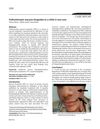
October 2023 in “Journal of the Pakistan Medical Association” This source describes a case of a 12-year-old male diagnosed with folliculotropic mycosis fungoides, presenting with an asymptomatic, erythematous plaque. Histology and immunohistochemistry confirmed FMF, which is typically rare in children and marked by follicular infiltration by CD4+ lymphocytes.