 25 citations
,
December 2017 in “Facial Plastic Surgery”
25 citations
,
December 2017 in “Facial Plastic Surgery” This study observed that combining high-potency steroids with pimecrolimus might effectively stabilize hairline recession in frontal fibrosing alopecia patients.
May 2026 in “International Journal of Dermatology” This study investigated a unique frontal fibrosing alopecia-like presentation of alopecia areata, finding that patients experienced an insidious, chronic course with limited scalp hair regrowth, and showed a lower response to systemic corticosteroids compared to patchy alopecia areata.
3 citations
,
June 2016 in “JEADV. Journal of the European Academy of Dermatology and Venereology/Journal of the European Academy of Dermatology and Venereology” This letter to the editor describes a case of postcast hypertrichosis in a patient with frontal fibrosing alopecia and reports no new research findings.
 30 citations
,
December 2017 in “Journal of The American Academy of Dermatology”
30 citations
,
December 2017 in “Journal of The American Academy of Dermatology” This correspondence discusses proposed updates to the diagnostic criteria for frontal fibrosing alopecia, emphasizing the importance of differentiating it from other types of alopecia.
 July 2023 in “Dermatology practical & conceptual”
 This study found that women with Female Pattern Hair Loss had lower serum BDNF levels, which correlated with higher stress and depression, suggesting BDNF as a potential marker for psychological impacts in these patients.
 July 2007 in “Faculty Opinions – Post-Publication Peer Review of the Biomedical Literature”
 This study introduced the BASP classification, a new system for categorizing pattern hair loss in both men and women, and applied it to analyze 2213 Korean subjects.
 26 citations
,
August 2016 in “Actas Dermo-Sifiliográficas”
26 citations
,
August 2016 in “Actas Dermo-Sifiliográficas” This study found that men with frontal fibrosing alopecia were more likely to have facial papules, androgenetic alopecia, and body hair loss compared to women, with the average patient age being higher than in other series, potentially explaining these differences.
 September 2019 in “The journal of investigative dermatology/Journal of investigative dermatology”
 This study reported that while eyebrow hair transplantation in patients with frontal fibrosing alopecia achieves satisfactory short-term results, most patients experience significant hair graft loss within 3-4 years.
 61 citations
,
January 2019 in “American Journal of Clinical Dermatology”
61 citations
,
January 2019 in “American Journal of Clinical Dermatology” This review discusses the potential causes and treatments for frontal fibrosing alopecia but reports no new clinical findings, highlighting the need for further research to understand its pathogenesis and develop validated treatments.
 November 2025 in “SKIN The Journal of Cutaneous Medicine”
 In this open-label study of post-menopausal women with frontal fibrosing alopecia, researchers found that 12 weeks of baricitinib monotherapy significantly reduced disease activity as measured by the Lichen Planopilaris Activity Index, improved patient-reported scalp hair growth, but showed no significant change in eyebrow growth.
 46 citations
,
January 2015 in “Journal of The American Academy of Dermatology”
46 citations
,
January 2015 in “Journal of The American Academy of Dermatology” This study suggests that trichoscopic features, such as perifollicular erythema and cicatricial white patches, are independently associated with pruritus and the severity of frontal fibrosing alopecia.
 8 citations
,
December 2017 in “Journal of The American Academy of Dermatology”
8 citations
,
December 2017 in “Journal of The American Academy of Dermatology” This correspondence discusses the diagnostic criteria for frontal fibrosing alopecia but reports no new research findings, agreeing with many previously suggested criteria.
 12 citations
,
July 2017 in “Journal of cosmetic dermatology”
12 citations
,
July 2017 in “Journal of cosmetic dermatology” This study suggests that infrared thermography may be a useful noninvasive tool for diagnosing active phases of frontal fibrosing alopecia when combined with dermoscopy.
April 2021 in “Aktuelle Dermatologie” This review discusses frontal fibrosing alopecia, noting its clinical characteristics, possible environmental factors, and lack of evidence-based therapies, but reports no new research findings.
 April 2017 in “Journal of Investigative Dermatology”
 This study observed that using a 1064 nm Nd: YAG laser may stabilize hair loss and promote new growth in some females with frontal fibrosing alopecia, though individual results varied.
 2 citations
,
January 2019 in “Skin appendage disorders”
2 citations
,
January 2019 in “Skin appendage disorders” This study observed that women with higher educational levels and social status are diagnosed with frontal fibrosing alopecia earlier, resulting in better therapeutic responses.
 21 citations
,
October 2017 in “Journal of the European Academy of Dermatology and Venereology”
21 citations
,
October 2017 in “Journal of the European Academy of Dermatology and Venereology” This study reports that variable environmental factors, including dietary habits, may contribute to the increasing incidence and diverse clinical presentations of frontal fibrosing alopecia.
 January 2020 in “Revista da Sociedade Portuguesa de Dermatologia e Venereologia”
 This study reports that frontal fibrosing alopecia in Brazilian patients is common in postmenopausal women and often associated with hypothyroidism and facial irritation from cosmetic products.
September 2004 in “Experimental Dermatology” In this study, neutralizing nerve growth factor reduced stress-triggered hair loss in mice, suggesting that nerve-immune system interactions and neurogenic inflammation contribute to this condition.
November 2025 in “Contact Dermatitis” In this case study, a 34-year-old woman experienced facial allergic reactions to SPF-containing products, and patch tests identified sensitization to salicylates, which when avoided, stabilized her symptoms and her existing frontal fibrosing alopecia, highlighting a possible link to investigate further.
 23 citations
,
October 2018 in “Australasian Journal of Dermatology”
23 citations
,
October 2018 in “Australasian Journal of Dermatology” This review highlights that frontal fibrosing alopecia’s increasing incidence may involve immune, genetic, hormonal, and environmental factors, yet its pathogenesis remains complex and not fully understood.
 July 2023 in “Developmental medicine and child neurology/Developmental medicine & child neurology”
 This study found that patients with Bachmann-Bupp syndrome treated with DFMO showed improvements in hair growth, muscle tone, and development.
 9 citations
,
October 2018 in “Journal of international medical research”
9 citations
,
October 2018 in “Journal of international medical research” This study found no correlation between the extent of frontal fibrosing alopecia and quality of life, but observed a strong association with thyroid disease in affected women.
 3 citations
,
September 2019 in “Skin appendage disorders”
3 citations
,
September 2019 in “Skin appendage disorders” This study found that females with frontal fibrosing alopecia had more preauricular lines than age-matched controls, indicating a potential new clinical marker for the condition.
 2 citations
,
July 2021 in “JAAD Case Reports”
2 citations
,
July 2021 in “JAAD Case Reports” This case study suggests that trichoscopic examination of the beard can aid in diagnosing frontal fibrosing alopecia in men, especially when challenging to differentiate from androgenetic alopecia.
 36 citations
,
December 2017 in “Journal of the American Academy of Dermatology”
36 citations
,
December 2017 in “Journal of the American Academy of Dermatology” This study observed that 70.7% of patients with frontal fibrosing alopecia stabilized with treatment, and patients using 0.3% tacrolimus were more likely to stabilize in 3 months compared to other treatments.
August 2020 in “Benha Journal of Applied Sciences” This study observed that patients with androgenetic alopecia had significantly higher serum FABP4 levels compared to healthy controls, suggesting FABP4 may be involved in the condition's pathogenesis.
 1 citations
,
March 2016 in “Journal of The American Academy of Dermatology”
1 citations
,
March 2016 in “Journal of The American Academy of Dermatology” This editorial response discusses the evidence for using 5-alpha reductase inhibitors in treating frontal fibrosing alopecia, acknowledging its potential benefits while emphasizing the need for further studies to establish it as a standard treatment.
 31 citations
,
April 2010 in “British journal of dermatology/British journal of dermatology, Supplement”
31 citations
,
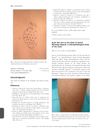
April 2010 in “British journal of dermatology/British journal of dermatology, Supplement” This report describes two patients with frontal fibrosing alopecia who developed acute hair loss on their limbs, revealing that the limb alopecia had similar histological features to scalp alopecia.
17 citations
,
June 2016 in “Archives de Pédiatrie” This case report describes three pediatric cases of frontal fibrosing alopecia, a condition typically seen in postmenopausal women, including a unique instance involving female twins.