June 2020 in “Zenodo (CERN European Organization for Nuclear Research)” In this study, the authors observed that controlled microflora in gnotobionts leads to delayed maturation of T-dependent lymphocytes in the thymus, affecting cellular immunity reactions.
32 citations
,
March 2018 in “Neoplasia” This study suggests that nephronectin (NPNT) could serve as a novel prognostic marker for poor prognosis in a subgroup of breast cancer patients, associated with specific NPNT staining patterns.
449 citations
,
December 2005 in “The Plant Cell” This study found that the BIK1 gene in Arabidopsis thaliana modulates defense responses to pathogens and is essential for normal root growth and development.
 3 citations
,
October 2021 in “Brain Sciences”
3 citations
,
October 2021 in “Brain Sciences” This review hypothesizes that risperidone long-acting injectable may be linked to bullous pemphigoid in a bipolar patient, though current studies report mixed results.
49 citations
,
January 2006 in “Developmental Dynamics” This research observed that the skeletal abnormalities in Noggin null mice varied based on genetic background, and identified haploinsufficiency leading to joint fusions, similar to human conditions associated with NOGGIN deficiency.
43 citations
,
January 2016 in “Development” This study identified a critical NF-κB-LHX2-TGFβ2 signaling pathway essential for primary hair follicle development in mice, revealing new insights into the underlying mechanisms of morphogenesis.

In this study, VB-1 was reported to promote human hair follicle growth by enhancing Wnt/β-catenin signaling and increasing human dermal papilla cell proliferation in vitro.
 24 citations
,
July 2017 in “Structure”
24 citations
,
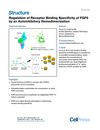
July 2017 in “Structure” In this study, researchers found that ligand homodimerization controls the receptor binding specificity of the FGF9 subfamily, preventing off-target activation of FGFR "b" isoforms.
 April 2017 in “IOSR journal of dental and medical sciences”
 This abstract discusses Netherton Syndrome, a genetic disorder with a characteristic triad of symptoms caused by SPINK5 gene mutation, and reports no new clinical findings or treatment advances.

CaBP1 and 2 are important for maintaining the activity of calcium channels necessary for hearing in inner ear cells.
This study found that in beagles with benign prostate hyperplasia, finasteride treatment increased blood volume and decreased vessel leakiness in the prostate's parenchymal zone as shown by dynamic contrast-enhanced MRI.
34 citations
,
August 2015 in “Frontiers in Behavioral Neuroscience” This study found that augmenting or reducing allopregnanolone activity in the BNST affected contextual fear expression in rats, suggesting sex differences in anxiety may be linked to neuroactive steroid regulation.
![Influence of FHIT on Benzo[a]pyrene-Induced Tumors and Alopecia in Mice: Chemoprevention by Budesonide and N-Acetylcysteine](/images/assets/f8f56777-f891-4879-8c45-c87d6aa82563/small/35499.jpg) 24 citations
,
May 2006 in “Proceedings of the National Academy of Sciences of the United States of America”
24 citations
,
May 2006 in “Proceedings of the National Academy of Sciences of the United States of America” This study reported that heterozygosity for FHIT affects mice's susceptibility to spontaneous alopecia areata and to certain preneoplastic lesions induced by benzo[a]pyrene, but does not change how they respond to budesonide and N-acetyl-L-cysteine.
August 2026 in “Free Radical Biology and Medicine” May 2005 in “Faculty Opinions – Post-Publication Peer Review of the Biomedical Literature” In this study, transgenic mice with a truncated latent transforming growth factor-beta-binding protein showed reduced keratinocyte proliferation and alterations in the hair cycle due to mis-localization of transforming growth factor-beta.
 December 2013 in “Appetite”
 This study identified a nonfunctional Itpr3 gene in BTBR mice, attributed to a 12-bp deletion, which likely causes their simultaneous hair loss and taste perception deficits.
January 2007 in “Journal of Southwest University” This study identified that the ND1 gene sequence of the Asian black bear's Sichuan subspecies shares high similarity with those of other bear species, raccoons, and Ailurus fulgens.
 5 citations
,
February 2016 in “Genetic Testing and Molecular Biomarkers”
5 citations
,
February 2016 in “Genetic Testing and Molecular Biomarkers” This study found that the expression levels of nucleolin, nucleophosmin, and UBTF genes were lower in normal sites compared to hair loss sites in males with alopecia.

This study demonstrated that de novo designed bifunctional proteins can target and degrade BCL-xL, leading to cell apoptosis, suggesting a new approach to targeted protein degradation therapy.
49 citations
,
January 2024 in “Regenerative Biomaterials” In this study, a novel electrospun dressing patch made with radially oriented PHBV nanofibers and loaded with berberine was shown to significantly accelerate diabetic wound healing in mice, achieving 100% wound closure in 18 days while also demonstrating improved mechanical and anti-inflammatory properties.
 March 2026 in “Folia Histochemica et Cytobiologica”
 This review highlights LTBP1 as a critical integrator in disease processes, showing its dual role in cancer progression and suppression, its pathological influence in fibrosis, and its contribution to various disorders, suggesting its potential as a biomarker and therapeutic target.
December 2011 in “University of Southern California Digital Library” In this study, transgenic mice with active BMPR1A signaling in the epidermis had impaired hair follicle morphogenesis and showed age-related hair loss, implicating BMP signaling in hair follicle development and homeostasis.
 June 2026 in “Springer Link (Chiba Institute of Technology)”
 This study found that fibroblast growth factors exhibit significant expression differences in the skin of rodents and primates, which may be linked to their evolutionary and environmental adaptations.
42 citations
,
September 2012 in “PLoS ONE” In this study, bezafibrate treatment improved certain aging-like features in a mouse model with mitochondrial dysfunction, but did not enhance muscle function or lifespan.
July 2024 in “Journal of Investigative Dermatology” This study found that systemic treatment with DS77754007, a KLK5 inhibitor, improved skin symptoms in a mouse model of Netherton Syndrome more effectively than certain antibody treatments, suggesting KLK5 inhibition as a promising therapeutic approach for this condition.
99 citations
,
March 2013 in “Journal of Investigative Dermatology” This study identified ABCB6 as the first gene linked to dyschromatosis universalis hereditaria (DUH) in a large Chinese family, suggesting it plays a role in skin pigmentation.
176 citations
,
September 2006 in “Stem Cells” This study found that active BMP signaling prevents epithelial stem cell activation and expansion in hair follicles, while its inhibition leads to HF stem/progenitor cell overproduction and matricomas.
 1 citations
,
March 2023 in “bioRxiv (Cold Spring Harbor Laboratory)”
1 citations
,
March 2023 in “bioRxiv (Cold Spring Harbor Laboratory)” This study found that Dermal Fibroblast Progenitors have repressed chromatin profiles which hinder their ability to reform skin in allograft assays despite their differentiation potential.
January 2001 in “Chinese Journal of Reparative and Reconstructive Surgery” This study found that endogenous EGF may play a role in epidermal development and wound healing, while the absence of bFGF in embryonic rats' skin could contribute to non-scar healing.
 June 2023 in “British Journal of Dermatology”
 This pilot study found that night shift workers showed fewer signs of wrinkle formation compared to day workers, but there were no significant differences in DNA amplification or collagen percentage.