
This chapter reviews various metrics for measuring sales performance, including sales effectiveness, market share, customer retention, and more, but reports no new research findings.
 December 2017 in “bioRxiv (Cold Spring Harbor Laboratory)”
 This study found that Endoglin is crucial for proper hair follicle cycling and the activation of hair follicle stem cell niches, based on its role in the feedback crosstalk between Wnt/β-catenin and Bmp/Smad signals.
 4 citations
,
January 2019 in “Dermatologic Therapy”
4 citations
,
January 2019 in “Dermatologic Therapy” This review explores the clinical characteristics, risk factors, and treatment challenges of scalp basal cell carcinoma, noting its potential aggressiveness and difficulty in treatment, but reports no new clinical results.
 2 citations
,
January 2023 in “Ceramics International”
2 citations
,
January 2023 in “Ceramics International” In this study, the Cu-doped bioglass composite dressings showed promising results for wound healing and hair follicle regeneration in vitro, with enhanced fibroblast proliferation and vascular growth.
1 citations
,
September 2023 in “Prostate International” In this study, a 12-week treatment with Angelicae Gigantis Radix and Glycyrrhizae Radix complex was well tolerated and showed therapeutic effects on moderate lower urinary tract symptoms in men.
 June 2023 in “Journal of Burn Care & Research”
 This study found that combining bone marrow aspirate concentrate with platelet-rich plasma significantly improved wound healing in mice compared to other treatments.
 1 citations
,
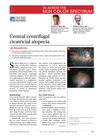
April 2022 in “The Journal of Family Practice”
1 citations
,
April 2022 in “The Journal of Family Practice” This report describes early and late stages of central centrifugal cicatricial alopecia in two Black women, highlighting progression from a small to a large central patch of hair loss.
 March 2017 in “BJU international”
 This article discusses the BJUI's strategies to support urology-related clinical trials but reports no new experimental results; the authors emphasize the importance of rigorous trial design and reporting standards.
 32 citations
,
December 2000 in “Phytomedicine”
32 citations
,
December 2000 in “Phytomedicine” In this study, 1% procyanidin B-2 tonic significantly increased the number of total and terminal hairs on the scalp of male participants compared to a placebo after 6 months of use.
 46 citations
,
July 2008 in “Dermatologic Therapy”
46 citations
,
July 2008 in “Dermatologic Therapy” This study developed and evaluated a photographic scale to assess CCCA pattern and severity in African American women, finding it reproducible when used by investigators and participants.
1 citations
,
January 1999 in “Proceedings of the British Society of Animal Science” This research investigates apoptosis and bcl 2 expression in hair follicles cultured with and without biotin, but it reports no new results.
April 2017 in “The journal of investigative dermatology/Journal of investigative dermatology” This case report identified a 6-month-old girl with congenital generalized hypertrichosis and gingival hyperplasia, where a de novo CNV on chromosome 17q24.2-24.3 was associated with reduced expression of ABCA5 and SOX9.
July 2020 in “Journal of Tissue Engineering and Reconstructive Surgery”  2 citations
,
January 2023 in “Bioresource Technology Reports”
2 citations
,
January 2023 in “Bioresource Technology Reports” This study suggests that using glycosidases to lyse the polysaccharides of Botryoccocus braunii may allow for the semi-continuous recovery of hydrocarbons while keeping the cells viable.
36 citations
,
October 2007 in “Journal of Investigative Dermatology” This study found that overexpression of betacellulin in transgenic mice delayed hair follicle morphogenesis and cycling, increased keratinocyte proliferation, and enhanced wound angiogenesis without affecting wound healing strength.
September 2022 in “Indian Journal of Paediatric Dermatology” This case report documents the first confirmed mutation-proved instance of Clouston syndrome in a large Chinese-Malaysian family, linked to the c.263C>T (A88V) mutation in the GJB6 gene, with no available treatment but highlighting the importance of genetic counseling.
 September 2011 in “Clinical Biochemistry”
 The demineralized bone matrix scaffold is better for cell attachment than the mineralized bone allograft.
May 2020 in “The journal of investigative dermatology/Journal of investigative dermatology” This study reported that specific inhibition of the classical complement pathway with BIVV009 prevented C3 deposition along the dermal-epidermal junction in bullous pemphigoid, reflecting its potential efficacy.
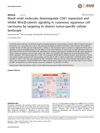 September 2025 in “Experimental & Molecular Medicine”
 This study observed that the small molecules KY19382 and KY19334 inhibited cancerous traits in human cutaneous squamous cell carcinoma cells by suppressing the Wnt/β-catenin pathway, indicating their potential as treatments for cancers involving CDK1 overexpression and diseases related to CXXC5 accumulation.
April 2010 in “Cancer Research” This study found significant upregulation of IDO-1 and IDO-2 in human basal cell carcinomas, suggesting that IDO production may confer immune privilege characteristics to the tumors, potentially impacting their growth.
 18 citations
,
December 2009 in “Canadian Journal of Animal Science”
18 citations
,
December 2009 in “Canadian Journal of Animal Science” This study reports that BMP2 expression in goat skin is higher during late telogen and early anagen phases, indicating a potential role in hair follicle regeneration.
6 citations
,
March 2022 in “IET Image Processing” This study utilized ultrasound biomicroscopy to evaluate the anterior chamber in angle closure glaucoma patients, revealing that the anterior chamber angle is wider on the downside than the upside and identifying important parameters for potential laser surgery.
10 citations
,
December 2015 in “International Journal of Dermatology” This study suggests that basal cell carcinoma and trichoblastoma may share differentiation toward the hair follicle, as indicated by strong positivity in CK 15, follistatin, and Bmi‐1 markers.
 26 citations
,
September 2018 in “Journal of Molecular Cell Biology”
26 citations
,
September 2018 in “Journal of Molecular Cell Biology” This study observed that Endoglin is crucial for maintaining correct hair follicle cycling and stimulating hair follicle stem cell niches through feedback interactions involving Wnt/β-catenin and Bmp/Smad signaling pathways in a mouse model.
9 citations
,
May 2022 in “Actas Dermo-Sifiliográficas” This study found that basal cell carcinoma exhibits altered expression patterns of CD10, p63, BCL-2, and EMA proteins compared to normal skin, with notable differences in staining and reactivity.
 10 citations
,
June 2024 in “American Journal of Clinical Dermatology”
10 citations
,
June 2024 in “American Journal of Clinical Dermatology” This review highlights that while sonidegib and vismodegib offer promising treatment options for advanced basal cell carcinoma, their use is often limited by treatment-emergent adverse events, which can be managed through protocol modifications and supportive interventions.
 3 citations
,
March 2019 in “Case Reports”
3 citations
,
March 2019 in “Case Reports” This report highlights a case of possible association between myotonic dystrophy type 1 and basal cell carcinoma, urging clinicians to consider this link despite negative genetic testing for known hereditary BCC syndromes.
 August 2025 in “Fabad Journal of Pharmaceutical Sciences”
 This review highlights that bicalutamide, a non-steroidal antiandrogen used in prostate cancer treatment, is mainly effective through its (R)-enantiomer and emphasizes the need to monitor its adverse effects despite its targeted antiandrogenic action.
August 2026 in “Journal of Functional Biomaterials” In this study, researchers developed a collagen and bacterial cellulose-based dressing loaded with bacitracin, which exhibited enhanced antibacterial activity, improved wound healing, and reduced inflammation in a murine infected-wound model, suggesting its potential for clinical use in treating infected wounds.