 September 2019 in “Journal of Investigative Dermatology”
 This study found that using human induced pluripotent stem cells (iPSC) carrying the causal mutation of Epidermolysis Bullosa simplex provides a robust model for understanding its molecular mechanisms and testing potential therapeutic targets.
January 2019 in “Dermatologic Surgery” This overview describes the Dermatologic Surgery journal, highlighting its comprehensive focus on various dermatologic surgery techniques, but it presents no new research findings.
10 citations
,
April 2013 in “Journal of Investigative Dermatology” This study reports a semidominant inheritance of epidermolytic ichthyosis due to a KRT1 mutation, which was previously thought to be only inherited dominantly.
4 citations
,
January 2020 in “Dermatology Online Journal” In this report, a 1-year-old boy with congenital atrichia with papular lesions was found to have a complete absence of scalp and body hair and keratin-filled cysts due to a mutation in the hairless gene.
2 citations
,
October 2016 in “OPAL (Open@LaTrobe) (La Trobe University)” This study reports that the Swedish newborn screening program for phenylketonuria, galactosaemia, and biotinidase deficiency is effective, with high sensitivity and specificity, and lower false positive rates compared to other countries, while genetic variants impact detection and incidence patterns in Sweden.
 10 citations
,
September 2015 in “PLoS ONE”
10 citations
,
September 2015 in “PLoS ONE” This case report documents a female toddler with novel compound heterozygous mutations in the VDR gene causing hereditary 1,25-dihydroxyvitamin D-resistant rickets, expanding the known mutation spectrum for this disease.
 December 2023 in “The journal of investigative dermatology/Journal of investigative dermatology”
 In a mouse model study, researchers observed that the absence of MCPIP1 in myeloid cells decreased susceptibility to chemically induced skin papillomas but caused significant hair loss and skin pigmentation changes, suggesting a role for MCPIP1 in skin carcinogenesis and follicle integrity.
July 2005 in “The American Journal of Human Genetics” The AR gene is linked to male-pattern baldness, TNFSF4 to heart disease, SLC19A3 to BBGD, MCT8 to a syndrome, and segmental duplications to genetic variation.
 76 citations
,
April 2005 in “Cancer Epidemiology, Biomarkers & Prevention”
76 citations
,
April 2005 in “Cancer Epidemiology, Biomarkers & Prevention” This study found that the AR-E211 A allele is associated with a lower risk of both metastatic prostate cancer and androgenetic alopecia in an Australian population.
1 citations
,
September 2022 in “European Journal of Dermatology” This study identified a novel splice-site variant of the LAMB3 gene that may cause junctional epidermolysis bullosa, suggesting gene sequencing is essential for accurate diagnosis.
29 citations
,
October 2010 in “Journal of Investigative Dermatology” This research found that activating a KrasG12D mutation in mice led to skin thickening, papillomas, and hair growth issues, suggesting that even rare KRAS mutations can mimic human RAS/MAPK syndrome symptoms.
449 citations
,
December 2005 in “The Plant Cell” This study found that the BIK1 gene in Arabidopsis thaliana modulates defense responses to pathogens and is essential for normal root growth and development.
 2 citations
,
October 2023 in “Philosophical transactions - Royal Society. Biological sciences”
2 citations
,
October 2023 in “Philosophical transactions - Royal Society. Biological sciences” This article reports that mutations in the PADI3 gene, affecting its activity or localization, cause uncombable hair syndrome and are linked to central centrifugal cicatricial alopecia, particularly among women of African ancestry.

This study in a nine-year-old boy from Lebanon identified a gene mutation (c.1066dup p.(Arg356Profs*16)) associated with a rare inborn error of immunity, characterized by craniosynostosis, jaundice, and several other symptoms, expanding the known genotypic and phenotypic spectrum of this condition.
 5 citations
,
August 2019 in “iScience”
5 citations
,
August 2019 in “iScience” In this study, Trf1 genetic deletion in mice, including those with cancer-prone mutations, was shown to not affect overall viability and cause only mild effects, while being necessary for tumor formation, suggesting a potential therapeutic window for Trf1 as an anti-cancer target.
1 citations
,
December 2020 in “International journal of molecular sciences” This study suggests that biallelic loss of the Hedgehog signaling repressor Patched alone in Keratin 5+ epidermal cells is insufficient to drive basal cell carcinoma development unless exogenous stimuli trigger accumulation of BCC precursor cells.
5 citations
,
April 2022 in “The journal of investigative dermatology/Journal of investigative dermatology” This article discusses junctional epidermolysis bullosa caused by COL17 deficiency, noting a lack of experimental therapies and the impact of nonsense mutations, but it reports no new clinical results.
 96 citations
,
June 2017 in “Nature Communications”
96 citations
,
June 2017 in “Nature Communications” This study identified WNT10A as crucial for adult epithelial cell proliferation and differentiation, suggesting β-catenin pathway activation may help address regenerative defects in WNT10A mutation patients.
November 1997 in “Open Archive (Karolinska Institutet)” This research observed that mutations in the PTCH gene are common in both sporadic and hereditary basal cell cancers, suggesting a critical role of the PTCH signaling pathway in skin tumor development.
 59 citations
,
September 2007 in “Biochemical and Biophysical Research Communications”
59 citations
,
September 2007 in “Biochemical and Biophysical Research Communications” This study found that a gain-of-function mutation in the TRPV3 channel leads to altered hair development in DS-Nh mice by affecting the anagen and telogen phases, highlighting TRPV3's role in hair growth regulation.
 51 citations
,
November 2011 in “British Journal of Dermatology”
51 citations
,
November 2011 in “British Journal of Dermatology” This study suggests that the HDAC9 gene is a third susceptibility gene for male-pattern baldness, with significant associations found in both German and Australian samples.
November 2025 in “Journal of Investigative Dermatology” This study found that UVB exposure led to visible tanning and distinct DNA methylation changes in pigmentation genes in tan-capable skin but not in non-tan skin, highlighting GNAS as a potentially UVB-responsive gene.
 2 citations
,
December 2018 in “Journal of cosmetic dermatology”
2 citations
,
December 2018 in “Journal of cosmetic dermatology” This study observed a significant increase in cellular retinol-binding protein-1 expression in lesional skin of patients with alopecia areata compared to healthy controls, suggesting its potential role in the disease's pathogenesis.
 1 citations
,
March 2015 in “Journal of the European Academy of Dermatology and Venereology”
1 citations
,
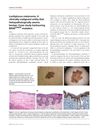
March 2015 in “Journal of the European Academy of Dermatology and Venereology” This letter to the editor shares a case study of lentiginous melanoma that appears clinically malignant but histopathologically benign, involving the BRAFV600R mutation.
 February 2019 in “bioRxiv (Cold Spring Harbor Laboratory)”
 This study found that Prss53-mutated rabbits exhibited curved hair and skeletal dyskinesia, suggesting a link between Prss53 loss and these traits, potentially involving disrupted calcium metabolism.
25 citations
,
September 2014 in “SpringerPlus” This study found that sheep possess a polymorphic KAP8-2 gene that shares high sequence identity with the KAP8-2 gene in goats and reindeer.
 March 2023 in “Journal of Cosmetic Dermatology”
 This study in Japanese women identified SNP rs2419385 as significantly associated with hair thinning, suggesting potential involvement of nearby genes in its development.
March 2026 in “Animal Models and Experimental Medicine” In a dermal Gorab knockout mouse model, this study found that Gorab mutations increase P53 protein accumulation and disrupt extracellular matrix expression, contributing to accelerated skin aging and suggesting a pathway involving epigenetic regulation.
12 citations
,
January 1987 in “Ophthalmic Paediatrics and Genetics” This report describes a patient with biotinidase deficiency presenting bilateral optic atrophy, and confirms autosomal recessive inheritance through enzyme dosage analysis in the patient and family members.
 19 citations
,
August 2008 in “Journal of The European Academy of Dermatology and Venereology”
19 citations
,
August 2008 in “Journal of The European Academy of Dermatology and Venereology” In this study, researchers observed that in advanced androgenetic alopecia, increased DNA damage in the frontal bald area may lead to cell apoptosis due to impaired repair capacity.