 295 citations
,
March 2016 in “Life Sciences”
295 citations
,
March 2016 in “Life Sciences” This review discusses the links between particulate matter exposure and skin diseases, highlighting oxidative stress and inflammation as key mechanisms; it reports no new clinical results.
 295 citations
,
September 2006 in “Cell Cycle”
295 citations
,
September 2006 in “Cell Cycle” This review discusses the role of the TOR pathway in aging and suggests that rapamycin could potentially target age-related diseases, but reports no new clinical results.
 200 citations
,
November 1997 in “Planta”
200 citations
,
November 1997 in “Planta” This study found that while a tip-focused calcium gradient influences localized growth in root hairs and pollen tubes, it is not the primary determinant of growth direction in root hairs of Arabidopsis thaliana.
 193 citations
,
February 2015 in “Nature Communications”
193 citations
,
February 2015 in “Nature Communications” Fungi-produced compounds can change plant root growth.
 193 citations
,
August 2005 in “Journal of Investigative Dermatology Symposium Proceedings”
193 citations
,
August 2005 in “Journal of Investigative Dermatology Symposium Proceedings” This study found that the prevalence of androgenetic alopecia increases with age among both men and women in Maryborough, Australia, with 57% of women and 73.5% of men aged 80 and over affected.
 193 citations
,
August 1985 in “Endocrinology”
193 citations
,
August 1985 in “Endocrinology” This study found significant species differences in the enzyme activity and inhibitor affinities of prostatic 5α-reductases from rats, dogs, and humans, with variable potencies for different 3-oxo-4-azasteroid inhibitors across species.
 150 citations
,
February 2013 in “Surgical Infections”
150 citations
,
February 2013 in “Surgical Infections” This review discusses the historical and modern use of silver for reducing infections and aiding healing in burns, wounds, and medical devices, noting its benefits and limitations in various applications.
 139 citations
,
October 1999 in “Environmental Health Perspectives”
139 citations
,
October 1999 in “Environmental Health Perspectives” This article reviews the scientific exploration of Ayurvedic medicinal plants and discusses their modern applications, such as a drug developed from Commiphora wightti for lipid disorders, without reporting new clinical findings.
 132 citations
,
January 2017 in “International Journal of Molecular Sciences”
132 citations
,
January 2017 in “International Journal of Molecular Sciences” This review explores how adipose-derived stem cells contribute to skin homeostasis and highlights recent advances in their clinical applications in dermatology, but it reports no new clinical results.
 130 citations
,
November 2017 in “Frontiers in Immunology”
130 citations
,
November 2017 in “Frontiers in Immunology” This review explores recent findings on regulatory T cells, focusing on their unique functions in non-lymphoid tissues and new mechanisms of action, but presents no original clinical results.
 129 citations
,
May 2015 in “Cell Stem Cell”
129 citations
,
May 2015 in “Cell Stem Cell” This review discusses recent findings on the plasticity and regulation of epithelial stem cells and reports no new experimental results.
 127 citations
,
January 2015 in “Journal of Biological Rhythms”
127 citations
,
January 2015 in “Journal of Biological Rhythms” This review discusses the role of the circadian clock in skin functions such as cell proliferation and UV protection and reports no new results; the authors note its potential in studying immune regulation and seasonal behaviors.
 124 citations
,
June 2020 in “Cell Stem Cell”
124 citations
,
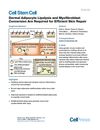
June 2020 in “Cell Stem Cell” This study found that in mice, dermal adipocytes initiate inflammation and aid repair after skin injury by releasing lipids, suggesting a role in managing inflammatory diseases and impaired wound healing.
 124 citations
,
January 1993 in “The Prostate”
124 citations
,
January 1993 in “The Prostate” Finasteride effectively inhibits 5α reductase, while plant extracts like Permixon and Bazoton don't show significant results.
 117 citations
,
May 2017 in “Human Reproduction Update”
117 citations
,
May 2017 in “Human Reproduction Update” This review examines the epidemiology, pathophysiology, diagnosis, and management strategies for non-classic congenital hyperplasia due to 21-hydroxylase deficiency, and provides evidence-based recommendations for its treatment and genetic counseling.
 115 citations
,
October 2009 in “The Journal of clinical endocrinology and metabolism/Journal of clinical endocrinology & metabolism”
115 citations
,
October 2009 in “The Journal of clinical endocrinology and metabolism/Journal of clinical endocrinology & metabolism” In this study, researchers identified novel LMNA mutations in patients with atypical progeroid syndrome, revealing clinical features distinct from other similar disorders, but unrelated to mutant prelamin A accumulation.
 106 citations
,
October 2016 in “Cell Stem Cell”
106 citations
,
October 2016 in “Cell Stem Cell” This study found that PDGFA is critical for the proliferation and maintenance of adipocyte stem cells in skin but not other white adipose tissues, highlighting unique regulatory mechanisms in different tissue depots.
 106 citations
,
December 2015 in “Journal of The American Academy of Dermatology”
106 citations
,
December 2015 in “Journal of The American Academy of Dermatology” This article reviews common pitfalls in biopsy site selection and technique that can lead to misdiagnosis of various skin conditions, highlighting the importance of proper biopsy practices for improving diagnostic accuracy.
 103 citations
,
October 2003 in “Birth Defects Research”
103 citations
,
October 2003 in “Birth Defects Research” This review discusses the multifactorial etiology of hypospadias, including genetic predispositions and possible environmental factors, and highlights the need for further studies on genetic and environmental contributions to its increasing prevalence, without presenting new findings.
 97 citations
,
September 2016 in “Reviews in Endocrine and Metabolic Disorders”
97 citations
,
September 2016 in “Reviews in Endocrine and Metabolic Disorders” This review summarizes recent multidisciplinary advances in sebaceous gland research and highlights potential novel therapeutic strategies for skin diseases, but it reports no new clinical results.
 94 citations
,
July 2020 in “European Journal of Human Genetics”
94 citations
,
July 2020 in “European Journal of Human Genetics” This article provides guidelines for molecular genetic testing of congenital adrenal hyperplasia due to 21-hydroxylase deficiency, focusing on quality requirements, methodologies, and variant classification; it reports no new clinical results.
 94 citations
,
January 2007 in “Cutaneous and Ocular Toxicology”
94 citations
,
January 2007 in “Cutaneous and Ocular Toxicology” This review discusses the long-term cutaneous and ocular complications from sulfur mustard exposure in the Iranian population, identifying pruritus and malignant changes as significant issues and highlighting eye surface damage leading to visual decline.
 92 citations
,
September 2015 in “Journal of Lipid Research”
92 citations
,
September 2015 in “Journal of Lipid Research” This review discusses the roles of dermal white adipose tissue (dWAT) as an insulator, antibiotic, and regenerative tissue, highlighting its importance in systemic metabolism and immune function, but reports no new clinical results.
 89 citations
,
March 2018 in “The Journal of Dermatology”
89 citations
,
March 2018 in “The Journal of Dermatology” This review presents various trichoscopic findings for diagnosing alopecia areata but reports no new clinical results, emphasizing that no single marker is pathognomonic and multiple features should be considered together.
 77 citations
,
July 2020 in “Journal of the European Academy of Dermatology and Venereology”
77 citations
,
July 2020 in “Journal of the European Academy of Dermatology and Venereology” This review examines the skin exposome, including solar exposure, air pollution, hormones, nutrition, and psychological factors, but reports no new clinical results.
 77 citations
,
July 2012 in “Journal of Investigative Dermatology”
77 citations
,
July 2012 in “Journal of Investigative Dermatology” The researchers observed that overexpression of Wnt10b in a mouse model can induce hair follicle regeneration by switching follicles from the resting phase to the growth phase via the Wnt-β-catenin signaling pathway.
 75 citations
,
October 2016 in “Genes & Development”
75 citations
,
October 2016 in “Genes & Development” This study found that Sonic Hedgehog secreted by hair follicle transit-amplifying cells is essential for dermal adipogenesis and hair follicle growth by acting on adipocyte precursors.
 73 citations
,
January 2013 in “European journal of dermatology/EJD. European journal of dermatology”
73 citations
,
January 2013 in “European journal of dermatology/EJD. European journal of dermatology” This review examines current research on antioxidants in autoimmune skin diseases like alopecia areata and vitiligo, concluding with suggestions for future studies and treatment possibilities without reporting new clinical results.
 72 citations
,
January 2011 in “Current Pharmaceutical Design”
72 citations
,
January 2011 in “Current Pharmaceutical Design” This review discusses the potential role of steroid 5α-reductase inhibitors in treating neuropsychiatric disorders related to dopaminergic hyperreactivity but reports no new clinical results.
 70 citations
,
July 2016 in “Aging”
70 citations
,
July 2016 in “Aging” This study suggests that dermal adipocytes might play a key role in skin aging due to their transformation into fibrotic structures in chronically photo-damaged skin.