 November 2025 in “Frontiers in Oncology”
 This study found that Si extract, cryptomeridiol, and SiAgNPs have the ability to induce cell death and prevent cell growth in HepG2 liver cancer cells, suggesting cryptomeridiol's potential as a phytochemical component in developing new therapies for hepatocellular carcinoma using nanotechnology in vitro.
 September 2023 in “HAL (Le Centre pour la Communication Scientifique Directe)”
 In this study, peptide-based nanoparticles were successfully used to deliver the CRISPR-Cas9 system into cancer cells, effectively targeting and editing KRAS mutations, suggesting promising therapeutic potential for cancer treatment.
 January 2026 in “Frontiers in Materials”
 This review discusses the potential of metal organic frameworks for drug delivery in wound treatment, highlighting their unique properties and recent research advancements, but reports no new clinical results.
 1 citations
,
January 2024 in “Journal of applied pharmaceutical science”
1 citations
,
January 2024 in “Journal of applied pharmaceutical science” This study investigated bacterial isolates from Xylocarpus sp. mangrove fruit and found that these symbiotic bacteria exhibit antibacterial, antifungal, and hair follicle growth properties, suggesting potential applications in the cosmetic bioindustry, particularly for treating alopecia.
 April 2023 in “JIVA : journal of Indian Veterinary Association Kerala/JIVA :Journal of Indian Veterinary Association, Kerala”
 This case study reported the successful recovery of a Doberman Pinscher with skin lesions, demodicosis, pyoderma, and malasseziosis following treatment with fluralaner, enrofloxacin, shampoos, immune boosters, and fatty acids.
![Asl Us Soos [Glycyrrhiza Glabra (Linn)]: An Evidence-Based Review on Its Phytopharmacological, Therapeutic Potential and Gastroduodenal Ulcer Activity](/images/assets/6967bbcb-3ed8-4b8e-a417-ed1c34019505/small/62125.jpg) January 2026 in “International Journal of Unani and Integrative Medicine”
January 2026 in “International Journal of Unani and Integrative Medicine” This study evaluated the antiulcer potential of Glycyrrhiza glabra and found that its hydroalcoholic extract demonstrated dose-dependent protective effects against various ulcer models, comparable to standard drugs like omeprazole and cimetidine, by enhancing mucosal defenses and reducing stomach acid production.
 1 citations
,
May 2025 in “Natural Products and Bioprospecting”
1 citations
,
May 2025 in “Natural Products and Bioprospecting” In this study, PEVIII, a nanocomposite chitosan-coated vesicle containing both α-hederin and hederacoside C, demonstrated notable antibacterial activity against Pseudomonas aeruginosa in a keratitis model, showing significant lesion reduction, tissue improvement, and decreased bacterial load and inflammatory markers compared to other treatments.
 1 citations
,
January 2014 in “The journal of advances in parasitology”
1 citations
,
January 2014 in “The journal of advances in parasitology” This case study in a German Shepherd with mixed ectoparasite and bacterial infections demonstrates that a combined therapeutic approach significantly improved the animal's skin condition and led to recovery.
 1 citations
,
October 2025 in “International Journal of Nanomedicine”
1 citations
,
October 2025 in “International Journal of Nanomedicine” This review explores the potential for using exosomes in treating autoimmune skin diseases and promoting skin regeneration, highlighting current applications, delivery methods, and ongoing clinical trials while also identifying challenges and future research directions within dermatology.
April 2026 in “Dermatological Reviews” This narrative review found that while exosome-based therapies hold regenerative potential for skin rejuvenation, wound healing, and hair restoration, significant challenges, including variability in manufacturing and lack of regulatory approval, necessitate careful integration into dermatology practice, emphasizing the importance of patient safety and regulatory understanding.
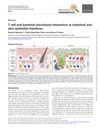 January 2023 in “Discovery immunology”
 T cells and bacteria in the gut and skin help maintain health and protect against disease.
 179 citations
,
October 2018 in “American Journal of Clinical Dermatology”
179 citations
,
October 2018 in “American Journal of Clinical Dermatology” This review outlines various dermatologic adverse events associated with targeted therapies and immunotherapies, emphasizing the need for collaboration between dermatologists and oncologists to manage these effects effectively; it reports no new clinical findings.
 8 citations
,
October 2021 in “Microbiology spectrum”
8 citations
,
October 2021 in “Microbiology spectrum” This study proposed a new approach to combat leishmaniasis by targeting host proteins rather than the parasite itself, identifying eight existing drugs as potential treatments despite not having been previously tested on leishmaniasis.
 December 2025 in “Babcock University Medical Journal”
 This study found that in patients with Alopecia Areata, CD27 and IL-35 levels were significantly higher in those with bacterial infections, suggesting they may be useful as immunological biomarkers.
 16 citations
,
September 2020 in “British journal of dermatology/British journal of dermatology, Supplement”
16 citations
,
September 2020 in “British journal of dermatology/British journal of dermatology, Supplement” This review explores the role of neutrophil recruitment in the inflammation seen in hidradenitis suppurativa and emphasizes potential therapeutic targets within these pathways, but it reports no new clinical results.
 March 2021 in “Actas Dermo-Sifiliográficas”
 This review discusses the scalp microbiome's unique features and its potential role in hair disorders, suggesting that microbiome-targeted treatments could offer new therapeutic options, though no clinical results are reported.
 77 citations
,
August 2025 in “Signal Transduction and Targeted Therapy”
77 citations
,
August 2025 in “Signal Transduction and Targeted Therapy” This review highlights the potential of extracellular vesicle-based therapies for treating various diseases, but it also notes challenges like the lack of regulatory guidelines that hinder their clinical development.
 17 citations
,
June 2021 in “Molecules”
17 citations
,
June 2021 in “Molecules” This review summarizes the promising role of melatonin combined with nanosized carriers in drug delivery, suggesting enhanced effectiveness in treating various diseases compared to free melatonin.
10 citations
,
January 2025 in “Biomaterials Science” This study found that a multifunctional hydrogel dressing enriched with Cu-MOF and tannic acid significantly improved full-thickness wound healing in rats, reducing the wound area to only 1.6% and promoting re-epithelialization, neovascularization, and hair follicle formation.
 38 citations
,
June 2015 in “Expert Opinion on Therapeutic Targets”
38 citations
,
June 2015 in “Expert Opinion on Therapeutic Targets” This review explores potential indications for prolactin receptor inhibitors beyond breast and prostate cancers, emphasizing the need for potent antibodies to further research prolactin receptor expression.

This animal study found that YH0618 may alleviate doxorubicin-induced alopecia and affects proteins like keratin and Smad3, suggesting potential therapeutic targets. The researchers analyzed protein expression changes to understand YH0618's effects in treating chemotherapy-related hair loss.
1 citations
,
December 2025 in “International Journal of Molecular Sciences” This review reports that chitosan-based systems with metal nanoparticles and polyphenols may enhance wound healing by improving the bioavailability and stability of these compounds, suggesting a potential new approach for chronic and diabetic wounds.
2 citations
,
October 2022 in “Electrochem” This review explores the applications of phytonutrient-based biosensors in micro-electrochemical systems and reports no new experimental findings, emphasizing the potential and challenges of this innovative approach.
December 2024 in “Jurnal Ilmiah Farmasi (Scientific Journal of Pharmacy)” This literature review reports that lavender essential oil exhibits various medicinal benefits, such as antibacterial and antioxidant properties, and that incorporating nanotechnology could enhance its effectiveness by improving solubility and stability.
 April 2026 in “International Journal of Molecular Sciences”
 This narrative review highlights the need for diabetes-informed approaches to aesthetic dermatology as accelerated skin aging in diabetic patients complicates the safety and effectiveness of cosmetic procedures.
December 2025 in “Pharmaceutics” This review highlights the potential of drug-loaded extracellular vesicles as a promising drug delivery platform but notes that clinical translation faces challenges due to variability in methods and the need for standardization and safety evaluation.
13 citations
,
April 2022 in “BMC Genomics” This study found that dandruff-afflicted individuals had a less integrated microbial network on the scalp and hair surface compared to healthy individuals, with more positive interactions and unstable connections.
2 citations
,
September 2025 in “International Journal of Nanomedicine” This review discusses the roles of extracellular vesicles in skin health and disease and reports no clinical results; the authors highlight potential therapeutic uses and call for more research.
 2 citations
,
November 2023 in “International Journal for Research in Applied Science and Engineering Technology”
2 citations
,
November 2023 in “International Journal for Research in Applied Science and Engineering Technology” This review explores various tissue regeneration technologies, highlighting how skin substitutes have significantly improved healing success rates for burn injuries, and examines cell-based therapies aimed at reducing scar formation and improving burn management.
 February 2026 in “International Journal of Web of Multidisciplinary Studies”
 This review synthesizes current research on how the interaction between the skin microbiome and exosome-mediated communication influences hair disorders, and discusses how microbiome restoration and exosome-based therapies could advance treatments for conditions like alopecia by promoting hair regrowth and follicular health.